
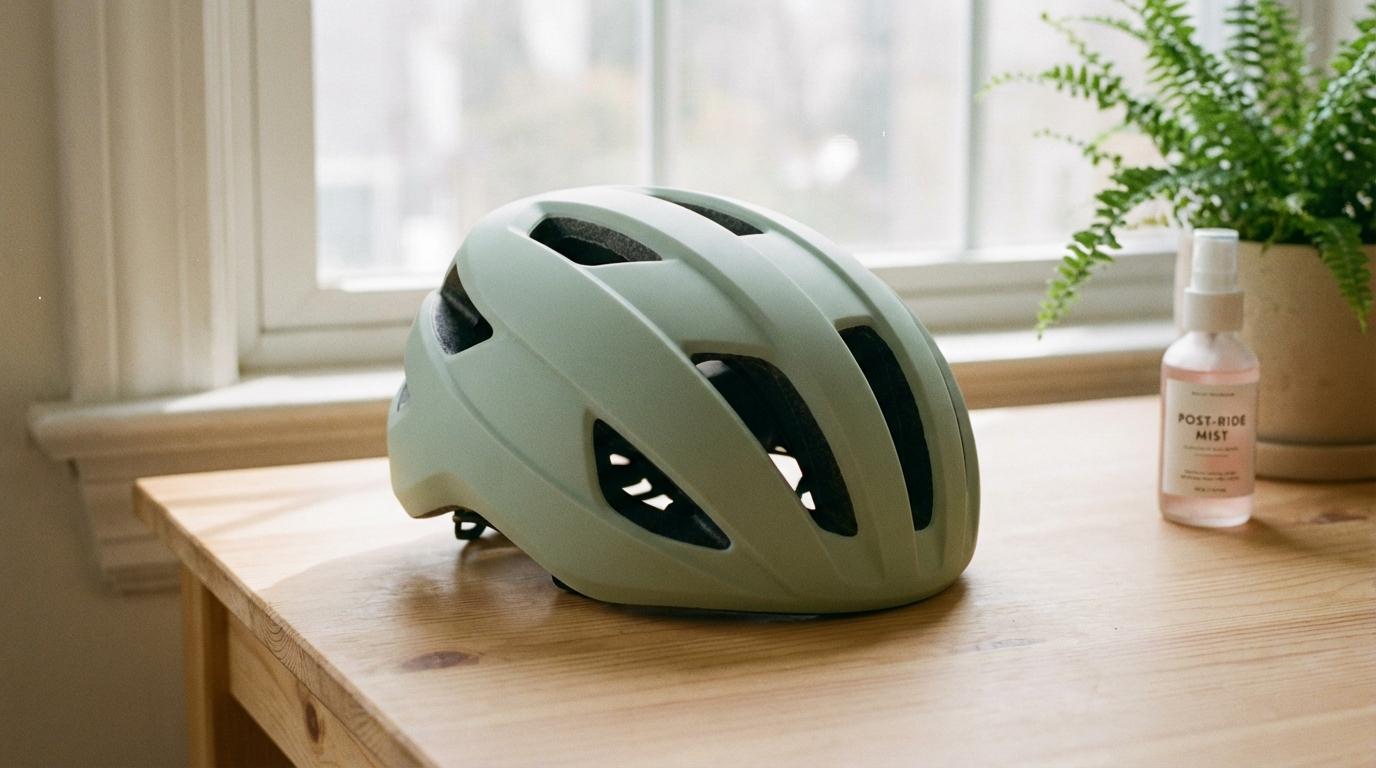
It feels like a rash at first, those small rough bumps along your forehead and temples that appear after a long ride or practice. You can feel them before you see them, little textured spots that were not there yesterday. If you wear a helmet regularly for cycling, motorcycling, skateboarding, or any sport, there is a good chance those bumps are acne mechanica, a specific type of breakout caused by the combination of friction, pressure, heat, and sweat that helmets create against your skin.
The Friction and Sweat Combo
Acne mechanica works differently from the hormonal or bacterial acne most people are familiar with. It is triggered by mechanical forces on the skin. When a helmet sits snugly against your forehead, it presses down on pores. Add heat, because helmets trap body warmth close to your skin, and add sweat, which has nowhere to evaporate under a non-breathable surface. That combination creates the perfect environment for clogged pores.
Sweat itself is not the villain here. Sweat is mostly water and salt, and it does not clog pores on its own. The problem is what happens when sweat gets trapped. It mixes with the oils your skin naturally produces, picks up dead skin cells from the surface, and all of that gets pushed into pores by the constant pressure and friction of the helmet. The result is a crop of small, inflamed bumps, usually concentrated wherever the helmet, padding, or straps make the most contact with your skin.
The American Academy of Dermatology specifically identifies sports equipment as a common cause of this type of acne. Chin straps are a frequent culprit too, causing breakouts along the jawline and under the chin where the strap rubs back and forth during movement.
Cleaning Your Helmet Padding
Most people clean their face after wearing a helmet. Very few people clean the helmet itself. That is a problem, because the padding inside your helmet absorbs sweat, oil, bacteria, and dead skin cells every single time you wear it. Over days and weeks, that padding becomes a breeding ground for the exact bacteria that contribute to acne.
Here is a simple cleaning routine that takes minimal effort:
- After every use: Wipe down the interior padding and straps with antibacterial wipes or a cloth dampened with a mild cleanser. Let the helmet air out completely before storing it. Do not toss it in a gym bag or closet while the padding is still damp.
- Weekly: If the padding is removable (most cycling and motorcycle helmets have removable liners), pull it out and hand wash it with a gentle, fragrance-free soap. Let it air dry completely before putting it back.
- Monthly: Give the entire interior a more thorough clean. Use a mixture of warm water and mild soap, gently scrub the foam and fabric, and rinse well. Some people use a diluted white vinegar spray to kill bacteria, which works fine as long as you rinse it out afterward.
Replacing helmet padding once a year (or more often if you ride daily) is also worth the small investment. Padding breaks down over time, becomes less effective at managing moisture, and accumulates bacteria that no amount of washing fully removes.
Creating a Barrier Underneath
You can reduce the amount of friction and sweat that reaches your skin by putting something between your forehead and the helmet. This is not about adding bulk. It is about creating a layer that absorbs sweat and reduces direct rubbing.
A thin, moisture-wicking headband or skull cap worn under the helmet makes a noticeable difference. Look for fabrics labeled as moisture-wicking or quick-dry, usually polyester or nylon blends. Cotton absorbs sweat but holds it against your skin, which defeats the purpose. The goal is a fabric that pulls sweat away from the skin surface so it can evaporate.
Some riders apply a thin layer of non-comedogenic moisturizer or a barrier product to their forehead before putting on the helmet. This creates a slight buffer between skin and padding. Products with dimethicone (a silicone) work well for this because they form a breathable protective layer without clogging pores. Just make sure whatever you apply is lightweight and fragrance-free. The same friction-and-sweat dynamic that happens with helmets also shows up in gym settings, so if you are breaking out from workouts too, the prevention strategies overlap.
Treating Helmet Acne
If you already have a crop of bumps from your helmet, the treatment approach is straightforward. Acne mechanica tends to respond well to basic acne-fighting ingredients, and it often clears faster than hormonal acne because once you remove the mechanical trigger, the skin can heal.
Salicylic acid is the go-to ingredient. It is oil-soluble, which means it can penetrate into clogged pores and help dissolve the mix of oil and dead cells sitting inside. A 2% salicylic acid cleanser or leave-on treatment applied to affected areas after you take off your helmet works well. Use it consistently for a few weeks.
Benzoyl peroxide is another solid option, especially if the bumps look red and inflamed. A 2.5% to 5% benzoyl peroxide wash used in the shower after riding targets the bacteria that contribute to acne mechanica. Be aware that benzoyl peroxide bleaches fabric, so rinse it off thoroughly and keep it away from your helmet padding and colored towels.
Avoid picking at these bumps. They might look like they are ready to pop, but squeezing acne mechanica bumps can push bacteria deeper into the skin and lead to scarring. Let the actives do their work.
If you have been treating helmet acne consistently for six to eight weeks and are not seeing improvement, it is worth visiting a dermatologist. Sometimes what looks like acne mechanica is actually folliculitis (a bacterial or fungal infection of hair follicles) or another condition that needs a different treatment approach.
A Gentle Routine for Helmet Wearers
You do not need a complicated routine to manage this. Before riding, wash your face with a gentle cleanser and apply a lightweight, non-comedogenic moisturizer. After riding, wash again as soon as you can. If you cannot shower immediately, keep micellar water wipes in your bag to at least clean the forehead and helmet contact zones until you can do a proper wash.
At night, use your salicylic acid or benzoyl peroxide treatment on the affected area. That is it. Two washes, one treatment product, and a clean helmet. Most people see improvement within two to three weeks once they address both the skin and the equipment.
Wearing a helmet is non-negotiable for safety. Breaking out because of it is not something you just have to accept. A few small adjustments to how you clean your gear and care for your skin before and after wearing it will let you ride, skate, or play without paying for it with your forehead.