
I need to tell you something, and you’re not going to love it. That phone you’re holding right now? The one you press against your face multiple times a day, set down on bathroom counters, and scroll through while eating? It might be contributing to those stubborn breakouts along your jawline and cheek. Before you panic, though, let’s talk about what’s actually happening and what you can realistically do about it.
The Bacteria Situation Is Real (and Kind of Gross)
Here’s the thing: studies have shown that cell phones can be up to 10 times dirtier than a toilet seat. I know, I know. I didn’t want to believe it either. But when you think about everywhere your phone goes in a single day, it starts to make sense. You’re touching doorknobs, then your phone. Swiping on the subway, then scrolling Instagram. Setting it down on restaurant tables, gym equipment, your desk at work.
All that bacteria, oil, and general gunk transfers to your screen. And then you press that screen directly against your face during phone calls. According to dermatologist Dr. Carina Woodruff, while acne has complex causes and bacteria from your phone alone probably won’t cause breakouts, it can definitely be an exacerbating factor. So if you’re already prone to acne, your phone could be making things worse.
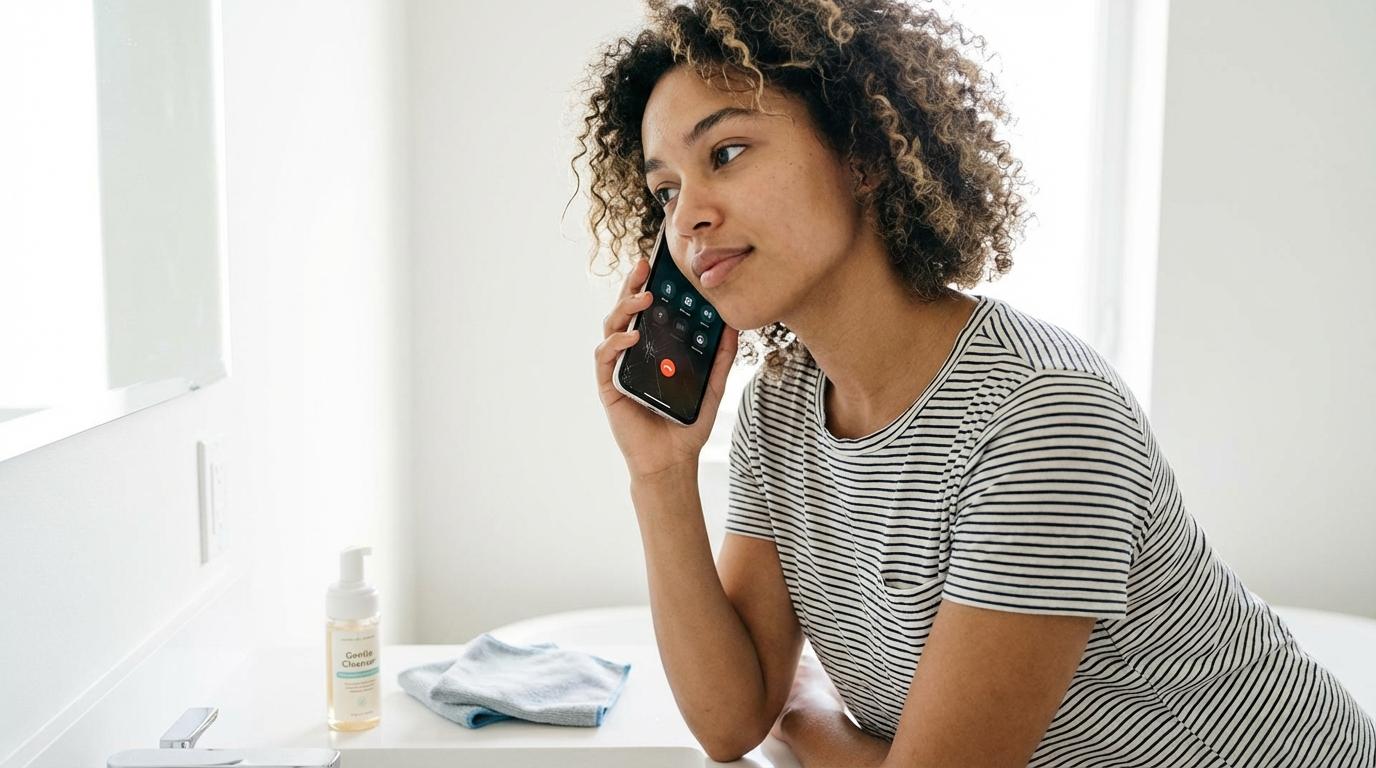
The type of acne you might see from phone contact is called acne mechanica. This happens when repeated friction, pressure, or rubbing irritates your skin. Think about how you hold your phone during long calls. You’re pressing it against your cheek and jaw, sometimes for 20 or 30 minutes at a time. That pressure stimulates your oil glands and creates the perfect conditions for clogged pores.
Heat and Friction: The Underrated Culprits
Beyond the bacteria issue, there’s also the physical contact to consider. When you’re on a long call, your phone generates heat. Combine that warmth with the friction of the screen against your skin, and you’ve got a recipe for inflammation. Your skin doesn’t love being pressed against a warm, slightly sticky surface repeatedly.
Dr. Debra Jaliman has explained that the pressure from holding a phone against your face stimulates your skin’s oil glands. More oil production plus bacteria from the phone surface plus friction equals potential breakouts. It’s a frustrating combination, especially when we all need to use our phones constantly.
You might notice this pattern if your breakouts tend to show up on one side of your face more than the other. If you always hold your phone to the same cheek, that’s where the acne mechanica is most likely to appear. It’s actually a good diagnostic clue. If your left cheek is consistently worse than your right, and you’re left-handed, your phone might be part of the problem.
Let’s Talk About Blue Light (It’s Probably Fine)
Okay, now for some actually good news. You’ve probably seen products claiming to protect your skin from “blue light damage” from screens. Some brands have leaned hard into this concern, selling serums and moisturizers specifically marketed for screen protection. But here’s the reality: the blue light concern is pretty overblown.
Yes, blue light from screens does reach your skin. But the amount of blue light your phone emits is minimal compared to natural sunlight. Some dermatologists suggest using antioxidant serums with vitamins C and E for general protection, which is good advice regardless of screen time. But you don’t need to buy specialized blue light products. A good broad-spectrum sunscreen and a vitamin C serum in your morning routine will do the job.
The research on blue light and skin damage is still evolving, but current evidence suggests that the levels from typical phone use aren’t a major skin concern. You’d need to sit in front of your screen for extremely long periods, probably longer than is healthy for other reasons, to see significant effects. So while it’s fine to be aware of blue light, it’s not worth stressing about or spending extra money on targeted products.
How to Actually Keep Your Phone Clean
Now for the practical part. What can you actually do to minimize phone-related breakouts? Let’s start with the obvious: clean your phone regularly. I’m not talking about a quick wipe on your jeans. I mean actually disinfecting it.
Dermatologist Dr. Joshua Zeichner recommends cleaning your phone at least once a week with rubbing alcohol. Use a soft cloth dampened with isopropyl alcohol (70% works well) and wipe down the entire screen and case. If you see visible dirt or grime, clean it immediately rather than waiting for your weekly wipe-down. Some people like to use screen-safe disinfecting wipes, which work just as well and are more convenient to keep at your desk.
Here’s a simple phone cleaning routine:
- Keep a small bottle of 70% isopropyl alcohol and a microfiber cloth at your desk
- Wipe your phone down every evening before bed
- Do a more thorough cleaning once a week, including your phone case
- Consider having a second phone case you can swap out and wash
- Never set your phone on bathroom surfaces (just trust me on this one)
Switch to Speakerphone or Headphones
The easiest solution? Stop pressing your phone against your face entirely. I know this sounds obvious, but it’s genuinely the most effective fix. When you use speakerphone or headphones, you eliminate the contact that causes acne mechanica. No friction, no pressure on your oil glands, and no bacterial transfer from screen to skin.
Dr. Jaliman specifically recommends earbuds as a simple prevention method. It keeps the bacteria on your screen away from your face entirely. If you’re someone who takes a lot of calls, investing in a decent pair of wireless earbuds could actually be an investment in your skin.
I get that speakerphone isn’t always an option. You might be in an open office, on public transit, or having a private conversation. In those cases, try to hold your phone loosely against your face rather than pressing it firmly. Even reducing the pressure makes a difference.
Your Skincare Routine Still Matters Most
Here’s the thing about phone-related breakouts: they’re easier to manage when your overall skincare routine is solid. A good cleanser, targeted treatments for acne-prone skin, and a non-comedogenic moisturizer create a foundation that can handle occasional phone contact better than neglected skin.
If you’re dealing with breakouts, the basics still apply:
- Cleanse your face twice daily with a gentle, non-stripping cleanser
- Use a salicylic acid or benzoyl peroxide treatment on acne-prone areas
- Keep your skin hydrated with a lightweight, non-comedogenic moisturizer
- Wear sunscreen daily, even if you’re mostly indoors
- Don’t touch your face throughout the day (this includes resting your chin on your hand)
The phone contact is just one factor among many. If you’re doing everything else right and still breaking out along your jaw or cheek, then it’s worth looking at your phone habits. But if you’re skipping cleanser and pressing a dirty phone against your face, well, you’ve got multiple things to address.
Be Honest About Your Habits
I want to be real with you: most of us aren’t going to clean our phones every single day. That’s just the truth. So focus on the changes that are actually sustainable for you. Maybe that means switching to speakerphone for longer calls. Maybe it means keeping cleaning wipes in your bag so you can actually use them. Maybe it means being more mindful about where you set your phone down.
Small consistent changes beat big changes you’ll abandon after a week. If you can commit to cleaning your phone twice a week and using headphones more often, you’ll probably see improvement. Perfection isn’t the goal here.
When to Consider Other Causes
If you’ve cleaned up your phone habits and you’re still breaking out in the same spots, it might be time to consider other factors. Hormonal acne often shows up along the jawline and chin, and that’s not going to be fixed by wiping down your iPhone. Touching your face habitually, resting your face on your hands at your desk, or even your pillowcase could be contributing.
Dr. Julia Carroll points out that your skin’s existing condition matters too. If you have a healthy, intact skin barrier, it can fend off most of the bacteria your phone might transfer. But if you’re dealing with conditions like rosacea or eczema, your compromised barrier makes you more susceptible. In that case, being extra careful about phone cleanliness is even more important.
Pay attention to patterns. Are the breakouts consistent with where your phone touches your face? Do they get worse during periods when you’re on the phone more often? If the pattern matches up, your phone is probably a factor. If the breakouts seem random or affect areas your phone never touches, look elsewhere for the cause.
The Bottom Line
Your phone isn’t the sole cause of your acne, but it could definitely be making things worse. The combination of bacteria, heat, friction, and pressure creates conditions that encourage breakouts, especially if you’re already prone to them. The good news is that the fixes are pretty simple: clean your phone regularly, use headphones when possible, and maintain a solid skincare routine.
You don’t need to become paranoid about your phone or buy expensive specialized products. Just be a little more mindful about hygiene and contact. Keep some cleaning wipes handy, switch to speakerphone when you can, and pay attention to whether your breakouts correlate with your phone habits. That’s honestly all most people need to do.
And maybe don’t scroll through your phone while it’s sitting on a public bathroom counter. Just saying.