
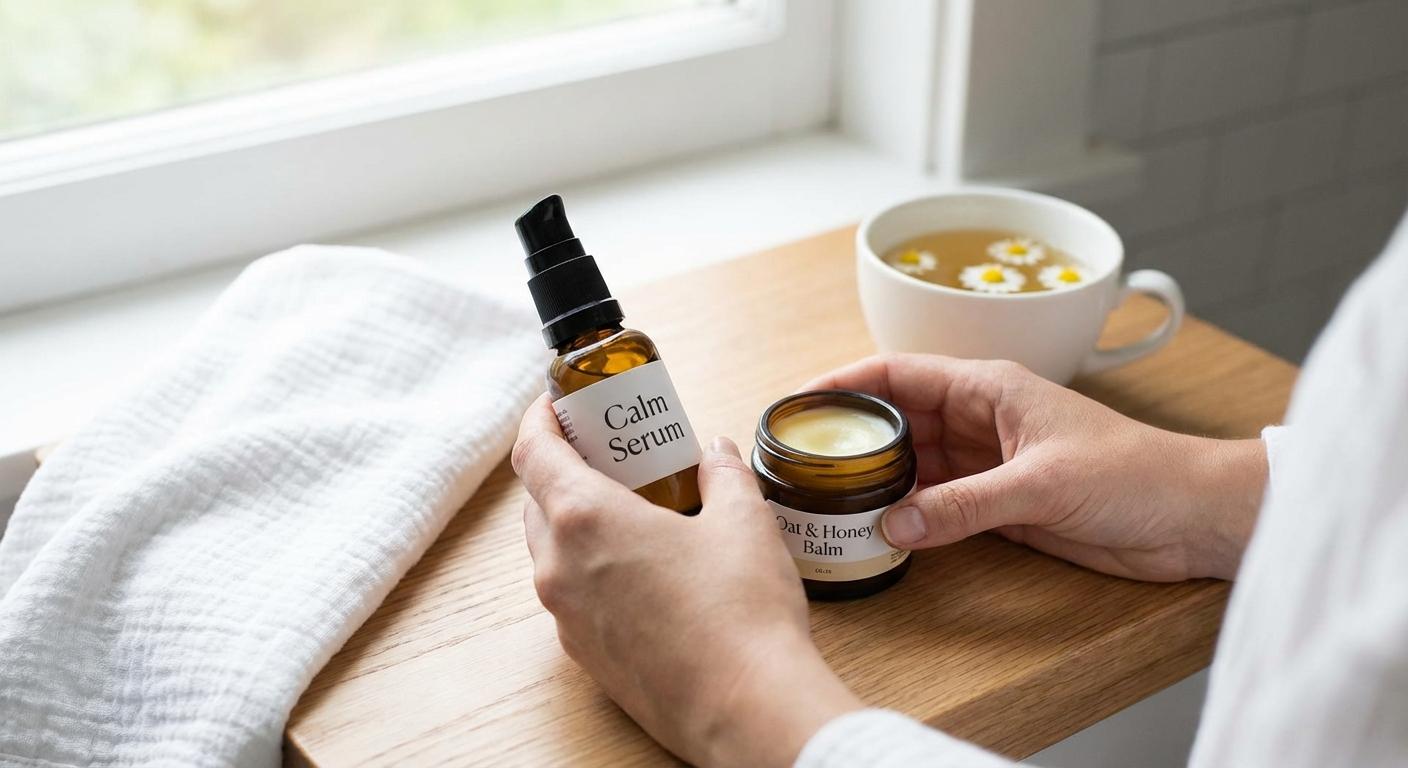
So your skin freaked out. Maybe you woke up with angry red patches, or that new serum turned your face into a burning, itchy mess. First things first: take a breath. I know it looks terrifying right now, but skin reactions happen to literally everyone, and yes, your skin will recover. This is your recovery game plan.
Stop Everything. Right Now.
I mean it. The moment you notice something is wrong, you need to hit pause on your entire routine. That fancy new toner you just bought? Set it aside. The vitamin C serum you have used for months? Taking a break too. Everything goes except two things: a gentle cleanser and a basic moisturizer.
I know this feels extreme, especially when you have built up a routine you love. But here is the thing: when your skin barrier is compromised, even products that normally work perfectly can make things worse. Your skin is essentially an open wound right now, and you need to treat it that way.
The only exceptions here are medications prescribed by a dermatologist. If you are on tretinoin or a prescription acne treatment, check with your derm before stopping. Everyone else? Strip it back completely.
Your Bare Bones Recovery Routine
For the next one to two weeks (minimum), your routine should look painfully simple:
- Morning: Rinse with cool water (or use a gentle cleanser if you feel oily), then apply a fragrance-free moisturizer. That is it.
- Evening: Wash with a gentle, non-foaming cleanser. Apply moisturizer. Maybe add a thin layer of healing ointment like Vaseline or Aquaphor to lock everything in.
The key word here is gentle. Look for cleansers labeled for sensitive skin, fragrance-free, and ideally with a short ingredient list. Cetaphil Gentle Skin Cleanser or La Roche-Posay Toleriane Hydrating Cleanser are solid options. For moisturizer, CeraVe Moisturizing Cream or Vanicream are dermatologist favorites because they are boring in the best way possible.
And yes, you still need sunscreen. A mineral sunscreen (zinc oxide or titanium dioxide) is usually gentler on irritated skin than chemical filters. Apply it after your moisturizer has had a few minutes to absorb.
The First 48 Hours Are Critical
Right after a reaction, your skin is in crisis mode. Here is what to do immediately:
Cool it down. If your skin is hot, red, or swollen, a cool (not cold) compress can help. Just wet a soft washcloth with cool water and hold it against your face for a few minutes. This reduces inflammation and feels incredibly soothing. Avoid ice directly on skin because that can cause more damage.
Take an antihistamine if needed. If your reaction involves significant swelling, hives, or intense itching, an over-the-counter antihistamine like Benadryl or Zyrtec can help. This is especially true if you suspect an allergic reaction rather than just irritation.
Do not pick, scratch, or peel. I know. The flaky skin is calling to you. The urge to scratch that itch is overwhelming. But touching your face right now will only make healing take longer and could lead to scarring or infection. Keep your hands away.
Know when to see a doctor. Most reactions will start improving within 48 to 72 hours with a stripped-back routine. But if you have difficulty breathing, severe swelling around your eyes or lips, widespread hives, or a reaction that keeps getting worse instead of better, get medical attention immediately. An ER visit is worth it if you are experiencing a true allergic reaction.
What the Healing Timeline Actually Looks Like
Everyone wants to know: how long until my skin looks normal again? Here is a realistic timeline, though your experience may vary depending on how severe the reaction was:
Days 1 to 3: This is often the worst of it. Redness, swelling, burning, or itching may peak before starting to calm down. Your skin might look worse before it looks better. This is normal. Keep the routine minimal and resist the urge to fix it with more products.
Days 4 to 7: Acute symptoms start fading. You might notice dryness, flaking, or peeling as your skin sheds the damaged layers. This is actually a good sign because it means your skin is regenerating. Keep moisturizing generously.
Weeks 2 to 3: Your skin barrier is rebuilding. Things should look more normal, but your skin is still vulnerable. This is when people often make the mistake of jumping back into their full routine too quickly. Do not do that.
Weeks 4 to 6: Full barrier recovery. Your skin has had time to truly heal, and you can start slowly reintroducing products. Even then, go one product at a time with at least a week between each new addition.
A dermatologist I follow on Instagram, @dermguru, often reminds followers that the skin barrier takes about 28 days to fully regenerate. Rushing this process is how people end up in a cycle of constant sensitivity.
Detective Work: Finding the Culprit
Once your skin has calmed down (usually after about a week), it is time to figure out what caused this mess. This is important because you want to avoid the ingredient in the future.
Think about what changed recently. Did you start a new product in the past few days or weeks? Sometimes reactions are not immediate, so consider anything introduced in the last month. New laundry detergent, a different pillowcase fabric, or even a change in water quality can also be triggers.
Look at the ingredient list. Common irritants include fragrance (often listed as parfum), essential oils, alcohol denat, witch hazel, and certain active ingredients like retinoids, vitamin C (especially at high concentrations), and chemical exfoliants like glycolic acid. INCIDecoder is a useful tool for analyzing ingredient lists.
Consider the combination effect. Sometimes it is not one product but the interaction between products that causes problems. Mixing retinol with AHAs, using too many actives at once, or applying products in the wrong order can all trigger irritation even when each product is fine on its own.
Patch test before going back. Once you have identified a suspect, you can confirm by patch testing when your skin has fully healed. Apply a small amount to your inner arm or behind your ear for a few days. If no reaction occurs there, try a small patch on your jawline before putting it on your whole face.
Keep a skincare journal if you are prone to reactions. It sounds tedious, but having a record of what you used and when makes detective work so much easier when something goes wrong.
Reintroducing Products the Smart Way
After a few weeks of your bare-bones routine, you might be itching (not literally, hopefully) to get back to your serums and treatments. Here is how to do it without triggering another reaction:
One product at a time. Add one product back to your routine and use it for at least seven days before adding anything else. This way, if a reaction happens, you know exactly what caused it.
Start with the gentlest products. Your hydrating toner or hyaluronic acid serum should come back before your retinol or exfoliating acids. Build up to the strong stuff slowly.
Use lower concentrations. If you were using a 1% retinol before the reaction, maybe start with a 0.3% formula. If your vitamin C was 20%, try 10%. You can always work your way back up.
Buffer strong actives. Apply your moisturizer first, then layer your active on top. This reduces the concentration that actually reaches your skin and makes irritation less likely.
Skip the product that caused the reaction. This seems obvious, but some people convince themselves they just need to try it differently. If a product hurt your skin, let it go. There are thousands of other options out there. The American Academy of Dermatology website has solid resources for finding suitable products for sensitive skin.
When Reactions Keep Happening
If you are constantly dealing with reactions, something deeper might be going on. Conditions like rosacea, eczema, or contact dermatitis can make your skin hyper-reactive to things that would not bother most people.
In this case, seeing a dermatologist is worth the investment. They can help identify underlying conditions, do proper allergy testing if needed, and create a routine that works specifically for your skin. It is frustrating to hear the advice to just see a doctor, but chronic sensitivity really does benefit from professional input.
Some people also find that their skin becomes temporarily more reactive during hormonal changes, high stress periods, or when their overall health is compromised. Taking care of yourself on a broader level (sleep, stress management, nutrition) can actually improve your skin resilience.
Building a Reaction-Resistant Routine Long Term
Once you are fully healed, you can take steps to prevent future disasters:
- Always patch test new products. I know it is annoying. I know you are excited about that new serum. But two days of patch testing is better than two weeks of healing.
- Introduce one new product at a time. Wait at least a week between new additions, longer for actives.
- Less is usually more. A three-step routine used consistently beats a ten-step routine that overwhelms your skin.
- Pay attention to your skin signals. Mild tingling that goes away is usually fine. Burning, stinging that persists, or immediate redness means stop.
- Keep your barrier strong. Regular use of a good moisturizer, sunscreen, and not over-exfoliating helps your skin stay resilient.
Your skin has an incredible ability to heal and adapt. One bad reaction does not doom you to a lifetime of sensitivity. Give yourself grace during the recovery process, keep things simple, and trust that better days are coming. You have got this.