
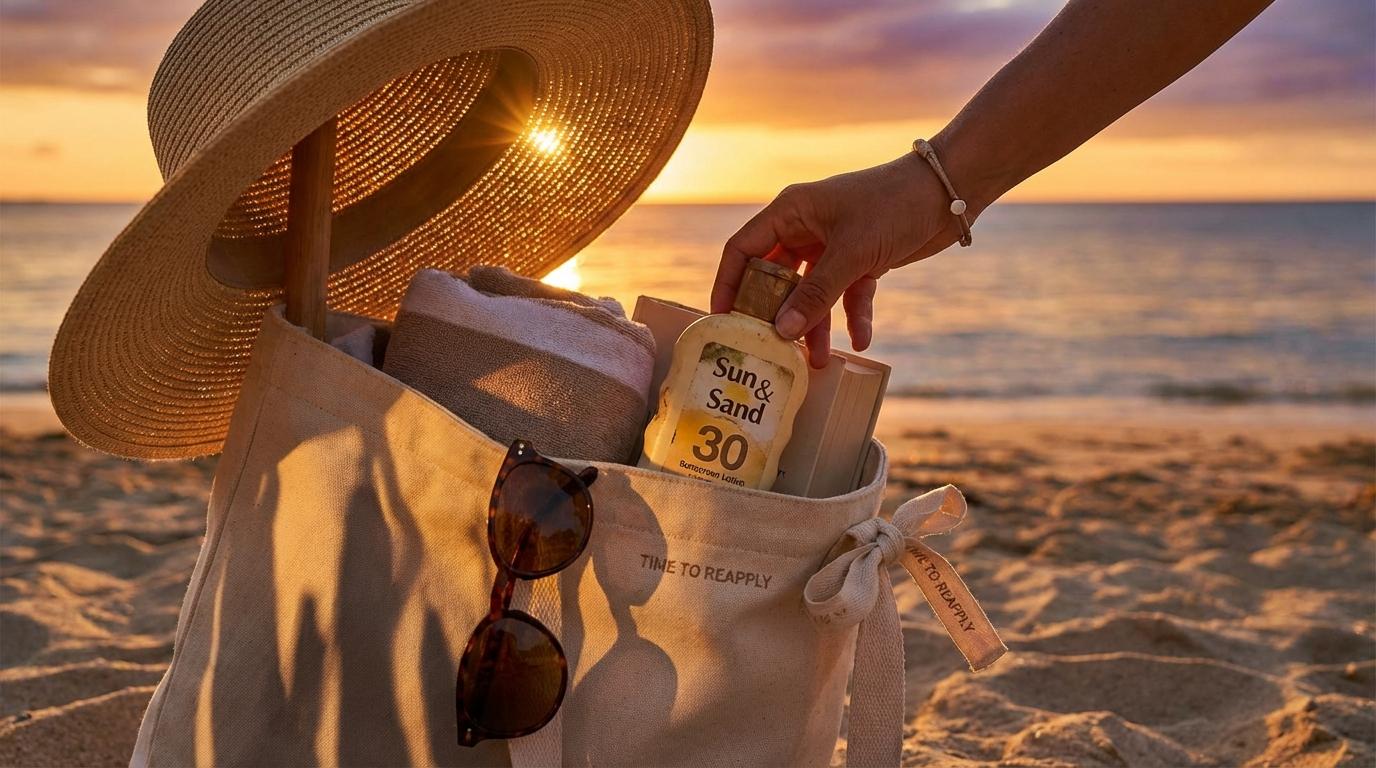
You applied sunscreen this morning, so you’re protected all day. That’s the assumption most of us operate under, but with avobenzone-based sunscreens, it’s not that simple. This UVA filter starts degrading the moment it hits sunlight, which means your protection isn’t nearly as stable as you might think.
Avobenzone is one of the most effective UVA absorbers available in the US market, which makes this degradation problem genuinely annoying. The good news is that formulation science has come a long way in addressing this issue. Let me explain what’s happening and what you can actually do about it.
The Photostability Problem
When avobenzone absorbs UVA radiation, it undergoes a structural change. The molecule shifts into a different configuration, and in this altered state, it can break down into byproducts that don’t filter UV at all. This process is called photodegradation.
Studies have shown that pure avobenzone can lose 50-90% of its UV-filtering capacity after just one hour of sun exposure. Without stabilizing agents, it essentially self-destructs while doing its job. You’re left with a thin layer of ineffective product on your skin while you’re still out in the sun thinking you’re protected.
The irony isn’t lost on anyone: the very thing avobenzone is supposed to protect against is what causes it to fail. It’s like a raincoat that dissolves when it gets wet. Fortunately, formulators figured this out decades ago and developed solutions.
How Stabilizers Save the Day
Modern sunscreen formulations don’t use naked avobenzone. They include stabilizing ingredients that prevent or significantly slow the degradation process. Here’s how the main approaches work:
Octocrylene: This is the most common stabilizer paired with avobenzone. Octocrylene absorbs the energy from avobenzone’s excited state before it can degrade. It’s also a mild UV filter itself, offering some additional protection. Most drugstore sunscreens containing avobenzone also contain octocrylene for this reason.
Tinosorb S (bis-ethylhexyloxyphenol methoxyphenyl triazine): This is a photostable UVA/UVB filter that also stabilizes avobenzone. It’s not approved in the US but is commonly used in European and Asian sunscreens. If you’ve noticed imported sunscreens feeling more elegant and stable, this is often why.
Mexoryl SX and XL: La Roche-Posay’s patented UV filters are extremely photostable and help stabilize avobenzone in formulations where they’re used together. Mexoryl-containing sunscreens are known for maintaining protection longer.
Other photostabilizers: Ingredients like diethylhexyl syringylidenemalonate and various film-forming polymers can also help lock avobenzone into a more stable configuration on the skin.
When shopping for sunscreen, seeing avobenzone paired with octocrylene or other known stabilizers is a good sign that the formula has been designed with photostability in mind.
What Destabilizes Avobenzone Further
Even stabilized avobenzone can break down faster under certain conditions:
Mineral filter combinations: Avobenzone can react poorly with certain mineral sunscreen ingredients. Zinc oxide is generally fine, but uncoated titanium dioxide can actually accelerate avobenzone’s breakdown. Better formulations use coated titanium dioxide to prevent this interaction.
Iron oxides: Some tinted sunscreens add iron oxides for color, and certain forms can destabilize avobenzone. Well-formulated tinted sunscreens account for this.
Heat and humidity: While UV light is the main culprit, extreme heat can also accelerate degradation. This matters for storage as well as application. Don’t leave your sunscreen in a hot car.
The takeaway? Formulation matters enormously. Two sunscreens with identical active ingredients can have vastly different real-world protection based on how those ingredients are combined and stabilized.
Why Reapplication Really Matters
Even with stabilizers, no avobenzone sunscreen maintains full protection indefinitely. This is why the two-hour reapplication guideline exists, and why it’s genuinely important for chemical sunscreens in particular.
That sunscreen you applied before leaving the house in the morning is not providing the same level of protection by lunchtime if you’ve been in the sun. The degradation happens gradually, so you don’t suddenly become unprotected, but the decline is real.
Reapplication every two hours during continuous sun exposure isn’t just a suggestion on the bottle for liability reasons. It’s based on how these products actually perform in real conditions. After swimming or sweating, you need to reapply regardless of time elapsed.
If you’re spending a day at the beach or doing outdoor activities, you should plan to go through multiple applications. A single morning application, even of an excellent sunscreen, is not enough protection for a full day outdoors.
Alternatives to Consider
If avobenzone’s stability issues concern you, there are other options:
Mineral sunscreens: Zinc oxide and titanium dioxide are photostable. They don’t degrade in sunlight, so they maintain their protection until they’re physically removed from your skin. The tradeoff is often texture and potential white cast, though formulations have improved significantly.
Newer chemical filters: Sunscreens from European and Asian markets often use newer UVA filters like Tinosorb S, Tinosorb M, and Uvinul A Plus that are inherently more photostable than avobenzone. These aren’t FDA-approved for the US market yet, but you can find them in imported products.
Combination approaches: Some formulations use both mineral and chemical filters together, reducing reliance on any single ingredient and potentially offering more stable protection overall.
Reading Your Sunscreen Label
When evaluating an avobenzone sunscreen, look at the full active ingredient list:
Avobenzone alone = less stable. Avobenzone + octocrylene = standard stabilization. Avobenzone + multiple stabilizers = better. Avobenzone + uncoated titanium dioxide = potentially problematic.
The inactive ingredients matter too. Antioxidants like vitamin E can help protect the formula from degradation. Quality packaging (opaque bottles, pumps instead of jars) keeps the product stable before you even apply it.
Practical Takeaways
Avobenzone is still a solid UVA filter choice when properly formulated. Here’s how to use it effectively:
Choose formulations that include stabilizers like octocrylene. Reapply every two hours during sun exposure, without exception. Store your sunscreen in a cool, dark place, not your car’s glove compartment. Use enough product each time since thin application provides thin protection. Consider mineral options for extended outdoor activities where reapplication might be inconvenient.
Understanding how your sunscreen actually works helps you use it more effectively. Avobenzone’s degradation issue doesn’t make it a bad ingredient. It just means you need to treat it accordingly. Apply generously, reapply on schedule, and your sunscreen will do what it’s supposed to do.
The SPF number on the bottle represents protection under testing conditions, which include fresh application of adequate amounts. Real-world protection depends on how you actually use the product. Now you know what that means for avobenzone specifically.