
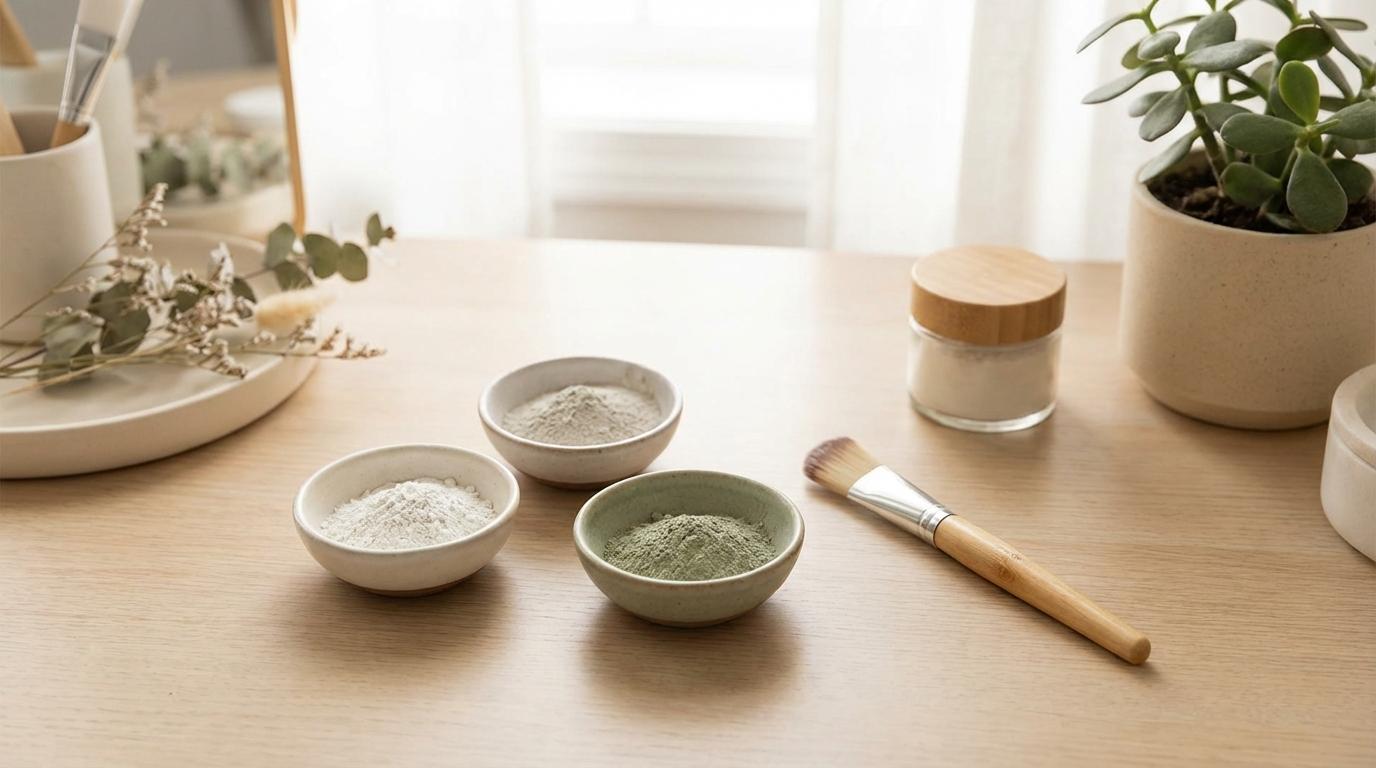
There’s something almost ritualistic about the way a clay mask feels against your skin, that cooling weight settling into your pores like a promise. But walk down any skincare aisle and you’ll find half a dozen different clays staring back at you, each claiming to be exactly what your face needs. Kaolin, bentonite, French green, and more. The differences between them aren’t just marketing speak. Each clay absorbs oil differently, works better for certain skin types, and deserves its own masking schedule. Let’s break down what actually sets them apart so you can choose the one that belongs in your bathroom cabinet.
What Makes Clay Work on Skin
Before we compare specific clays, it helps to understand why any clay works at all. Clays are naturally occurring minerals that form over millions of years from volcanic ash and sediment. Their magic lies in their molecular structure, which creates a negative electrical charge. This charge attracts positively charged particles like dirt, oil, and impurities, essentially pulling them out of your pores.
Think of clay as a very gentle magnet for all the stuff you don’t want sitting on your face. The key difference between clays comes down to how strong that “magnet” is and how much moisture they pull along with the impurities. Some clays are aggressive absorbers that can leave your skin feeling stripped. Others take a softer approach, cleaning without disrupting your skin barrier.
Kaolin Clay: The Gentle One
Kaolin clay takes its name from Kao-ling, a mountain in China where it was first discovered centuries ago. Of all the clays used in skincare, kaolin is the mildest. It absorbs roughly 60% of its mass in water, which sounds like a lot until you compare it to other clays. This moderate absorption makes kaolin remarkably gentle on skin that’s easily irritated.
The pH of kaolin clay hovers around 5.5, which happens to match your skin’s natural pH. This means kaolin won’t disrupt your acid mantle the way more alkaline clays can. For anyone with sensitive or redness-prone skin, this matters enormously.
Best suited for: Dry skin, sensitive skin, normal skin that doesn’t produce much oil, or anyone new to clay masks.
What kaolin does well:
- Removes surface impurities without over-drying
- Maintains skin’s moisture balance
- Works consistently without causing flare-ups
- Provides gentle exfoliation over time
You’ll often see kaolin listed as white kaolin or pink kaolin (which contains small amounts of iron oxide). Pink kaolin is even gentler than white, making it ideal for the most reactive skin types.
Bentonite Clay: The Deep Cleaner
Bentonite clay is formed from volcanic ash, and it behaves like it. This clay means business. Where kaolin absorbs 60% of its mass in water, bentonite can absorb up to 700% of its mass. That’s not a typo. Bentonite is incredibly powerful at drawing out oil, toxins, and impurities from deep within your pores.
This aggressive absorption makes bentonite the go-to clay for anyone dealing with consistently oily skin or stubborn blackheads. The clay creates a tightening sensation as it dries, which many people love as a sign that it’s working. Just know that this intensity comes with trade-offs.
Bentonite has a pH around 8.5, which is notably more alkaline than your skin prefers. Using it too frequently can disrupt your skin barrier and actually trigger more oil production as your skin tries to compensate. The experts at Skin Pharm note that bentonite’s alkaline nature can cause irritation for sensitive skin types.
Best suited for: Oily skin, very oily skin, combination skin (on oily zones only), acne-prone skin that produces excess sebum.
What bentonite does well:
- Deep cleans clogged pores
- Controls excess oil production
- Draws out impurities other products miss
- Provides antibacterial and anti-inflammatory benefits
If you have dry or sensitive skin, bentonite will likely be too harsh for regular use. Even oily skin types benefit from limiting bentonite masks to once weekly.
French Green Clay: The Balanced Option
French green clay, also called Illite clay, gets its distinctive color from decomposed plant matter and iron oxides in the mineral deposits of France where it’s sourced. This clay sits comfortably between kaolin’s gentleness and bentonite’s intensity, making it versatile enough for most skin types.
According to Hello Glow’s clay guide, French green clay balances oil production while still being gentle enough for regular use. It absorbs excess sebum without stripping skin completely dry, and its mineral content actually nourishes while it cleanses.
The mineral profile of French green clay includes silica, magnesium, calcium, and potassium. These minerals support skin health rather than just cleaning it. Many people notice that French green clay leaves their skin feeling toned and slightly firmer, almost like a very mild tightening treatment.
Best suited for: Combination skin, oily skin that’s also sensitive, normal to oily skin, anyone who found bentonite too harsh.
What French green clay does well:
- Balances oil without over-drying
- Delivers minerals that support skin health
- Tightens pores and improves skin texture
- Works for detoxifying without irritation
French green clay bridges the gap nicely. If you want more cleansing power than kaolin provides but find bentonite too aggressive, this is your clay.
Quick Comparison at a Glance
Choosing between these three clays becomes easier when you see them side by side:
Absorbency: Kaolin is gentle (absorbs 60% of its mass), French green is moderate, and bentonite is intense (absorbs up to 700% of its mass).
pH level: Kaolin matches skin at roughly 5.5. French green clay falls in the moderate range. Bentonite runs alkaline at about 8.5.
Best skin type match: Kaolin works for dry and sensitive skin. French green suits combination and moderately oily skin. Bentonite is designed for very oily and acne-prone skin.
Drying potential: Kaolin rarely over-dries. French green may dry slightly on very dry skin. Bentonite can definitely over-dry if used too often.
How Often Should You Mask
The frequency of your clay masking matters as much as which clay you choose. More isn’t better here. Clay masks work by absorbing, and absorbing too frequently can compromise your skin’s protective barrier.
For kaolin clay, you can generally mask one to three times weekly without issues. Its gentle nature makes it forgiving even if you go a little overboard. If you’re using kaolin as part of a minimal skincare approach, twice weekly is a solid rhythm.
French green clay works well at one to two times weekly for most skin types. Combination skin might use it weekly on oily zones and skip the drier areas altogether. Listen to how your skin responds and adjust accordingly.
Bentonite clay should generally be limited to once weekly at most. Some dermatologists, including those consulted by Sand and Sky, suggest even less frequently for anyone with reactive skin. If you notice increased oiliness or tightness after using bentonite, you’re probably masking too often.
Application Tips for Better Results
How you apply and remove clay masks affects your results almost as much as which clay you choose. A few techniques make a real difference.
Always apply clay masks to damp skin. The moisture helps the clay spread evenly and prevents it from drying out too quickly. Dry application can lead to patchy coverage and uneven absorption.
Don’t let the mask dry completely, especially with bentonite. Once a clay mask starts cracking and pulling at your skin, it’s working against you rather than for you. The Mountain Rose Herbs guide recommends removing the mask while it’s still slightly tacky. This prevents over-drying while still allowing the clay to do its work.
Use lukewarm water for removal. Hot water can irritate freshly cleansed skin, and cold water won’t dissolve the clay as effectively. Take your time and be gentle. Scrubbing at dried clay can cause micro-tears in your skin.
Always follow with a hydrating product. Even gentle kaolin benefits from a layer of moisture afterward. Your skin just released a lot of oil and impurities, and it needs something to replace that lost hydration.
Mixing Clays for Custom Masks
Once you understand how each clay works, you can start mixing them for customized results. Many DIY skincare enthusiasts blend kaolin and bentonite to get deep cleaning without the harshness of pure bentonite.
A good starting ratio is 75% kaolin to 25% bentonite. This gives you more absorbing power than kaolin alone while keeping the formula gentle enough for most skin types. You can adjust based on how your skin responds.
French green clay mixes well with kaolin too. Try a 50/50 blend for combination skin that needs balance without intensity. The minerals in French green clay complement kaolin’s gentleness nicely.
Whatever blend you create, always patch test first. Even natural ingredients can cause reactions, and your skin’s tolerance may vary from day to day depending on your cycle, stress levels, and other factors.
Choosing Your Clay
Your ideal clay depends on your skin type and what problems you’re trying to address. Start with these guidelines.
If your skin runs dry, sticks to makeup by mid-day, or reacts to most products, kaolin is your safest starting point. It cleans without stripping and won’t make dryness worse.
If you’re oily in some areas but dry or normal in others, French green clay offers the best of both worlds. Use it as a full face mask or spot treat the oily zones only.
If your skin produces oil constantly, your pores feel perpetually clogged, or you’re dealing with hormonal breakouts tied to excess sebum, bentonite’s power makes sense. Just respect its intensity and don’t overdo it.
Seasonal changes matter too. Your skin might crave gentle kaolin during dry winter months but tolerate French green or even occasional bentonite during humid summers when oil production increases. There’s no rule saying you can only own one type of clay.
The best approach is starting gentle and working up if needed. You can always add more intensity. It’s harder to calm down irritated, over-stripped skin than to simply try a stronger clay next time.