
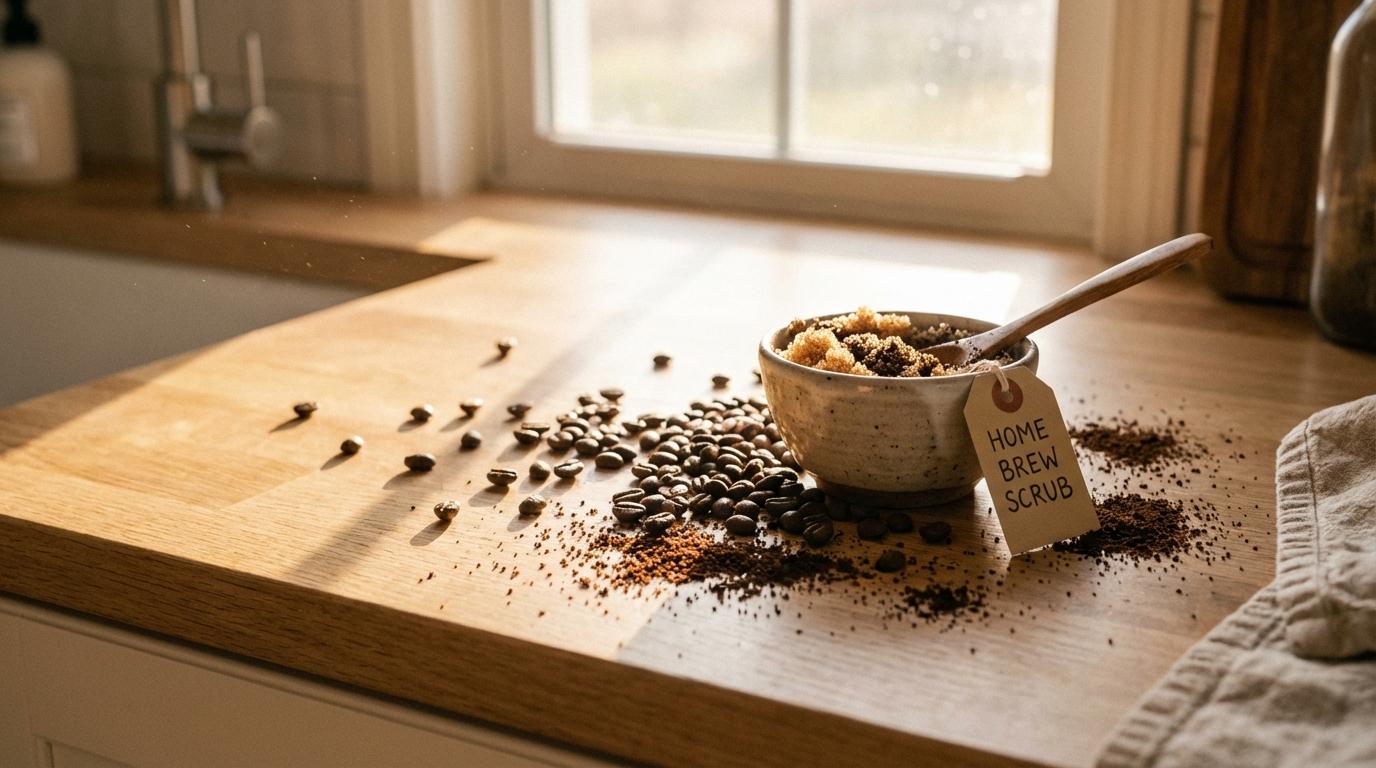
It smells like a warm morning before anything else has happened, that rich, earthy scent of fresh coffee grounds sitting in a bowl on your bathroom counter. There is something deeply comforting about the idea of turning your leftover grounds into a skincare ritual, and the good news is that coffee scrubs can genuinely do something for your skin. The less good news is that they can also do some damage if you are not thoughtful about how you use them.
Coffee scrubs have been a bathroom staple for years, and for good reason. The grounds contain caffeine, which has real, measurable effects on skin when applied topically. Caffeine is a vasoconstrictor, meaning it temporarily tightens blood vessels near the surface of the skin. This is why you will find it in so many eye creams and cellulite products. It can reduce puffiness, calm redness, and give skin a temporarily smoother, firmer appearance. When you combine that with the physical exfoliation of the grounds themselves, you get something that feels productive and looks like it is working right away.
But before you dump yesterday’s French press onto your face, there is a significant distinction to make between using a coffee scrub on your body and using one on your face. Your body skin is thicker, more resilient, and can handle a coarser texture. Your facial skin, especially around your cheeks and under your eyes, is thinner and much more prone to irritation. A scrub that feels fantastic on your legs might leave your face red, raw, and unhappy.
What Caffeine Actually Does for Your Skin
The caffeine in coffee grounds is the real star of this whole practice. When applied topically, caffeine can penetrate the skin barrier and reach the deeper layers where it has an antioxidant effect. It helps neutralize free radicals, those unstable molecules that contribute to premature aging from sun exposure and pollution. Studies have shown that caffeine can even offer a modest amount of UV protection, though it is absolutely not a replacement for sunscreen.
Caffeine also stimulates blood circulation in the area where it is applied. Better circulation means more oxygen and nutrients reaching your skin cells, which can contribute to a healthier, more even-toned appearance over time. This is a temporary effect with each use, but consistent application can support your skin’s overall vitality. Think of it as a gentle nudge rather than a dramatic transformation.
Grind Size Matters More Than You Think
This is where most homemade coffee scrubs go wrong. The grind size of your coffee determines whether you are gently buffing away dead skin cells or creating tiny tears in your skin’s surface. Used coffee grounds from a drip machine tend to be medium-fine, which is manageable for body use but still potentially too rough for the face. Espresso grounds are finer and gentler, making them a better option if you insist on using coffee on your face.
The ideal approach is to mix your grounds with a carrier that softens the scrubbing action. Coconut oil, olive oil, or even plain yogurt can act as a buffer between the grounds and your skin, reducing friction while adding their own moisturizing benefits. A ratio of roughly equal parts coffee grounds to carrier oil creates a paste that glides rather than scratches. If you are making a body scrub, you can afford to use a bit more coffee relative to oil. For your face, lean heavier on the oil and lighter on the grounds.
You can also let used grounds sit in water for a day, which softens them further and extracts some of the caffeine into the liquid. Strain the grounds and use the softer, waterlogged version for a gentler scrub. The caffeinated water itself makes a decent toner, though it will not replace your regular products. It is a nice little bonus from the same batch of grounds.
How Often Should You Use a Coffee Scrub
Less than you probably want to. For your body, two to three times per week is a reasonable frequency. This gives your skin time to recover between sessions and prevents over-exfoliation, which can strip away the protective oils your skin needs. If you notice your skin feeling tight, dry, or sensitive after scrubbing, that is a clear signal to cut back. For facial use, once a week at most, and honestly, there are gentler ways to exfoliate your face that carry less risk of irritation.
Pay attention to how your skin responds in the hours after scrubbing, not just immediately after. Sometimes the irritation from over-exfoliation shows up later as small bumps, increased oiliness (your skin overcompensating for lost moisture), or a stinging sensation when you apply your regular products. These are signs you have gone too far, and your skin needs a break.
The Simple Recipe That Works
You do not need a complicated recipe to get the benefits. The simplest effective coffee scrub is just used coffee grounds mixed with a carrier oil. Here is what works well:
- Half a cup of used coffee grounds (let them cool completely first)
- A quarter cup of coconut oil, sweet almond oil, or olive oil
- A teaspoon of honey if you want additional antibacterial and hydrating properties
- A few drops of vanilla extract if you enjoy the scent combination
Mix everything together until it forms a thick paste. Apply it in gentle circular motions, spending no more than 30 to 60 seconds on any one area. Rinse thoroughly with warm water. The oil will leave a slight film on your skin, which is actually beneficial, acting as a light moisturizer. If it feels too greasy, a quick pat with a towel takes care of the excess without removing the hydrating layer entirely. That is it. No need for complicated additions or specialty ingredients. Simplicity is the whole point, and similar DIY scrub principles apply whether you are working with coffee or sugar.
Who Should Skip Coffee Scrubs Entirely
Not everyone’s skin will appreciate this particular ritual, and that is perfectly fine. If you have active acne, especially inflamed or cystic breakouts, physical scrubs of any kind can worsen the situation by spreading bacteria and increasing inflammation. The pressure and friction involved in scrubbing can rupture pimples beneath the surface, leading to more breakouts and potential scarring. Stick with chemical exfoliants like salicylic acid or gentle AHAs until your skin calms down.
People with rosacea, eczema, or psoriasis should also approach coffee scrubs with caution, or skip them altogether. These conditions involve a compromised skin barrier, and physical exfoliation can trigger flare-ups. The caffeine itself is not the problem, it is the mechanical scrubbing action that poses the risk. If you have sensitive skin but still want the caffeine benefits, look into a formulated caffeine serum or eye cream instead. You get the active ingredient without the abrasion.
Sunburned or freshly waxed skin is another obvious no. Your skin is already compromised in those situations, and adding physical exfoliation on top of existing damage is a recipe for prolonged irritation and healing time. Wait until your skin has fully recovered before reaching for any scrub.
Storing Your Scrub Safely
One thing that often gets overlooked in DIY skincare is shelf life. Coffee grounds are organic matter, and organic matter grows mold. If you make a batch of coffee scrub with oil, it can last about a week in the refrigerator in a sealed container. Beyond that, you risk introducing bacteria and fungus to your skin, which defeats the entire purpose of a self-care routine.
The safest approach is to make small batches each time, using only what you need in one session. This also means your grounds are fresh and still contain the most caffeine. Grounds that have been sitting around lose their potency over time, both in terms of caffeine content and their physical texture. Fresh grounds are firmer and more effective as an exfoliant, while old grounds become mushy and do less actual work on the skin’s surface.
If you want a coffee scrub that keeps longer, you can use fresh, unused grounds instead of spent ones. Unused grounds have not been leached of their caffeine and oils by hot water, so they retain more of their beneficial properties. They are also firmer, which means you need to be gentler in your application to avoid overdoing the exfoliation. Mix them with plenty of oil and use a lighter touch than you would with softer used grounds.
Keeping It in Perspective
A coffee scrub is a lovely addition to a simple routine, not a cornerstone of one. It will not fix major skin concerns, clear persistent acne, or reverse years of sun damage. What it can do is give you a pleasant, sensory experience that happens to provide some genuine skin benefits along the way, smoother texture, temporary firmness, improved circulation, and a healthy-looking glow that lasts a few hours.
The best version of skincare is the one that feels sustainable and enjoyable without requiring perfection or complication. If mixing up a coffee scrub on a Sunday morning brings you a few minutes of calm and leaves your skin feeling soft, that is enough. That is actually more than enough. Just keep the grind gentle, the frequency reasonable, and listen when your skin tells you it has had enough.