
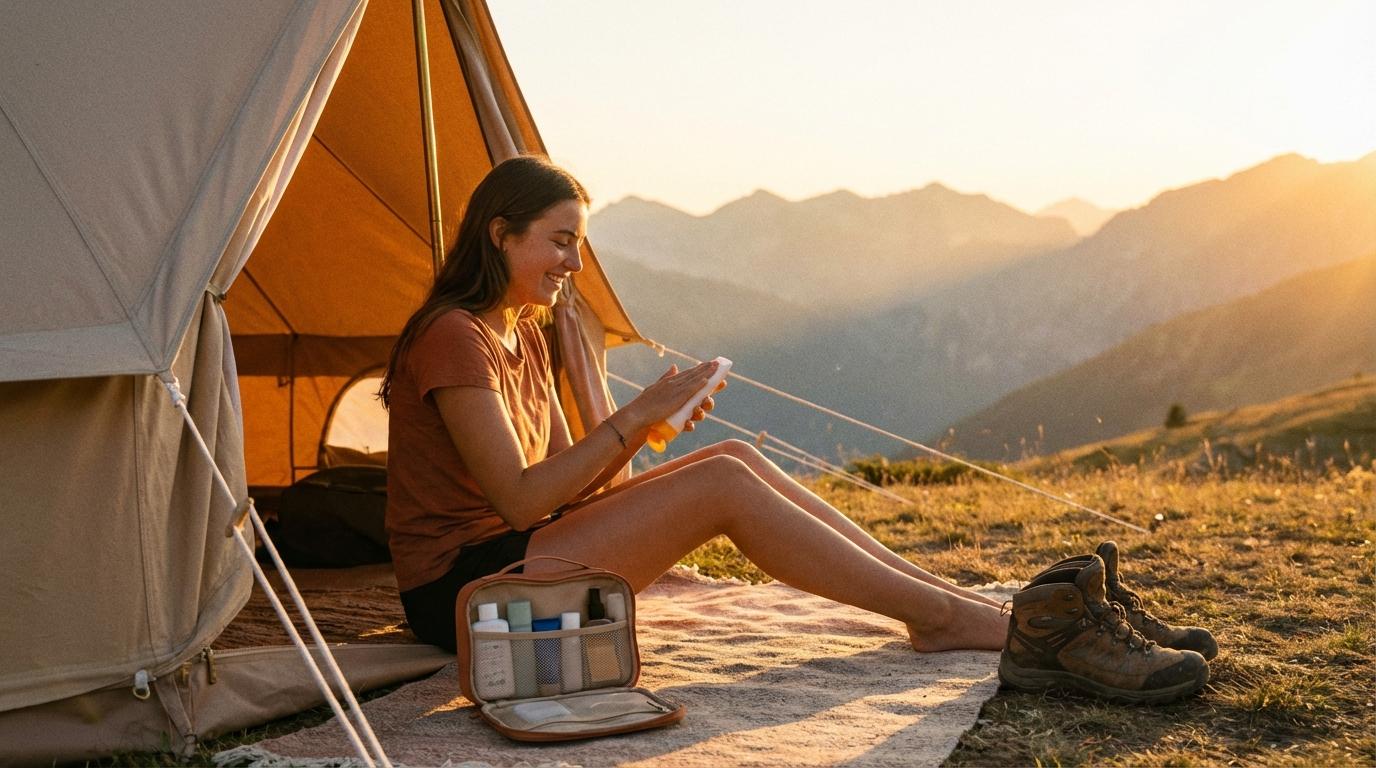
I spent five days in the backcountry last summer with nothing but wipes, sunscreen, and regret. My skin was destroyed by day three, and I swore I would figure out a better system before the next trip. Turns out, you do not need running water or your entire bathroom cabinet to maintain decent skin outdoors. You just need to be strategic about what you bring and when you use it.
Camping skincare is different from travel skincare because you genuinely might not have access to water for washing. You might be dusty, sweaty, and dealing with extreme sun exposure. This is not about looking cute around the campfire; it is about not coming home with a face full of breakouts, sunburn, and dehydration damage.
Waterless Cleansing Options That Actually Work
When you cannot wash your face properly, you need alternatives that remove sunscreen, sweat, and grime without requiring a rinse. Here is what I have tested:
Micellar water is my top pick for camping. Bring it in a small squeeze bottle and use it with cotton pads or rounds. It does not need to be rinsed off, it removes most dirt and sunscreen effectively, and it does not leave a heavy residue. The downside is you need to pack out those used cotton rounds, which is not ideal for leave-no-trace camping. A reusable makeup eraser cloth is a more sustainable option if you can air dry it between uses.
Cleansing balms in stick form are another option. They melt on contact with skin, break down sunscreen and oil, and can be wiped off with a damp cloth rather than fully rinsed. The solid format also means no spillage risk in your pack.
Face wipes are controversial in skincare circles, and I get it. They are not great for regular use because they can be irritating and they leave residue. But for camping? Sometimes they are the only practical option. Look for fragrance-free versions and do not scrub. Press and hold instead of wiping back and forth. And again, pack out your trash.
What I do not recommend: skipping cleansing entirely. I tried that on my disaster camping trip, figuring my skin would be fine for a few days. The combination of sweat, sunscreen buildup, and dirt led to the worst congestion breakout I have had in years. Even imperfect cleansing beats no cleansing when you are in the elements.
Your Minimal Pack List
Weight and space matter when backpacking. Even car camping has limits. Here is my stripped-down kit:
- Micellar water in a 2-3 oz travel bottle
- Cotton rounds or a reusable cloth (bring enough for one AM and one PM use per day)
- Lightweight moisturizer with SPF for daytime (this is your two-in-one situation)
- Heavier occlusive for nighttime (CeraVe Healing Ointment in a tiny jar or even just basic Vaseline)
- Separate high SPF sunscreen for reapplication throughout the day
- Lip balm with SPF
That is it. I leave behind serums, toners, multiple moisturizers, and anything with active ingredients that might make my skin more sensitive to sun. A camping trip is not the time to maintain your retinol schedule.
For trips longer than three days, consider bringing a small multi-use product that can work as face moisturizer, body lotion, and hair tamer. Something like pure jojoba oil or a basic healing balm pulls triple duty without adding much to your pack.
Sun Protection Is Not Optional
I cannot stress this enough: sun exposure while camping is intense. You are outside all day. You might be at higher elevation where UV is stronger. There is often no shade. You are sweating, so products wear off faster.
Bring more sunscreen than you think you need. My rule is one ounce per person per day for face reapplication, plus whatever you need for body. Sounds like a lot, and it is, but sunburn on day two of a five-day trip will ruin everything.
Choose a mineral sunscreen if you are swimming in natural water sources. Chemical sunscreens can damage aquatic ecosystems. Yes, this matters even if it is “just” a lake or stream.
Wear a hat. Wear long sleeves if you can stand it. Seek shade during peak hours. Sunscreen is your backup, not your primary defense when you are outdoors for extended periods.
For your lips specifically, reapply SPF lip balm constantly. Your lips cannot produce melanin and will burn faster than the rest of your face. Cracked, blistered lips from sun exposure are common camping injuries that people do not talk about enough.
Managing Common Camping Skin Issues
Even with good practices, camping throws some curveballs at your skin.
Sweat acne: The combination of sweat, heat, and not being able to properly cleanse can trigger breakouts, especially if you are prone to them. Keep a few salicylic acid pads in a small ziplock for use after particularly sweaty days. Just one in the evening can help keep pores clear without adding much weight.
Chapped, windburned skin: If you are camping in windy or cold conditions, your moisture barrier takes a beating. That heavy occlusive I mentioned for nighttime is crucial here. A layer of Vaseline or Aquaphor before bed creates a physical barrier that helps skin recover overnight.
Bug bite irritation: Not technically skincare, but if you scratch at bites on your face, you risk infection and scarring. Bring a tiny tube of hydrocortisone cream for itch relief, and try to avoid scratching even when it is driving you crazy.
Dehydration: You might be so focused on physical hydration (drinking water) that you forget your skin is also losing moisture to the elements. If your skin feels tight and looks dull by mid-trip, add extra moisturizer at night. You can also drink more water; internal hydration does help your skin to some degree.
Post-Trip Skin Recovery
Even if you do everything right while camping, your skin will probably need some extra attention when you get home. Here is my recovery routine:
Day one home: Gentle double cleanse to fully remove any residue from your camping cleansing routine. Oil cleanser first to break down sunscreen buildup, then a hydrating cleanser. Skip actives. Use the richest moisturizer you have.
Days two through three: Continue gentle cleansing. Add a hydrating mask if your skin is particularly parched. Still avoid harsh actives; your skin has been through enough.
Day four onward: Slowly reintroduce your normal routine. If you had any sun damage, focus on antioxidants like vitamin C. If you broke out, you can start using your usual acne treatments again.
The temptation is to immediately go ham with exfoliating acids and treatments when you get home because your skin feels rough and congested. Resist this. Your skin barrier is compromised from sun exposure and environmental stress. Give it a few days of gentle care before bringing out the big guns.
Car Camping vs Backpacking
If you are car camping with access to coolers and do not have to carry everything on your back, you have more flexibility. You can bring larger bottles, include extras like hydrating mists, and even pack a more complete routine.
Backpacking requires ruthless minimalism. Every ounce counts when you are carrying it on your shoulders for miles. In this case, absolutely pare down to essentials only. If something is not sunscreen, cleansing, or moisturizing, it probably does not make the cut.
For extended backcountry trips (a week or more), consider repackaging everything into the smallest possible containers. Those little contact lens cases are perfect for holding enough moisturizer or occlusive for a trip. Decant sunscreen into flexible pouches. Every gram matters.
Real Talk
Your skin will not be perfect while camping. That is okay. You are trading your bathroom routine for mountains, lakes, stars, and fresh air. A few days of simplified skincare will not undo all your progress, and your skin will bounce back quickly once you return to your normal life.
The goal is damage prevention, not perfection. Protect from sun, cleanse enough to prevent major breakouts, and moisturize so you do not come home with a destroyed moisture barrier. Everything else is extra.
I have done week-long trips with just sunscreen and Aquaphor and survived fine. I have also done trips with my optimized minimal kit and come home with skin that barely looked like it had been roughing it. Both approaches are valid depending on how much weight you can carry and how much you care about maintaining your skin.
Pack what you will actually use, protect yourself from the sun, and enjoy being outdoors. Your skin can handle a few days of adventure.