
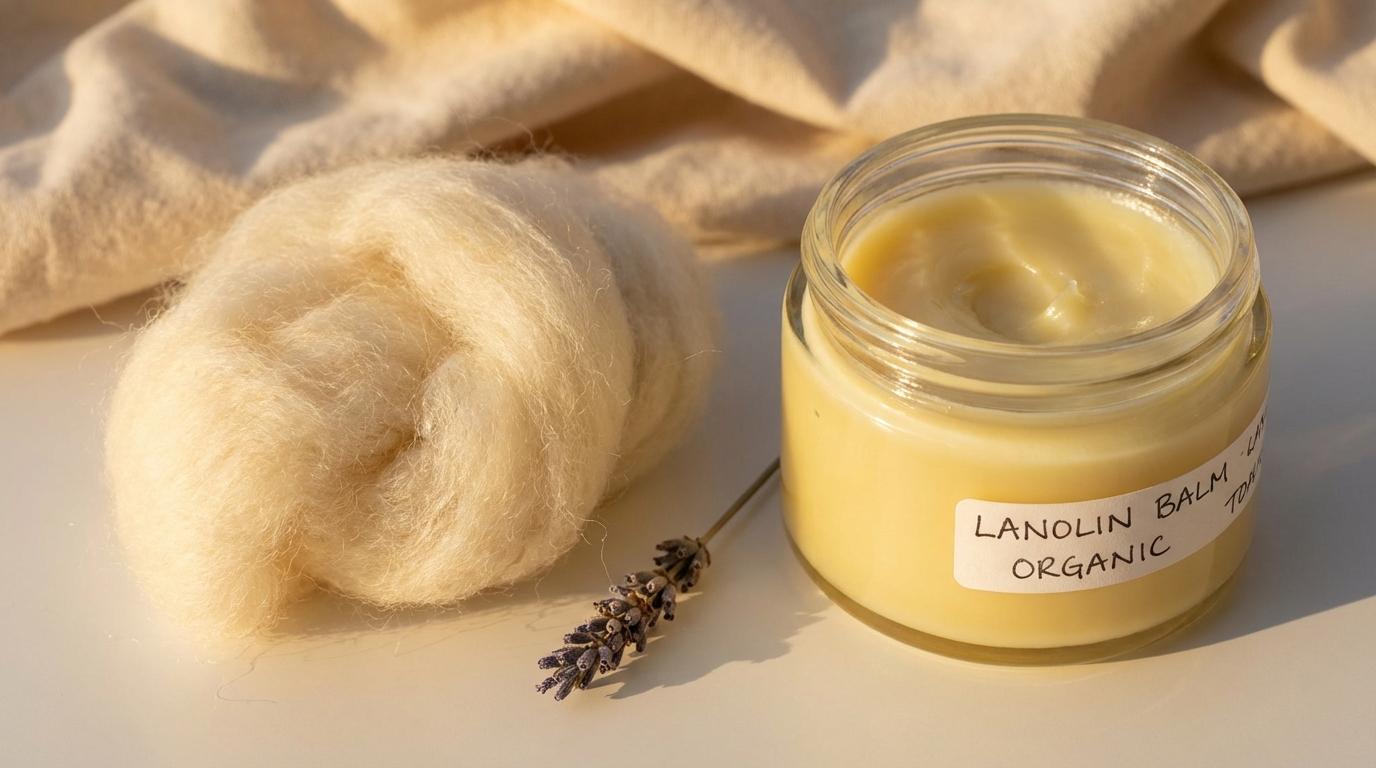
Lanolin is universally praised as nature’s miracle moisturizer. Except it’s also one of the most common causes of contact dermatitis in skincare products.
That’s the annoying reality of this ingredient. It’s genuinely incredible for dry, cracked skin. It’s also a legitimate allergen that dermatologists screen for regularly. Both things are true.
What Lanolin Actually Is
Lanolin is a waxy substance secreted by sheep’s sebaceous glands. It coats their wool, protecting it from weather and water damage. Think of it as the sheep’s own built-in conditioning treatment.
When wool is processed, this greasy coating gets washed off and refined. The result is lanolin, which ranges from the crude, sticky “wool fat” to highly purified pharmaceutical-grade versions.
The composition is fascinating. Lanolin contains cholesterol esters, fatty acids, and alcohols that closely mimic human skin lipids. This structural similarity is exactly why it works so well as an emollient. Your skin recognizes it.
Why Lanolin Works So Well
Three things make lanolin exceptional:
- Occlusive power: It creates a barrier that prevents transepidermal water loss. Nothing escapes.
- Emollient properties: It softens and smooths rough, dry skin on contact.
- Lipid compatibility: Those cholesterol esters integrate with your skin’s natural lipid matrix.
For severely dry, cracked skin, lanolin often outperforms petroleum jelly and synthetic alternatives. There’s a reason it’s been used for centuries.
Breastfeeding mothers swear by pure lanolin for cracked nipples. People with eczema often find it provides relief when nothing else works. Chronic hand dermatitis from overwashing? Lanolin can help.
The Allergy Problem
Lanolin allergy affects approximately 1-3% of the general population. In people with existing skin conditions like eczema or contact dermatitis, that number jumps to around 5-6%.
The reaction isn’t to lanolin itself. It’s typically to the lanolin alcohols, which are a subset of compounds within the waxy mixture. Some research suggests oxidized lanolin products cause more reactions than fresh ones.
Symptoms of lanolin allergy include:
- Redness and itching at the application site
- Small blisters or bumps
- Dry, cracked skin that gets worse, not better
- Swelling in severe cases
The tricky part is timing. Allergic contact dermatitis can take 24-72 hours to develop. You might use a lanolin product for days before realizing it’s the culprit.
How to Know If You React
If you’ve never used lanolin before, do a patch test. Apply a small amount to your inner forearm or behind your ear. Wait 48-72 hours. If nothing happens, you’re probably fine.
Already suspect you’re allergic? A dermatologist can do a proper patch test. They tape lanolin (and other common allergens) to your back for 48 hours, then check for reactions.
People most likely to react include those with:
- Existing eczema or atopic dermatitis
- History of contact allergies
- Leg ulcers or stasis dermatitis
- Frequent use of medicated creams containing lanolin
Purified vs. Regular Lanolin
Not all lanolin is created equal. Highly purified forms like “lanolin USP” or “medical-grade lanolin” have fewer contaminants and lower allergen potential.
Some brands market “lanolin-free lanolin” using lanolin derivatives that supposedly retain benefits without the allergy risk. The evidence on these is mixed. They might reduce reactions, or they might not. Your mileage will vary.
Products containing small amounts of lanolin (like some lip balms or hand creams) pose less risk than pure lanolin ointments. But if you’re truly allergic, even trace amounts can trigger a response.
When Lanolin Is Worth the Risk
For people who tolerate it, lanolin is genuinely one of the best moisturizing ingredients available. The situations where it shines:
- Cracked heels and hands: Apply thick lanolin-based cream at night under cotton gloves or socks.
- Windburned or chapped lips: Pure lanolin often beats standard lip balms.
- Barrier repair: When your skin barrier is completely trashed from overexfoliation or harsh weather.
- Extremely dry skin conditions: Especially when lighter moisturizers just aren’t cutting it.
It’s not an everyday ingredient for most people. Think of it as a heavy-duty repair treatment, not a daily moisturizer.
Alternatives If You Can’t Use Lanolin
If patch testing reveals you’re among the unlucky few, don’t despair. Other occlusive ingredients can fill the gap:
- Petrolatum: The gold standard occlusive, rarely causes allergic reactions
- Shea butter: Plant-derived, rich in fatty acids
- Squalane: Lightweight but effective, also mimics skin lipids
- Ceramides: Found in products like The Ordinary’s offerings
These won’t have the exact same feel as lanolin, but they’ll protect and moisturize your skin without the allergy risk.
Reading Labels
Lanolin hides under various names in ingredient lists:
- Lanolin
- Lanolin alcohol
- Lanolin oil
- Acetylated lanolin
- Lanolin acid
- Wool wax
- Wool fat
If you know you’re allergic, scan for all of these. Many cosmetics contain lanolin derivatives, even products marketed as “gentle” or “natural.”
My Take
Lanolin is worth trying if you have seriously dry skin and no history of contact allergies. The ingredient has earned its reputation as an exceptional moisturizer.
But if your skin tends to react to things, or if you have eczema, proceed carefully. Start with a patch test. Use purified versions when possible. And if something feels off, stop using it immediately.
There’s no shame in being part of the small percentage who can’t tolerate lanolin. Plenty of alternatives exist. The goal is healthy skin, not using any specific ingredient.
For more on ingredients and what they actually do, check out the azelaic acid breakdown or the retinol guide if you’re building a routine around specific skin concerns.