
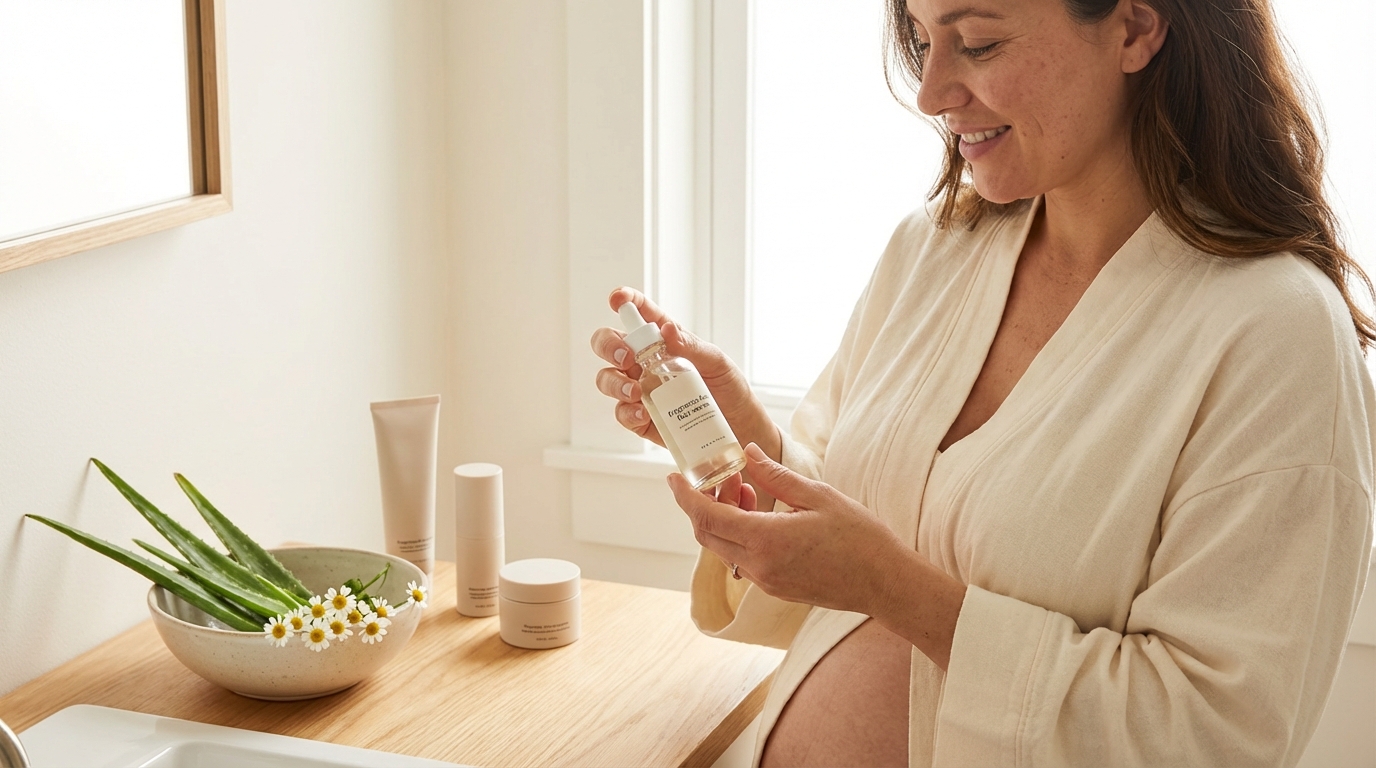
Finding out you’re pregnant changes everything, including what you put on your skin. I know it can feel overwhelming when suddenly half your medicine cabinet seems off-limits. But here’s the good news: with a little knowledge about how ingredients work, you can build a safe, effective routine that keeps your skin happy during pregnancy.
Let’s break down the science behind pregnancy skincare so you can make informed choices.
Why Your Skin Changes During Pregnancy
Before we talk about what to avoid, let’s understand what’s actually happening to your skin. Pregnancy triggers significant hormonal shifts, primarily increased estrogen, progesterone, and melanocyte-stimulating hormone (MSH). These hormones affect nearly every organ in your body, and your skin is no exception.
Estrogen increases blood volume and can make your skin appear more flushed or “glowy.” Progesterone stimulates sebum production, which explains why some people experience pregnancy acne even if they’ve never had breakouts before. MSH can trigger melasma, those darker patches that appear on the face, often called the “mask of pregnancy.”
Your skin may also become more sensitive due to increased blood flow and hormonal fluctuations. Products that never bothered you before might suddenly cause irritation. This is normal, and it’s your body’s way of telling you to simplify.
Ingredients to Avoid Completely
Let’s get specific about what needs to leave your routine. These ingredients have either proven harmful effects on fetal development or lack sufficient safety data to risk using during pregnancy.
Retinoids (All Forms)
This includes retinol, tretinoin, adapalene, tazarotene, and retinaldehyde. Research shows that oral retinoids like isotretinoin cause serious birth defects. While topical retinoids absorb in much smaller amounts, dermatologists universally recommend avoiding them during pregnancy as a precaution. The risk simply isn’t worth it when safer alternatives exist.
High-Dose Salicylic Acid
Oral salicylates in high doses have been linked to pregnancy complications. For topical use, the American College of Obstetricians and Gynecologists considers low concentrations (under 2%) in wash-off products likely safe. However, leave-on products with high concentrations or full-body peels should be avoided. When in doubt, skip it or talk to your doctor.
Hydroquinone
This skin-lightening ingredient has a high absorption rate, with studies showing 35-45% systemic absorption. Given that melasma often appears during pregnancy, you might be tempted to reach for hydroquinone. Don’t. The absorption rate is too high, and there’s not enough safety data for pregnant people.
Chemical Sunscreen Filters
Oxybenzone, avobenzone, and similar chemical filters can be absorbed into the bloodstream. While the research on pregnancy effects is still emerging, many dermatologists recommend switching to mineral sunscreens containing zinc oxide or titanium dioxide. These sit on top of the skin and physically block UV rays rather than being absorbed.
Essential Oils to Skip
Certain essential oils can stimulate uterine contractions or cross the placenta. Avoid rosemary, clary sage, juniper, thyme, and cinnamon bark in skincare products. Check ingredient lists carefully, as these often appear in “natural” products.
Safe Alternatives for Your Favorite Actives
Missing your retinol? Worried about maintaining your anti-acne routine? Here’s how to swap effectively.
Instead of Retinol: Try Bakuchiol
Bakuchiol is a plant-derived ingredient that activates similar cellular pathways to retinol without the vitamin A concerns. Studies published in the British Journal of Dermatology show it improves lines and pigmentation comparable to retinol. It’s also gentler, making it perfect for pregnancy-sensitive skin.
Instead of Salicylic Acid: Try Azelaic Acid
Azelaic acid is pregnancy-safe at typical skincare concentrations. It’s antibacterial, anti-inflammatory, and helps with both acne and hyperpigmentation. Dermatologists actually prescribe it during pregnancy for these exact reasons. Look for products with 10-15% concentration for best results.
Instead of Hydroquinone: Try Vitamin C
Vitamin C (ascorbic acid) inhibits tyrosinase, the enzyme responsible for melanin production. While it works more slowly than hydroquinone, it’s completely safe during pregnancy and offers additional antioxidant protection against environmental damage.
Instead of Glycolic Acid: Try Lactic Acid
If you love chemical exfoliation, lactic acid is the gentler choice. It’s naturally occurring in the body, works effectively at lower concentrations, and is less likely to cause irritation on sensitive pregnancy skin. Stick to products with 5-10% concentration.
Your Simplified Pregnancy Routine
Pregnancy is actually the perfect time to embrace minimalism in skincare. Your skin is already going through a lot. Supporting it with basics works better than overwhelming it with a complex routine.
Morning Routine
Cleanser: Choose a gentle, fragrance-free formula. Cream or milk cleansers work well for pregnancy-dry skin; gel cleansers suit those experiencing increased oiliness. Avoid anything that makes your skin feel tight or stripped.
Vitamin C Serum: A 10-15% L-ascorbic acid serum provides antioxidant protection and helps prevent melasma from darkening further. If your serum starts turning orange, it’s oxidized and needs replacing. Apply to dry skin for best penetration.
Moisturizer: Look for ceramides, hyaluronic acid, or squalane. These ingredients support your skin barrier without any pregnancy concerns. Your skin barrier can become compromised during pregnancy, so barrier-supporting ingredients are especially valuable.
Mineral Sunscreen: This is non-negotiable, especially if you’re prone to melasma. Zinc oxide provides broad-spectrum protection and sits physically on the skin. Apply generously and reapply every two hours when outdoors.
Evening Routine
Oil Cleanser or Micellar Water: Remove sunscreen and makeup thoroughly but gently. Pregnancy isn’t the time for harsh makeup removers.
Gentle Cleanser: Follow up with your morning cleanser for a complete clean.
Azelaic Acid (if needed): If you’re dealing with acne or dark spots, apply a thin layer of azelaic acid. Start with every other night if you’re new to it.
Moisturizer: Same as morning, or something richer if your skin feels dry at night.
Managing Common Pregnancy Skin Issues
Pregnancy Acne
Increased progesterone triggers more sebum production, leading to breakouts. Resist the urge to over-cleanse or use harsh products. Gentle cleansing, azelaic acid, and spot treatments with benzoyl peroxide (which is pregnancy-safe in low concentrations) can help. Be patient. Hormonal acne often improves after the first trimester.
Melasma
Those dark patches on your forehead, cheeks, or upper lip result from increased melanin production. Sun exposure makes melasma worse, so diligent sunscreen use is your best defense. Vitamin C and azelaic acid can help prevent darkening. Most melasma fades after pregnancy, though some discoloration may persist.
Stretch Marks
I’ll be honest with you: no topical product has been proven to prevent stretch marks. They’re largely determined by genetics and how quickly your skin stretches. However, keeping skin well-moisturized can help with the itching that comes with stretching skin and may improve their eventual appearance. Cocoa butter, shea butter, and oils like rosehip are all safe options.
Increased Sensitivity
If products you’ve used for years suddenly sting or cause redness, your skin is telling you something. This often traces back to a compromised skin barrier. Simplify your routine, eliminate fragrance, and focus on soothing ingredients like centella asiatica, allantoin, and oat extract.
When to Talk to Your Doctor
While this guide covers general skincare safety, always consult your healthcare provider about specific products or concerns. Definitely reach out if you experience severe acne that isn’t responding to safe treatments, sudden skin changes that concern you, or any allergic reactions.
Your dermatologist and OB-GYN can work together to help you manage skin issues safely throughout pregnancy.
The Bottom Line
Pregnancy skincare doesn’t have to be complicated. The key points to remember: avoid retinoids, high-dose salicylic acid, hydroquinone, and chemical sunscreens. Embrace safe alternatives like bakuchiol, azelaic acid, vitamin C, and mineral sunscreens. Keep your routine simple and listen to what your changing skin needs.
Your body is doing something incredible right now. A streamlined, pregnancy-safe routine supports your skin without adding stress. When in doubt, less is more, and there will be plenty of time to bring back your beloved actives after baby arrives.