
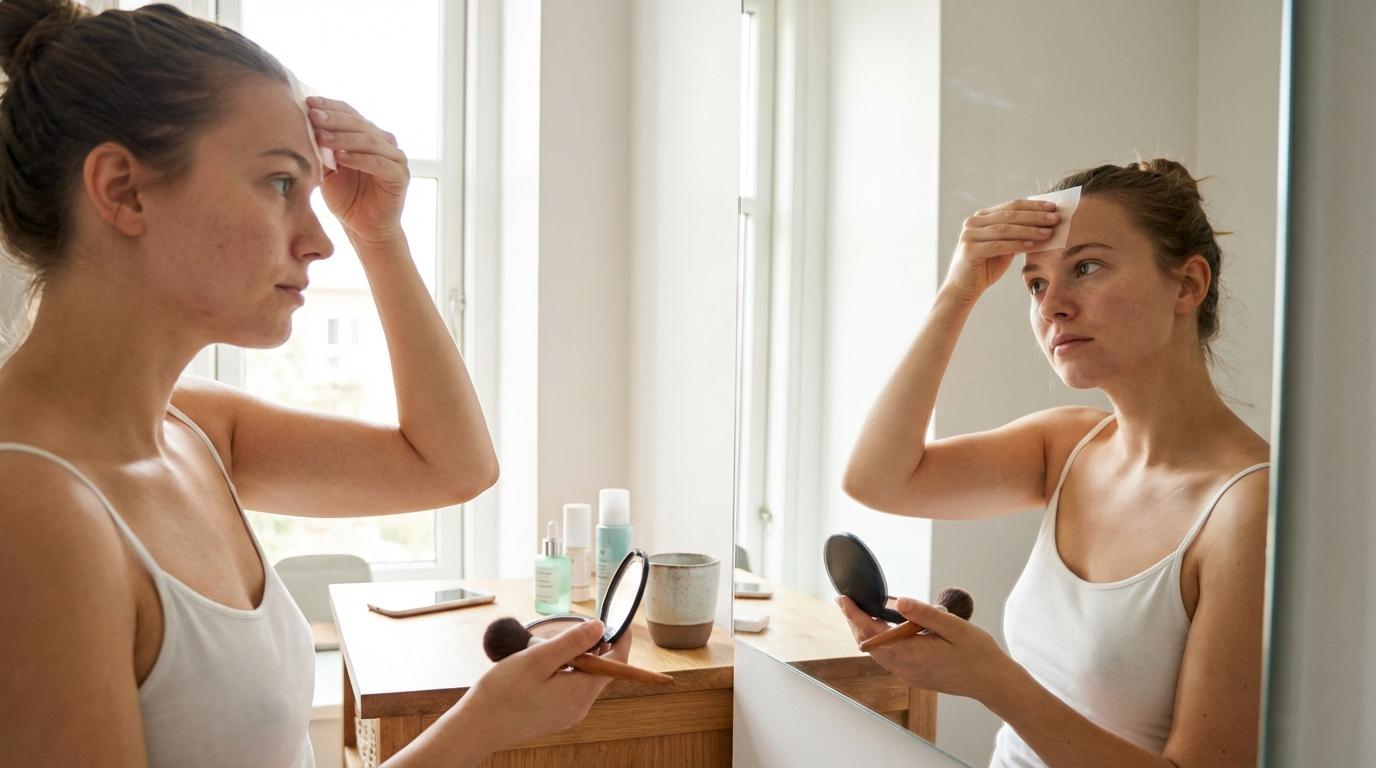
You know that moment when you catch your reflection around lunchtime and think, “When did I become a glazed donut?” Same. I used to spend my mornings painstakingly applying makeup, only to look like I’d run a marathon by noon. If your skin is staging a hostile sebum takeover by midday, let’s talk about what’s actually going on and how to get it under control.
Why Your Face Turns Into an Oil Slick by Noon
First, a quick reality check: some oil production is totally normal and even healthy. Your skin needs sebum to stay protected and moisturized. But when your T-zone starts looking reflective enough to signal airplanes? That’s when we’ve got a problem.
There are a few reasons your skin might be overproducing oil. Hormonal fluctuations are a big one (thanks, cortisol spike from your morning commute). Your skincare routine might actually be triggering more oil production if you’re using products that are too harsh. According to dermatologist Dr. Marisa Garshick, “If the skin becomes too dry, it can actually trigger the production of more oil.” Wild, right? Your skin overcorrects when it feels stripped.
Environmental factors play a role too. Humidity, heat, and even sitting in a stuffy office can ramp up sebum production. And let’s be honest, if you’re touching your face throughout the day (we all do it), you’re spreading oils around and potentially clogging pores.
Your Morning Routine Needs a Reframe
Here’s where most people go wrong: they assume oily skin needs aggressive cleansing and zero moisture. Nope. That approach almost always backfires, because even oily skin needs proper hydration to stay balanced. Your morning routine should focus on balance, not total oil annihilation.
Cleanse gently. Use a gentle foaming cleanser that removes overnight oil without stripping your skin barrier. Look for something with salicylic acid or niacinamide. CeraVe SA Cleanser is a solid choice, or any cleanser labeled for oily skin that doesn’t leave your face feeling tight. If your skin feels squeaky clean, the cleanser is probably too harsh.
Don’t skip moisturizer. I know it feels counterintuitive when your face is already producing enough oil to fry an egg, but hydration is different from oiliness. A lightweight, oil-free gel moisturizer like Neutrogena Hydro Boost gives your skin the hydration it needs without adding heaviness. When your skin is properly hydrated, it doesn’t feel the need to pump out extra sebum.
Add niacinamide to your routine. This ingredient is seriously underrated for oil control. Research shows that 2% topical niacinamide significantly reduces sebum production after just a few weeks of consistent use. It also helps minimize the appearance of pores. You can find it in serums (The Ordinary and The Inkey List both have affordable options) or look for moisturizers and cleansers that include it.
Sunscreen is non-negotiable, but choose wisely. An oily sunscreen will obviously make things worse. Look for oil-free, mattifying formulas that say “non-comedogenic” on the label. Some mineral sunscreens have a natural mattifying effect because of the zinc oxide.
The Blotting vs. Powdering Debate
Okay, so you’ve done everything right in the morning, but it’s 11 AM and the shine is creeping in. What do you reach for? This is where people get divided into two camps: blotting paper enthusiasts and powder devotees.
Here’s the actual difference. Blotting papers absorb oil and remove it from your face. Powder sits on top of the oil and covers it up. Celebrity makeup artist Andrew Sotomayor explains it well: papers actually remove the oil, while powder just masks it.
For most people, blotting papers are the better midday choice. They’re fast, they won’t make your makeup look cakey, and you can use them multiple times throughout the day without building up product on your face. Powder, especially when applied over powder over powder, tends to look heavy and settle into fine lines by late afternoon.
That said, there’s a caveat. You don’t want to over-blot. Your skin does need some natural oils to function properly, and aggressively removing all of it can actually signal your sebaceous glands to produce even more. Blot gently, press (don’t rub), and stop once the obvious shine is gone.
A pro tip I love: after blotting, follow up with a quick spritz of hydrating facial mist. It refreshes your makeup and gives your skin a hit of hydration, which can actually help prevent the next oil surge.
Products That Actually Extend Your Matte
If you’re wearing makeup and want it to last past noon without sliding off your face, a few strategic products make a huge difference.
Mattifying primer is your friend. Apply it after moisturizer and sunscreen, focusing on your T-zone and anywhere else you tend to get oily. You don’t need to cover your whole face. Good options include ONE/SIZE Oil Sucker Extreme Mattifying Primer (which claims up to 12 hours of oil control) or the more budget-friendly NYX Shine Killer. Make Up For Ever’s Shine Control is another solid option that’s beloved by makeup artists.
Try the powder sandwich technique. This one sounds weird but works surprisingly well. After your primer, lightly dust translucent setting powder on your T-zone. Then apply your foundation. Then set with another light layer of powder. The layer of powder under your foundation acts as an extra oil absorber. Just go easy with it so you don’t end up looking flat or cakey.
Choose the right foundation formula. Dewy and luminous foundations are not your friends if midday oil is your enemy. Look for matte or semi-matte formulas specifically designed for oily skin. Many people with oily skin actually do well with mineral powder foundations, which absorb oil throughout the day rather than mixing with it.
Setting spray can help, but choose carefully. Not all setting sprays are created equal. Some add dewiness (skip those), while others have mattifying properties. Urban Decay All Nighter and Charlotte Tilbury Airbrush Flawless Setting Spray are both popular for longevity.
Quick Fixes When You’re Already at Work
Sometimes prevention only gets you so far and you need to deal with the situation in real time. Here’s my desk drawer emergency kit for oily skin moments:
- Blotting papers or an oil-absorbing roller for quick shine removal
- A small compact of translucent powder for touch-ups (pressed powder is easier to travel with than loose)
- A mini facial mist to refresh and hydrate
- A few cotton swabs for cleaning up any smudged makeup
If you’re going completely makeup-free, the midday refresh is simpler. Blot, mist, done. Some people like to do a quick rinse with water at lunch if they have access to a bathroom and don’t mind going bare-faced for a bit. Just splash some cool water on your face, pat dry, and reapply sunscreen if you’ll be outside.
What About Skincare at Night?
Your nighttime routine matters too because it sets up your skin for the next day. Double cleansing is really helpful for oily skin, especially if you wear sunscreen or makeup. Start with an oil-based cleanser (I know, oil to clean oily skin sounds backwards, but it dissolves sebum and makeup really effectively) followed by your regular cleanser.
Consider adding a weekly clay mask to your routine. The American Academy of Dermatology recommends clay masks with kaolin or bentonite to help absorb excess oil and refine pores. Once a week is enough, twice maximum. More than that and you risk drying out your skin and triggering, you guessed it, more oil production.
Retinoids can also help regulate oil production over time, but that’s a conversation to have with a dermatologist since they can be irritating when you first start using them.
Be Patient With the Process
Here’s the thing: you’re not going to wake up tomorrow with perfectly balanced skin. Ingredients like niacinamide take about two months of consistent use to really show results in terms of oil reduction. Building a solid routine and sticking with it matters more than constantly switching products hoping for an instant fix.
Pay attention to what makes your skin oilier. Stress? Certain foods? Specific products? Everyone’s triggers are different. Once you identify yours, you can plan around them.
And honestly? Some amount of oil by the end of the day is normal and not worth stressing over. The goal isn’t to have completely matte skin 24/7 (that would actually look pretty unnatural). It’s to keep things balanced enough that you feel comfortable and your makeup stays put if you want it to. That’s totally achievable with the right routine and a few strategic products in your bag.