
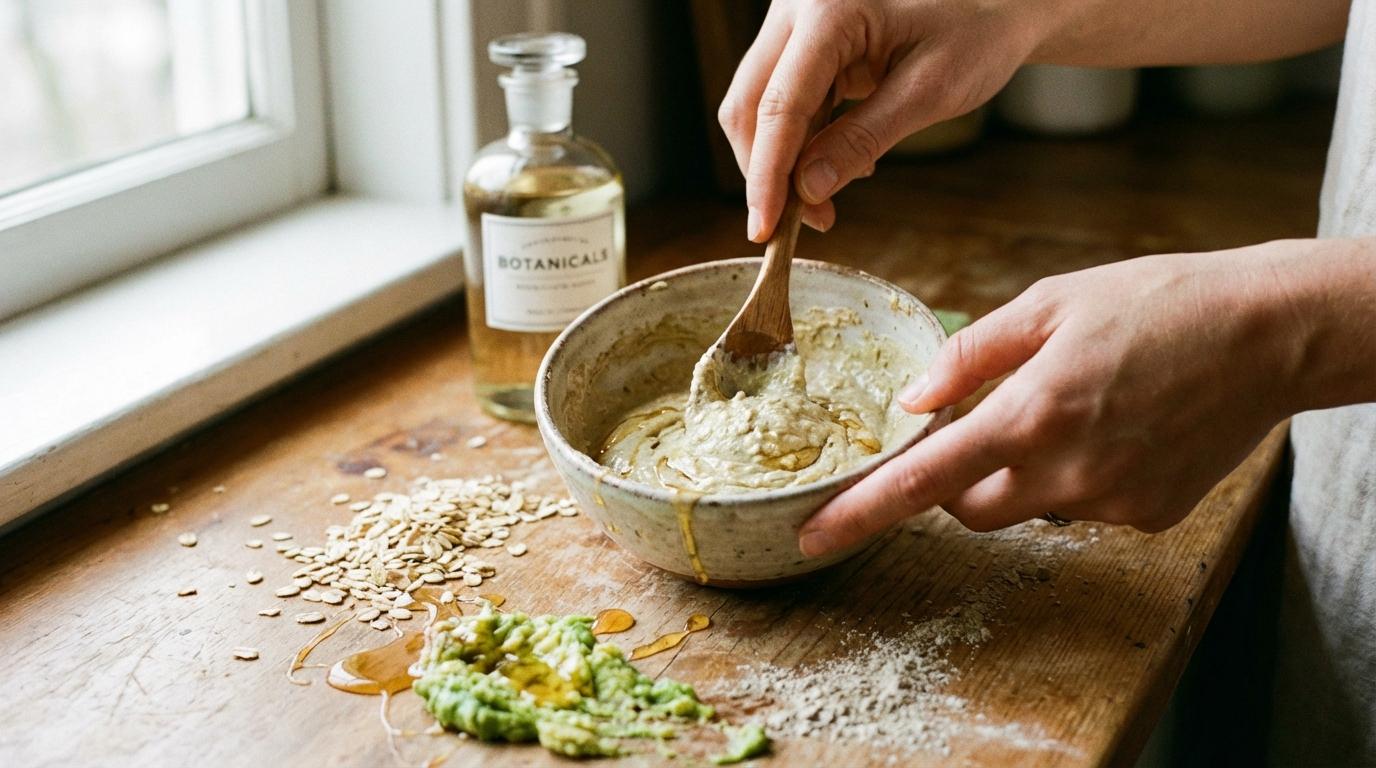
DIY skincare has an expiration date.
Not literally (well, actually, literally too if you’re mixing things in your kitchen). But there’s this point where making your own stuff stops being smart and budget-friendly and starts being… kind of reckless? I say this as someone who once gave herself a chemical burn trying to “customize” a vitamin C serum. The Pinterest tutorial made it look so easy.
The thing is, homemade skincare can work. I’m not here to tell you DIY green tea treatments are the devil. But there’s a line, and when you cross it, your face will definitely let you know.
Your Skin Is Screaming (Listen to It)
The first sign you need to stop is probably the most obvious one, but we all ignore it anyway because we’re stubborn. If your skin is red, burning, itching, or developing weird texture that wasn’t there before… stop what you’re doing. Just stop.
I’m talking about irritation that lasts more than a few minutes. Not the slight tingle you might get from an acid (that’s different). I mean the kind of reaction where you splash cold water on your face and it still feels angry ten minutes later.
Your DIY concoction might be too strong. The pH might be off (more on that later). Or you might be allergic to something you mixed in. Natural doesn’t mean non-irritating. Poison ivy is natural.
If you’re getting consistent irritation from something you made, that’s your skin telling you it’s time to invest in actual products formulated by people with chemistry degrees.
When Your Bathroom Looks Like a Science Experiment
There’s a contamination problem with DIY skincare that nobody wants to talk about. Professional skincare products have preservatives for a reason (and that reason is bacteria, mold, and general grossness that will colonize your homemade cream within days).
If you’re making something with water in it, it needs a preservative. Period. And no, essential oils don’t count. Tea tree oil is not a broad-spectrum preservative system, no matter what that wellness influencer told you.
I learned this the hard way when my homemade rosewater spray developed… chunks. Chunky toner is not a vibe. That’s contamination, and putting contaminated products on your face can cause infections, breakouts, and irritation that’s way more expensive to fix than just buying proper products.
Signs your DIY stuff has gone bad: weird smell (different from how it smelled when you made it), color changes, separation that doesn’t remix, any kind of fuzziness or film on top, or yes, chunks.
If you’re not willing to learn about proper preservation systems (which requires buying specific preservatives and following exact percentages), then stick to single-ingredient stuff you use immediately. Fresh aloe from your plant? Cool. Week-old cream you whipped up? Nope.
The pH Situation You’re Probably Ignoring
Your skin has a pH of around 4.5 to 5.5. It’s slightly acidic, and that’s good (it keeps bad bacteria from throwing a party on your face). When you mix random ingredients without testing pH, you might end up with something way too acidic or way too alkaline.
Lemon juice has a pH of about 2. That’s acid-peel territory, except without any of the buffering systems that make professional acid peels safe. Rubbing straight lemon juice on your face can cause serious damage, including chemical burns and sun sensitivity that leads to dark spots.
Baking soda is alkaline (pH around 9). People use it as an exfoliant, which… please don’t. It disrupts your skin barrier and can cause long-term damage that takes months to fix.
If you’re mixing acids or alkaline ingredients and you don’t own a pH meter (they’re like $15 on Amazon, just saying), you’re basically gambling with your skin barrier. And the house always wins eventually.
When Simple Stops Working
There’s this sweet spot with DIY skincare where you’re making basic stuff that works. Homemade hydrating mist? Great. Face oil blend? Sure. Single-ingredient honey mask? Go for it.
But when you start trying to tackle specific skin issues like acne, hyperpigmentation, or wrinkles with DIY treatments, you’re probably in over your head. These concerns need active ingredients at specific concentrations, with proper pH, in formulations that penetrate skin correctly.
I spent six months trying to fade dark spots with homemade vitamin C serums that kept oxidizing (turning brown and useless within days). Finally bought an actual serum with stabilized vitamin C, and it worked in a month. I could’ve saved so much time.
Some skin issues require ingredients you can’t easily buy, shouldn’t be handling without training (ever tried to mix your own retinoid? don’t), or need to be formulated in specific ways to actually work.
The Time and Money Math
Let’s be honest about why we DIY stuff: we think it’s cheaper. And sometimes it is! But sometimes… it’s really not.
If you’re buying four ingredients to make a face oil, and you’re only going to use small amounts of each (because they go bad), and they cost $15 each, you’ve just spent $60 to make something you could’ve bought for $20. The math isn’t always mathing.
Plus, there’s the time factor. If you’re spending two hours researching recipes, shopping for ingredients, making the product, testing the pH, making it again because the first batch went wrong, and cleaning up… your hourly rate just dropped below minimum wage. (I’m not judging if you enjoy it as a hobby! But if you hate it and only do it to save money, maybe run the actual numbers.)
Sometimes budget-friendly store products are the smarter choice. The Ordinary exists. CeraVe exists. You can get effective skincare for less than the cost of buying five carrier oils and a dozen essential oils you’ll never finish.
What’s Actually Safe to DIY
Okay, I’m not saying never make anything yourself. But stick to the safe zone:
Single ingredients you use fresh: Honey masks. Oatmeal soaks. Aloe from your plant (not stored, used immediately). Green tea as a toner (make it fresh, keep it refrigerated, use within three days max).
Simple oil blends: Mixing a few facial oils is pretty safe, as long as you’re not adding water (which requires preservation) and you store them properly (dark bottle, cool place). These don’t go rancid immediately, but they do eventually, so make small batches.
Physical exfoliants you mix right before use: Sugar or oatmeal mixed with honey or oil, used once and discarded. No storage means no contamination issues.
What’s not safe? Anything with water that you plan to store. Anything that requires pH adjustment. Anything with active ingredients at specific percentages. Anything you’re creating to treat a skin condition. Anything you’re selling to other people (please don’t, that’s a liability lawsuit waiting to happen).
When to Admit You Need Real Products
You’ve got a skin condition that’s not getting better with gentle DIY treatments. You’ve had repeated irritation from homemade stuff. You keep wasting ingredients on batches that go bad. You’re spending more money on DIY supplies than you would on actual products. Your bathroom looks like a chemistry lab and you hate it.
Any of those? Time to stop.
Also, if you’re dealing with acne, rosacea, eczema, or any diagnosed skin condition, please talk to a dermatologist instead of trying to treat it with kitchen ingredients. I know healthcare is expensive (trust me, I know), but some conditions need medical treatment. DIY turmeric masks aren’t going to cut it.
There’s this weird guilt some people feel about buying skincare products instead of making them. Like you’re not a “real” natural beauty person if you purchase things formulated in a lab. But skincare chemists went to school for this. They know things about molecular structures and penetration enhancers that Pinterest doesn’t cover.
The Middle Ground Nobody Talks About
You don’t have to choose between full DIY everything or buying $200 serums. There’s a middle ground where you buy effective, affordable basics and maybe supplement with simple DIY stuff when it makes sense.
I buy my cleanser, treatments (acids, retinoids, vitamin C), and sunscreen. Those need to be formulated properly to work, and I’m not going to risk my skin barrier trying to make them myself. But I’ll still do a honey mask sometimes because it feels nice and I like the ritual.
The difference is I’m not expecting the honey mask to fix my skin issues. It’s a nice addition, not my entire skincare strategy. That’s the realistic approach that keeps your skin healthy without requiring a chemistry degree or a trust fund.
Listen, I get the appeal of DIY. It feels natural, it feels cheap, it feels like you’re taking control of what goes on your face. But control without knowledge is just chaos with good intentions. Your skin deserves better than that.
If something you’re making works, doesn’t irritate you, stays fresh, and genuinely improves your skin… keep doing it! But the second things start going wrong, don’t push through hoping it’ll get better. It won’t. Store-bought skincare exists for a reason, and sometimes that reason is “so you don’t accidentally burn your face off trying to save fifteen dollars.”