
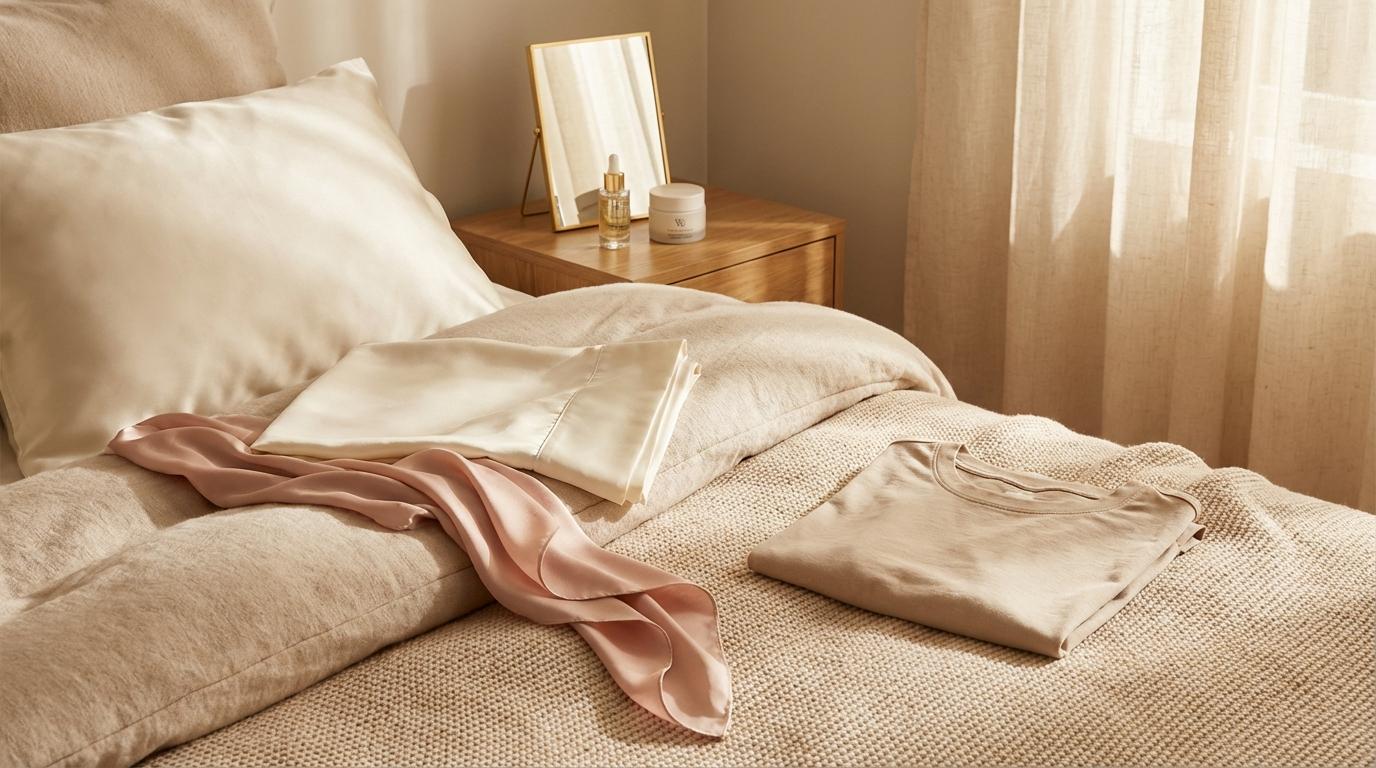
Picking a pillowcase for your skin feels a lot like trying to choose between three different first dates: one’s fancy but intimidating, one’s smooth and promising, and one’s comfortable but maybe too familiar. I’ve been there, staring at my ratty cotton pillowcase at 2am wondering if that’s why I keep waking up with creased cheeks and frizzy hair. Spoiler alert: it kind of was. But before you drop $80 on silk, let’s actually break down what’s worth your money.
What’s Actually Different About These Fabrics
First things first: silk, satin, and cotton are not created equal, and knowing the basics will save you from impulse buying something that doesn’t work for you.
Cotton is what most of us grew up with. It’s breathable, affordable, and easy to wash. But here’s the thing: cotton is absorbent. Like, really absorbent. That nice moisturizer you slathered on before bed? Your pillowcase is drinking half of it. Same goes for the natural oils from your hair and face, which build up over time and can contribute to breakouts if you’re not washing your pillowcase frequently.
Silk is the luxury option, made from natural protein fibers produced by silkworms. Real silk (specifically mulberry silk) has a smooth surface that creates less friction against your skin, and it’s naturally hypoallergenic. It also doesn’t absorb moisture the same way cotton does, so more of your skincare actually stays on your face. The downside? It’s expensive and requires more careful washing.
Satin is where things get confusing. Satin isn’t actually a fabric, it’s a weave. Satin pillowcases can be made from polyester, nylon, or even silk. Most affordable “satin” pillowcases are polyester satin, which gives you that smooth, slippery surface without the price tag of silk. The catch? Polyester doesn’t breathe as well as natural fibers, and some people find it makes them sweat at night.
The Friction Factor
When dermatologists talk about pillowcase upgrades, friction is usually the main topic. Every night, your face spends hours pressed against your pillow, and if that surface is rough or grabby, it can tug at delicate facial skin. Over time, this repeated friction may contribute to sleep creases that become more permanent as we age.
Cotton has the highest friction of the three options. The woven texture grips skin and hair, which is why you might wake up with sheet marks on your face or a tangled mess on your head. If you’re a side sleeper (like most of us), you’re getting more of this friction than back sleepers.
Both silk and satin dramatically reduce this friction. Your face glides over the surface instead of sticking to it. According to the American Academy of Dermatology, reducing friction on your skin is one way to potentially minimize wrinkle formation over time. Is it going to prevent aging entirely? No. But it’s a low-effort change that might make a small difference.
Moisture: Where Your Products Actually Go
This is where I started paying attention. When I finally started building a proper skincare routine on my limited budget, I was annoyed to realize that part of my expensive (okay, mid-range) serums might be ending up on my pillowcase instead of my face.
Cotton absorbs moisture, period. It pulls water and oils from whatever touches it, which includes your carefully applied night cream. One study published in the Journal of Cosmetic Dermatology found that pillowcase material can affect how much product stays on your skin overnight.
Silk and satin are both less absorbent than cotton. Silk, being a natural protein fiber, actually helps regulate moisture rather than just sitting on the surface. Polyester satin doesn’t absorb much either, but it also doesn’t breathe, so you might find yourself getting sweaty. If you’re prone to night sweats or have oily skin, this is worth considering.
For those of us who are acne-prone, the moisture situation matters in another way too. A pillowcase that absorbs oils, dead skin cells, and product residue becomes a breeding ground for bacteria faster. Cotton pillowcases really should be washed every two to three days if you’re dealing with breakouts. Silk and satin build up grime slower, though they still need regular washing.
Price Reality Check
Okay, let’s talk money, because that’s where most of us actually make our decisions.
Cotton pillowcases: $5-20 for a set. You probably already own some. Easy to throw in the regular wash, can handle hot water and bleach if needed. No special care required.
Polyester satin pillowcases: $8-25 for a set. This is the budget-friendly upgrade option. They’re widely available on Amazon, at Target, and at pretty much any home goods store. They need to be washed on gentle cycles with cool water, and you shouldn’t put them in the dryer on high heat or they’ll get damaged.
Silk pillowcases: $30-100+ each. Real mulberry silk pillowcases from reputable brands like Slip, Blissy, or Fishers Finery will set you back anywhere from $50-90 for a single pillowcase. You can find cheaper options, but quality varies wildly. Silk requires hand washing or a delicate machine cycle with special silk detergent, and air drying. If you’re someone who struggles to wash your regular sheets on time, silk might not be the best choice.
Who Should Actually Upgrade
Not everyone needs to switch from cotton. Here’s my honest breakdown:
You might benefit from silk or satin if:
- You’re a side sleeper who wakes up with creases on your face
- You have dry or dehydrated skin and feel like your products aren’t working
- You’re trying to protect a specific treatment (like retinol or prescription creams) from rubbing off
- You have curly or textured hair that gets tangled and frizzy overnight
- You want to reduce friction after procedures or with sensitive skin
Cotton is probably fine if:
- You’re a back sleeper with minimal face-to-pillow contact
- You have oily or acne-prone skin and wash your pillowcase every few days anyway
- You run hot at night and need maximum breathability
- You’re not using expensive nighttime skincare products
- Laundry convenience is a priority (silk is high maintenance)
If you’re working with sensitive skin or dealing with barrier issues, reducing friction can be a helpful part of your overall approach. Understanding your skin barrier basics will help you figure out if this is worth prioritizing.
Satin vs Silk: The Real Difference
If you’ve decided cotton isn’t cutting it, the next question is whether to go with affordable polyester satin or invest in real silk.
Polyester satin gives you about 70-80% of the benefits at 20% of the price. You get the reduced friction and the smoother surface, which helps with sleep lines and product absorption. The main downsides are heat retention (polyester doesn’t breathe well) and the fact that it’s not as gentle or naturally hypoallergenic as silk.
Silk has extra benefits beyond just smoothness. It’s naturally temperature regulating, which means it stays cool in summer and warm in winter. It’s hypoallergenic and resistant to dust mites, which matters if you have allergies. And according to research published in the British Journal of Dermatology, silk may have anti-inflammatory properties that benefit skin conditions like eczema.
That said, for most people on a budget, polyester satin is the smarter starting point. Try it for a few months and see if you notice a difference. If you love the results and have the budget later, you can upgrade to silk.
What to Look for When Shopping
A few tips to avoid wasting money:
For satin: Look for pillowcases labeled as “silky satin” or “charmeuse satin.” These tend to be smoother than basic satin. Check reviews for comments about the fabric feeling sticky or making people sweat. Beige or white options show stains less than dark colors.
For silk: Look for mulberry silk (the highest quality) and pay attention to momme weight. Momme is a unit measuring silk density, and for pillowcases, you want at least 19-22 momme. Anything lower will feel thin and wear out quickly. Be skeptical of “silk” pillowcases under $30, they’re often blended with other fibers or using low-quality silk.
If you’re looking for affordable skincare products to pair with your new pillowcase, focus on hydrating nighttime treatments that will benefit from reduced absorption.
My Honest Take
I switched from cotton to a $15 polyester satin pillowcase about a year ago, mostly for my hair. The skin benefits were a nice bonus. I do wake up with fewer creases, and my face feels less dried out in the morning. Is it life-changing? No. But for $15, I think it’s worth trying.
I haven’t upgraded to silk yet because honestly, I’m not convinced the extra $60-80 is worth it for my lifestyle. I’m not great at hand washing delicates, and I’d probably ruin an expensive silk pillowcase within a few months. If you’re the type of person who treats your things carefully and has the budget, go for silk. For the rest of us, satin does the job.
The most important thing, regardless of which fabric you choose? Wash your pillowcase regularly. A clean cotton pillowcase beats a dirty silk one every time. If your skin is acting up, check when you last changed your pillowcase before you blame your products. Sometimes the simplest fix is the right one.
At the end of the day, your pillowcase is one small piece of a bigger picture. It’s not going to replace a solid skincare routine or fix major skin concerns on its own. But if you’re looking for a low-effort way to potentially preserve more of your nighttime skincare and wake up with fewer lines on your face, swapping your pillowcase is a reasonable place to start. Just don’t let anyone convince you that you need to spend $100 on silk to have good skin. You don’t.