
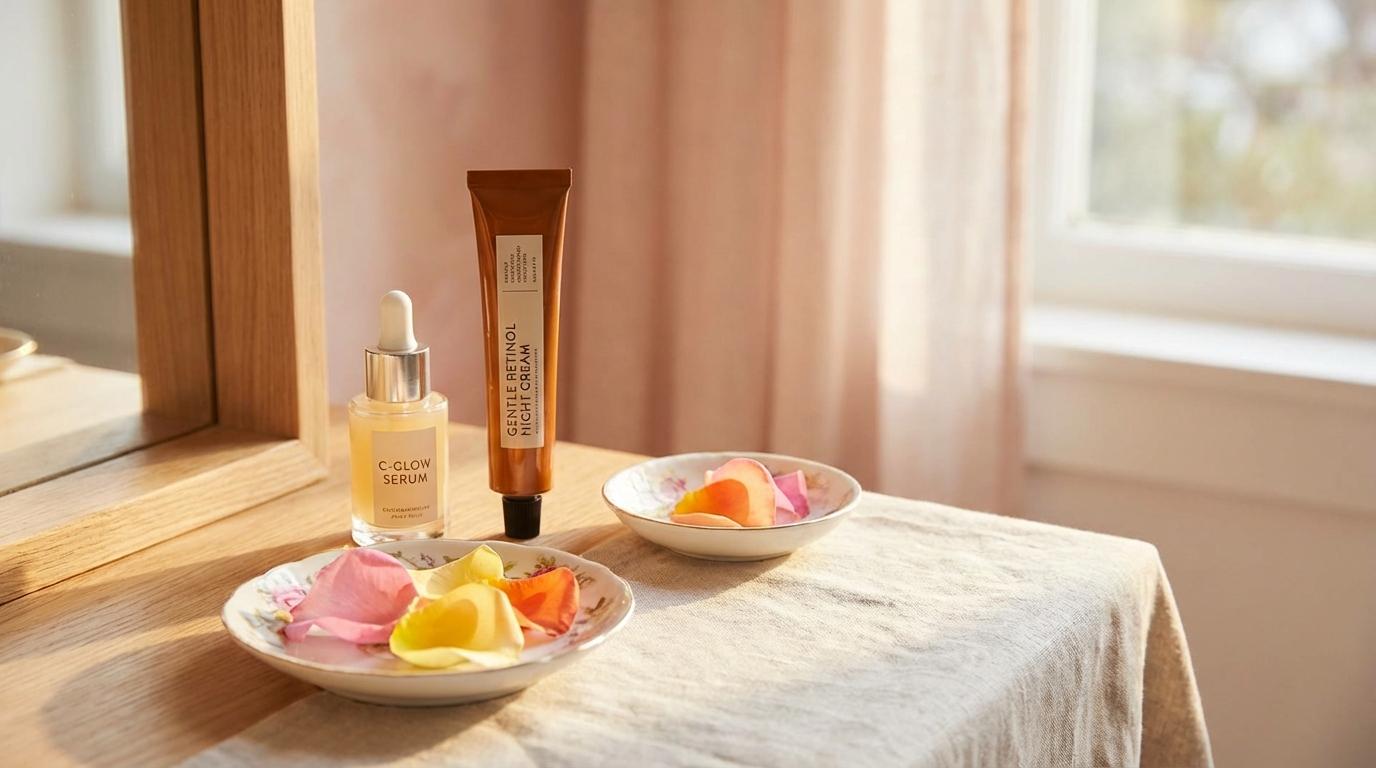
Everyone tells you that mixing retinol and vitamin C is a one-way ticket to irritation city. The truth is, that rule is about as outdated as flip phones and low-rise jeans.
I spent months avoiding my vitamin C serum on nights I used retinol because I read somewhere that combining them would basically melt my face off. Spoiler alert: my face stayed intact, I just wasted a lot of product sitting on my bathroom shelf. After actually looking into the science (and talking to some dermatologists on TikTok who know their stuff), I realized I’d been following skincare advice from 2010.
Where This “Rule” Came From
The whole retinol-plus-vitamin-C panic started because of pH levels. Traditional L-ascorbic acid (the classic form of vitamin C) needs a pretty acidic environment to work, somewhere around pH 3.5 or lower. Retinol, on the other hand, does its best work at a slightly higher pH. The thinking was that layering these two would throw off each other’s pH sweet spots and either cancel each other out or cause irritation.
And honestly? That concern made sense with older formulations. Pure L-ascorbic acid is notoriously unstable and finicky. But skincare chemistry has come a long way since those early studies. According to dermatologists at GoodRx, the risk of incompatibility really depends on the specific percentages and forms of these ingredients in your products.
Modern Formulas Changed Everything
The biggest reason this rule is outdated? Vitamin C derivatives. Most vitamin C serums today do not use pure L-ascorbic acid. Instead, they use stabilized derivatives like:
- Magnesium ascorbyl phosphate (MAP) which stays stable at neutral pH
- Sodium ascorbyl phosphate (SAP) which converts to active vitamin C once it hits your skin
- Ethyl ascorbic acid which is roughly 50 times more stable than traditional vitamin C
These derivatives work at pH levels much closer to your skin’s natural balance (around pH 5 to 7), which means they play nicely with retinol. The whole “pH clash” problem basically disappears when you are not using pure L-ascorbic acid.
Retinol formulations have also gotten smarter. Many now use encapsulated retinol that releases gradually and stays stable regardless of what else is on your skin. So even if you layer a vitamin C derivative over encapsulated retinol, you are not causing some chemical disaster.
What Dermatologists Actually Say
Dr. Arash Akhavan, a board-certified dermatologist, has been pretty clear about this: “You can use vitamin C and retinol at the same time in your skincare routine, because they work differently on the skin and target different concerns. As long as you do not experience any irritation, it is safe to use them together.” That is from an actual doctor, not a random skincare influencer.
The key phrase there is “as long as you do not experience any irritation.” Your skin is unique. Some people can layer actives like they are stacking pancakes, while others need to introduce things slowly. Neither response is wrong, it just means paying attention to how your skin reacts. If you want to understand more about what retinol actually does before combining it with anything, check out our breakdown of retinol basics.
Tips for Using Both Safely
Even though the combination is not the disaster we were all warned about, there are still smart ways to introduce both ingredients into your routine:
Start with alternating nights. If you are new to either ingredient, use vitamin C one night and retinol the next. This gives your skin time to adjust without overwhelming it. After a few weeks with no irritation, you can experiment with using them closer together or even the same night.
Consider the vitamin C in the morning, retinol at night routine. This is what many dermatologists recommend, not because the ingredients do not mix, but because vitamin C provides antioxidant protection against daytime environmental stressors while retinol works best overnight when your skin is in repair mode. It is about optimizing when each ingredient can do its job, not about them being incompatible.
Check your product formulations. If your vitamin C serum uses a derivative (look for ingredients like ascorbyl glucoside, sodium ascorbyl phosphate, or ethyl ascorbic acid), you have more flexibility. If it is pure L-ascorbic acid at a high percentage, that is when you might want to keep things separated or add a waiting period between applications.
Buffer with a hydrating layer. Applying a hydrating serum or moisturizer between your vitamin C and retinol can reduce any potential irritation. This is especially helpful when you are testing out layering them for the first time. Something with hyaluronic acid works well as a buffer.
Signs You Should Back Off
I am a huge fan of experimenting with your routine, but not at the expense of your skin barrier. If you notice any of these, pump the brakes:
- Redness that does not calm down within an hour
- Flaking or peeling, especially around your nose and mouth
- A tight, dry feeling that moisturizer does not fix
- Increased sensitivity to products that normally feel fine
These are signs your skin barrier is stressed. Go back to basics for a week or two with just cleanser, moisturizer, and sunscreen. You can always reintroduce actives once your skin has recovered. We have a helpful guide on layering retinol without irritation that breaks down how to build up tolerance gradually.
The Budget Angle
What I really appreciate about this updated advice is the money it saves. Following the old rule meant I needed twice as many products, one set of serums for vitamin C days and another for retinol days. That adds up fast, especially when good vitamin C serums are not cheap.
Now I can buy one vitamin C serum and one retinol product and use them both consistently without feeling like I am wasting either one. For anyone watching their skincare budget (which, let us be honest, is most of us), knowing you do not need separate routines for these two ingredients is genuinely helpful.
The Ordinary makes this especially accessible with their affordable vitamin C derivatives and retinol options. You can get both for under fifteen dollars total, which makes experimenting way less scary.
My Current Approach
For what it is worth, here is how I use both ingredients now:
Mornings, I use a vitamin C serum with ethyl ascorbic acid (more stable, less irritating), followed by sunscreen. Evenings, I use retinol two to three times a week, depending on how my skin is feeling. On retinol nights, I sometimes skip the vitamin C entirely, but other times I will use a gentler vitamin C derivative underneath my moisturizer. No burning, no peeling, no drama.
The point is flexibility. Once you understand why the old rule existed and why modern formulations make it less relevant, you can make choices based on how your actual skin responds rather than following rigid rules that do not account for current product technology.
When to Actually Be Careful
I do not want to give the impression that you can just throw any products together without thinking. There are still some situations where caution makes sense:
If you are using prescription-strength retinoids like tretinoin, that is a different ballgame. These are much stronger than over-the-counter retinol and can definitely cause irritation when combined with acidic vitamin C serums. Check with your dermatologist about timing if you are on prescription retinoids.
If your skin is already compromised from over-exfoliation, acne treatments, or environmental damage, adding multiple actives is not smart. Fix your barrier first. We have an article on building a brightening routine without irritation that might help you approach this more gently.
And if you are using multiple acids in your routine (like glycolic acid, salicylic acid, or azelaic acid), adding vitamin C and retinol on top might be too much. Pick your priorities and rotate instead of layering everything at once.
The Real Takeaway
Skincare rules are not laws. They are guidelines based on the products and knowledge available at the time. The advice to never combine retinol and vitamin C made sense when most vitamin C serums were unstable and most retinol products were harsh. But formulation science has evolved, and our routines can evolve too.
Test things out, pay attention to your skin, and do not let outdated rules scare you away from a routine that might actually work better. Your skin is smarter than some internet advice from fifteen years ago, and so are you.