
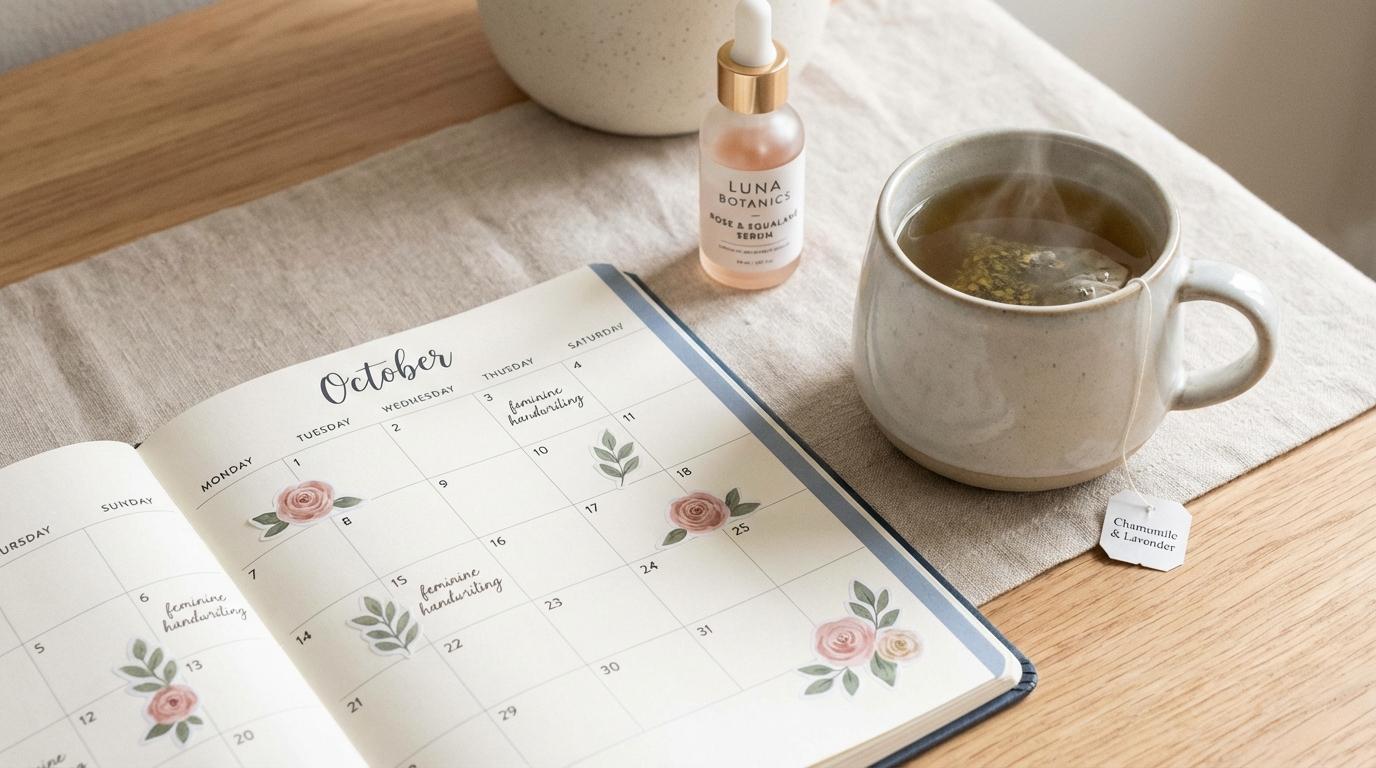
I spent $400 on prescription acne treatments before discovering that a $3 box of tea might actually help my hormonal breakouts. And honestly? The science behind spearmint tea is more legit than I expected (though it comes with some important caveats).
If you’ve ever noticed your chin and jawline staging a full rebellion right before your period, you’re probably dealing with hormonal acne. And while scrolling through skincare forums at midnight, you’ve likely stumbled across people raving about spearmint tea. But does it actually work, or is this just another wellness trend with more hype than substance?
The Hormone-Acne Connection (Quick Science Break)
Before we talk tea, let’s talk hormones. Androgens (testosterone and its friends) tell your sebaceous glands to produce more oil. More oil means clogged pores, which means acne. This is why hormonal breakouts typically hit the lower face, jawline, and chin, and they tend to follow your menstrual cycle like clockwork.
This is also why treatments like spironolactone work for hormonal acne; they block androgens. But not everyone wants to take prescription medications, which is where spearmint tea enters the chat.
What the Research Actually Says
There are two key studies that got the skincare community excited about spearmint tea, and they’re genuinely interesting (I promise to keep this part short).
A 2007 Turkish study had 21 women with hirsutism (excess hair growth, which is also androgen-related) drink spearmint tea twice daily for just five days. The results? Significant decreases in free testosterone levels. The caveat is that five days isn’t long enough to see physical changes, but the hormone shift was measurable.
Then in 2010, a randomized controlled trial (the gold standard of research) followed 41 women for 30 days. The spearmint tea group saw significant reductions in both free AND total testosterone levels. Their follicle-stimulating hormone and luteinizing hormone also increased, which basically means their hormonal balance improved.
The kicker? Neither study actually measured acne improvement. They looked at hormone levels and hirsutism. So while we have solid evidence that spearmint tea can lower androgens, the direct acne research is… still waiting to happen.
How Spearmint Tea Actually Works
Spearmint contains carvone, which appears to have anti-androgenic properties. Researchers think it might:
- Speed up how quickly your body metabolizes androgens
- Directly affect androgen synthesis
- Work through cytochrome P450 enzymes (your body’s chemical processors)
The important thing to understand is that spearmint tea isn’t doing the same thing as prescription anti-androgens. Think of it more like gently nudging your hormones versus shoving them. If your hormonal imbalance is mild to moderate, that nudge might be enough. If you’re dealing with severe hormonal acne or PCOS-related issues, tea alone probably won’t cut it.
How Much Spearmint Tea Should You Drink?
Based on the research, the sweet spot seems to be two cups daily. That’s what the studies used, and consistency matters more than chugging a gallon when you feel a breakout coming on (I’ve tried that approach; it doesn’t work and you’ll just be running to the bathroom constantly).
A few practical tips:
- Morning and evening works well (I do one with breakfast, one after dinner)
- Use actual spearmint, not peppermint. They’re different plants with different properties. Check your labels.
- Give it at least two to three months. Hormonal changes take time to show up on your skin. Cell turnover is roughly 28 days, so you’re looking at multiple cycles before you’ll see real results.
- Loose leaf or bags both work. The studies used tea steeped from the plant, but quality tea bags should be fine.
What Spearmint Tea Won’t Do
Let’s be realistic about this (because I wish someone had told me before I expected miracles):
It won’t replace prescription treatment for severe acne. If your hormonal acne is severe, causing scarring, or significantly impacting your quality of life, please see a dermatologist. Tea is not a substitute for proper medical treatment.
It won’t work overnight. Or over a week. Or probably even over a month. Hormonal changes are slow, and skin takes time to respond.
It might not work for everyone. Your hormonal profile is unique. What helps one person might do nothing for another. Bodies are annoyingly individual like that.
It won’t fix non-hormonal acne. If your breakouts are from clogged pores, bacteria, or product reactions, spearmint tea isn’t addressing those issues. If you’re not sure what type of acne you’re dealing with, check out how niacinamide works differently for acne and see if the description matches your situation.
Potential Side Effects and Warnings
Spearmint tea is generally safe for most people, but a few things to watch for:
- Digestive upset in some people (mint can relax the lower esophageal sphincter, which might worsen acid reflux)
- Interactions with certain medications, particularly those processed by the liver
- Pregnancy concerns. The anti-androgen effects mean you should avoid it during pregnancy. Androgens play important roles in fetal development.
- If you have PCOS or other hormonal conditions, talk to your doctor before adding this to your routine. You want to make sure it won’t interfere with any treatments you’re already on.
How I Actually Use It
Full transparency: I drink spearmint tea as part of my overall hormonal acne management, not as my only treatment. I pair it with a solid skincare routine that addresses other acne factors. Good cleansing habits matter too (your pillowcase could be contributing to breakouts regardless of your hormone levels).
My approach:
- Two cups of spearmint tea daily (I actually like the taste, which helps)
- Consistent skincare routine with acne-fighting ingredients
- Paying attention to when breakouts happen in my cycle
- Tracking whether the tea actually helps over several months
After about three months, I noticed my pre-period breakouts were less intense. Not gone, but less aggressive. Could be the tea, could be placebo, could be other factors. But for something this cheap and easy, I’ll keep doing it.
The Bottom Line
Spearmint tea has real, documented anti-androgen effects. The research is legit, even if it’s not as extensive as we’d like. Drinking two cups daily might help reduce the severity of hormonal acne by lowering testosterone levels.
But (and this is a big but): it’s not a magic fix. It won’t replace professional treatment for serious acne. It takes months to work. And it might not work for you at all.
That said, for $3 to $10 a box and zero prescription needed, it’s worth trying if you’re dealing with mild to moderate hormonal breakouts. Worst case, you’ve developed a pleasant tea habit. Best case, you’ve found an affordable addition to your acne-fighting toolkit.
Just don’t be like past me, expecting one cup to clear a month’s worth of hormonal revenge. Patience is annoying but necessary.