
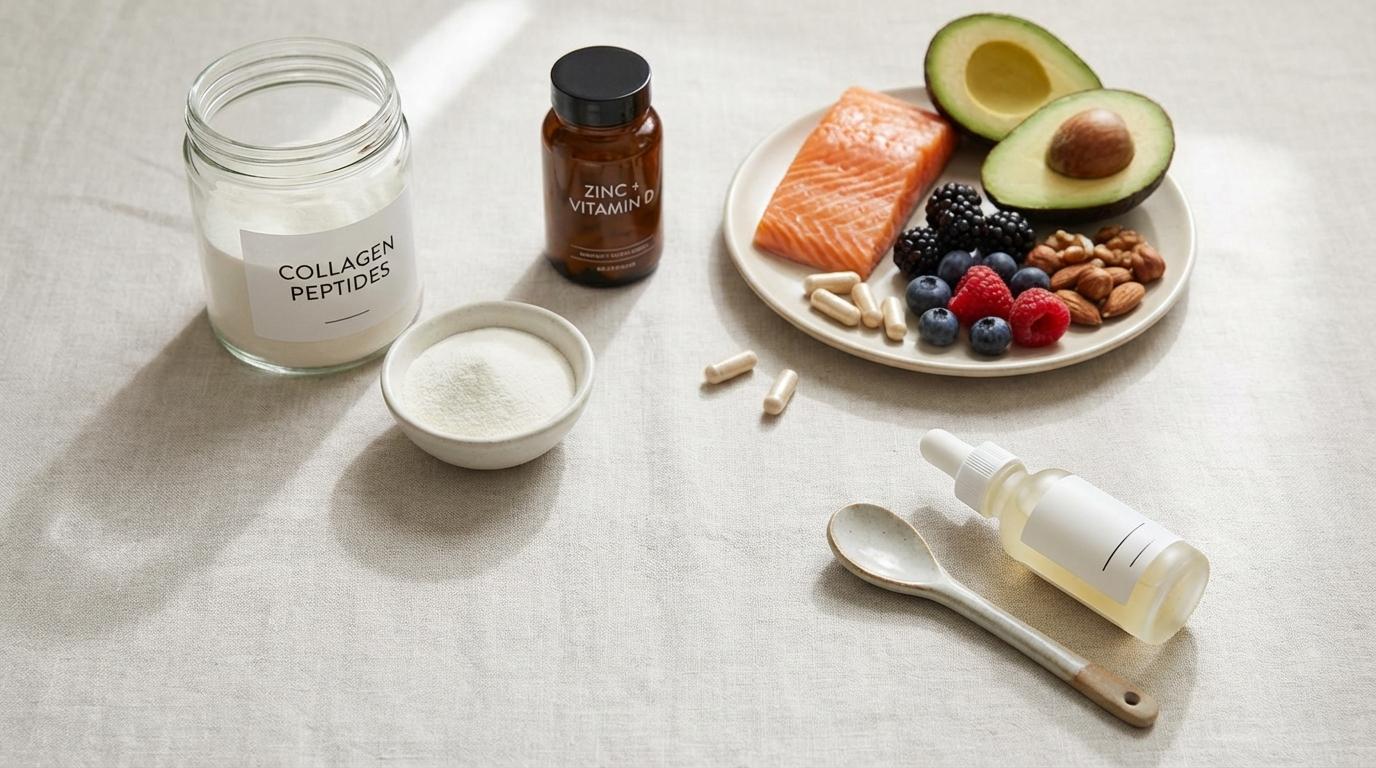
You have probably seen those glossy Instagram ads promising flawless skin with just a few daily capsules. Collagen gummies, biotin pills, “skin vitamins” in aesthetically pleasing bottles. The supplement industry is massive, and skin health is one of its favorite selling points. But here is the thing: not every supplement lives up to its marketing promises, and some are genuinely backed by science. Let me break down what the research actually says, so you can make informed decisions with your money and your health.
The Collagen Supplement Reality Check
Collagen is everywhere right now. Powders, drinks, capsules, even coffee creamers. The premise sounds logical: collagen is a protein that gives our skin structure and firmness, and we produce less of it as we age. So taking collagen should help, right?
The research is genuinely mixed here. Some studies do show improvements in skin hydration and elasticity after taking collagen supplements. However, a recent meta-analysis of 23 randomized controlled trials found that studies supporting collagen supplements were more likely to be lower quality and funded by pharmaceutical companies. That is a significant red flag in research.
Here is what happens when you take collagen orally: your digestive system breaks it down into amino acids, just like any other protein. Your body then uses those amino acids wherever it needs them, not necessarily your skin. There is no guarantee those building blocks end up in your face.
Most dermatologists agree that while collagen supplements show potential, the evidence is not strong enough to recommend them routinely. If you want to try them, look for hydrolyzed collagen peptides (they are more absorbable), but keep your expectations realistic. A quality sunscreen and retinoid will do far more for your skin than any collagen powder.
Zinc: The Quiet Performer
Unlike the flashy collagen marketing, zinc tends to fly under the radar. But this mineral has some legitimate science behind it, especially for acne-prone skin.
Zinc serves several critical functions for skin health. It helps with collagen production, transports vitamin A (another skin-essential nutrient), and regulates inflammatory signals that can trigger breakouts and irritation. According to research published in the Journal of the American Academy of Dermatology, zinc plays a role in wound healing and regulating sebaceous gland activity.
For acne specifically, studies suggest zinc can help reduce inflammation. Some dermatologists recommend it as a complement to topical treatments, particularly for people with inflammatory acne.
The catch? Dosing matters a lot with zinc. Dermatologists typically recommend sticking to 25-30 mg daily because excess zinc can cause nausea and actually interfere with copper absorption. More is definitely not better here. If you are considering zinc supplements for your skin, talk to your doctor first, and get your levels tested if possible. Many people get adequate zinc from food sources like oysters, beef, pumpkin seeds, and chickpeas.
Vitamin D: The Sunshine Nutrient
Vitamin D has become one of the most studied vitamins in recent years, and for good reason. It influences skin cell growth, repair, and immune function. Low vitamin D levels have been associated with various skin conditions, including psoriasis and eczema.
Here is where it gets interesting: vitamin D may also help protect against UV damage. However, this does not mean you should skip sunscreen (please do not skip sunscreen). It means adequate vitamin D levels support your skin’s natural defense mechanisms.
The research is clearest for people who are actually deficient in vitamin D, which is surprisingly common. People who live in northern climates, have darker skin tones, spend most of their time indoors, or consistently wear sunscreen (yes, the thing that protects you from skin cancer also reduces vitamin D synthesis) are at higher risk for deficiency.
The solution? Get your vitamin D levels tested. If you are deficient, supplementation can genuinely help your skin and overall health. If your levels are normal, popping extra vitamin D pills probably will not make a visible difference in your complexion. Most doctors recommend 1000-2000 IU daily for those who need supplementation, but individual needs vary.
Niacinamide: The Most Promising Evidence
Here is where the science gets really solid. Niacinamide, also known as nicotinamide or vitamin B3, has some of the strongest evidence among skin supplements. You might know it as a popular skincare ingredient, but the oral form has impressive research backing it up.
A landmark study published in The New England Journal of Medicine found that taking 500 mg of niacinamide twice daily reduced the development of new non-melanoma skin cancers by 23 percent over 12 months. That is significant data from a high-quality trial.
Beyond skin cancer prevention, niacinamide supports your skin barrier and may help with UV protection. Dermatologists at Boston Derm Advocate note that both niacinamide and vitamins C, D, and E may all protect against UV damage when taken orally.
If you are at higher risk for skin cancer (fair skin, history of sunburns, family history), niacinamide supplementation is worth discussing with your dermatologist. It is affordable, well-tolerated, and has solid evidence behind it.
When Food Is Enough
Here is something the supplement industry does not want you to hear: for most healthy people with a reasonably balanced diet, food provides adequate nutrition for skin health.
Your skin needs a variety of nutrients to function optimally: protein, vitamin C (for collagen synthesis), vitamin E, zinc, omega-3 fatty acids, and antioxidants. These are all readily available from food sources:
- Fatty fish like salmon provide omega-3s and vitamin D
- Citrus fruits, bell peppers, and berries are loaded with vitamin C
- Nuts and seeds offer vitamin E and zinc
- Leafy greens pack antioxidants and various vitamins
- Eggs contain protein and biotin
- Legumes provide zinc and protein
The bioavailability of nutrients from whole foods is often better than from isolated supplements. Plus, foods contain cofactors and other compounds that help your body absorb and use those nutrients effectively.
Supplements make the most sense when you have a documented deficiency, dietary restrictions (like veganism, which may require B12 and potentially zinc supplementation), or specific medical conditions. Taking random supplements “just in case” is not only expensive but potentially counterproductive.
What Dermatologists Actually Recommend
I talked to several dermatologists’ published guidance, and here is what they consistently emphasize:
First, supplements should address a specific deficiency or health goal. Taking a generic “skin vitamin” without knowing your actual nutrient status is shooting in the dark. Get blood work done to identify what you actually need.
Second, quality matters enormously. The supplement industry is poorly regulated compared to pharmaceuticals. Dr. Marie Hayag recommends looking for products with third-party testing (USP, NSF, or ConsumerLab verification), clearly defined doses that align with recommended daily values, and reputable manufacturers.
Third, supplements work best as complements to proven skincare, not replacements. A consistent routine with sunscreen, gentle cleansing, and evidence-based actives (like retinoids and vitamin C serums) will always outperform any supplement regimen.
Fourth, if you have a specific skin concern like acne, hyperpigmentation, or signs of aging, prescription treatments under dermatologist supervision are more effective than supplements. Supplements work best as optional support under medical guidance, not as standalone solutions.
Red Flags in Supplement Marketing
Now that you know what actually works, here is how to spot marketing hype:
Claims that sound too good to be true. “Reverse aging in 30 days” or “Get glass skin with one pill” are not realistic. Skin health is complex and supplements cannot transform your complexion dramatically.
Proprietary blends that hide dosages. If a product does not tell you exactly how much of each ingredient it contains, that is a red flag. You cannot evaluate effectiveness without knowing the dose.
Before and after photos. These are easily manipulated with lighting, makeup, and editing. They are not scientific evidence.
Celebrity endorsements. Celebrities are paid to promote products. Their glowing skin is more likely due to professional treatments, genetics, and excellent dermatological care than the supplement they are hawking.
Vague scientific language. Phrases like “clinically tested” or “dermatologist approved” mean very little. Ask: tested how? Approved for what claim specifically?
The Bottom Line
Some supplements have legitimate evidence for skin benefits. Zinc may help with acne. Vitamin D supplementation benefits those who are deficient. Niacinamide has strong evidence for skin cancer prevention. Even collagen might help some people, though the evidence is shaky.
But the foundation of healthy skin remains consistent: sun protection, gentle skincare, adequate sleep, stress management, and a nutrient-rich diet. No supplement can compensate for skipping sunscreen or chronic sleep deprivation.
Before spending money on supplements, consider whether that budget might be better spent on a good sunscreen, a retinoid prescription, or even a consultation with a dermatologist. Those interventions have far more evidence behind them.
If you do decide to supplement, do it strategically. Get your levels tested, choose quality products, stick to evidence-based options, and have realistic expectations. Your skin is an organ that reflects your overall health, not a problem that can be solved with a single pill.