
Within fifteen minutes of finishing your last rep, a microscopic battle begins on your face. Sweat, which is largely sterile when it first emerges from your pores, starts mixing with the bacteria already living on your skin’s surface. This creates a warm, moist environment that certain bacteria, particularly Cutibacterium acnes and Staphylococcus epidermidis, absolutely thrive in. The post-workout window for cleansing is real, and understanding the science behind it can prevent those frustrating gym breakouts that seem to appear out of nowhere.
The Sweat and Bacteria Timeline
Fresh sweat is actually quite clean. It’s mostly water, with some sodium chloride, urea, and lactate mixed in. The problem isn’t the sweat itself but what happens when it sits on your skin. According to research published in the Journal of Applied Physiology, bacterial populations on the skin can multiply significantly within 30-60 minutes in a warm, humid environment.
Your face has a particularly high density of sebaceous glands, especially across the T-zone. When you exercise, these glands ramp up oil production as your body temperature rises. Mix that fresh sebum with evaporating sweat, add in whatever your pores pushed out during your workout, and you have the perfect recipe for clogged pores. The bacteria don’t create acne directly. They feed on the sebum trapped in your pores, and their metabolic byproducts trigger the inflammatory response we recognize as a pimple.
The timeline matters more than most people realize. Studies on exercise-induced acne from the American Academy of Dermatology suggest that cleansing within 30 minutes post-workout significantly reduces breakout frequency compared to waiting hours. That doesn’t mean you need to panic-sprint to the locker room, but it does mean lingering in sweaty clothes while you grab coffee or run errands afterward is working against your skin.
Why Waiting Too Long Causes Breakouts
The mechanism is straightforward once you understand it. As sweat evaporates, it leaves behind concentrated salts and other compounds on your skin. These residues can irritate the skin barrier, causing micro-inflammation even before bacteria get involved. Meanwhile, the sebum your glands produced during exercise begins to oxidize when exposed to air, making it stickier and more likely to trap dead skin cells inside your pores.
There’s another factor that gym-goers often overlook: occlusion. Tight-fitting workout clothes, headbands, and even ponytail holders create zones where sweat can’t evaporate properly. These areas stay wetter longer, giving bacteria more time to proliferate. It’s why forehead breakouts along the hairline and “backne” after workouts are so common. The combination of friction, trapped moisture, and bacterial growth creates a perfect storm for inflammatory acne.
Your skin’s pH also shifts during and after exercise. The normal slightly acidic pH of around 5.5 helps keep pathogenic bacteria in check. During heavy sweating, this pH can temporarily rise closer to neutral, which some studies suggest may allow certain bacteria to flourish more easily. Getting your skin clean and back to its normal state helps restore that protective acidity faster. If you’re dealing with similar issues beyond workouts, understanding how to manage routine mistakes that worsen acne can help you see the bigger picture.
Gym Bag Essentials for Skin
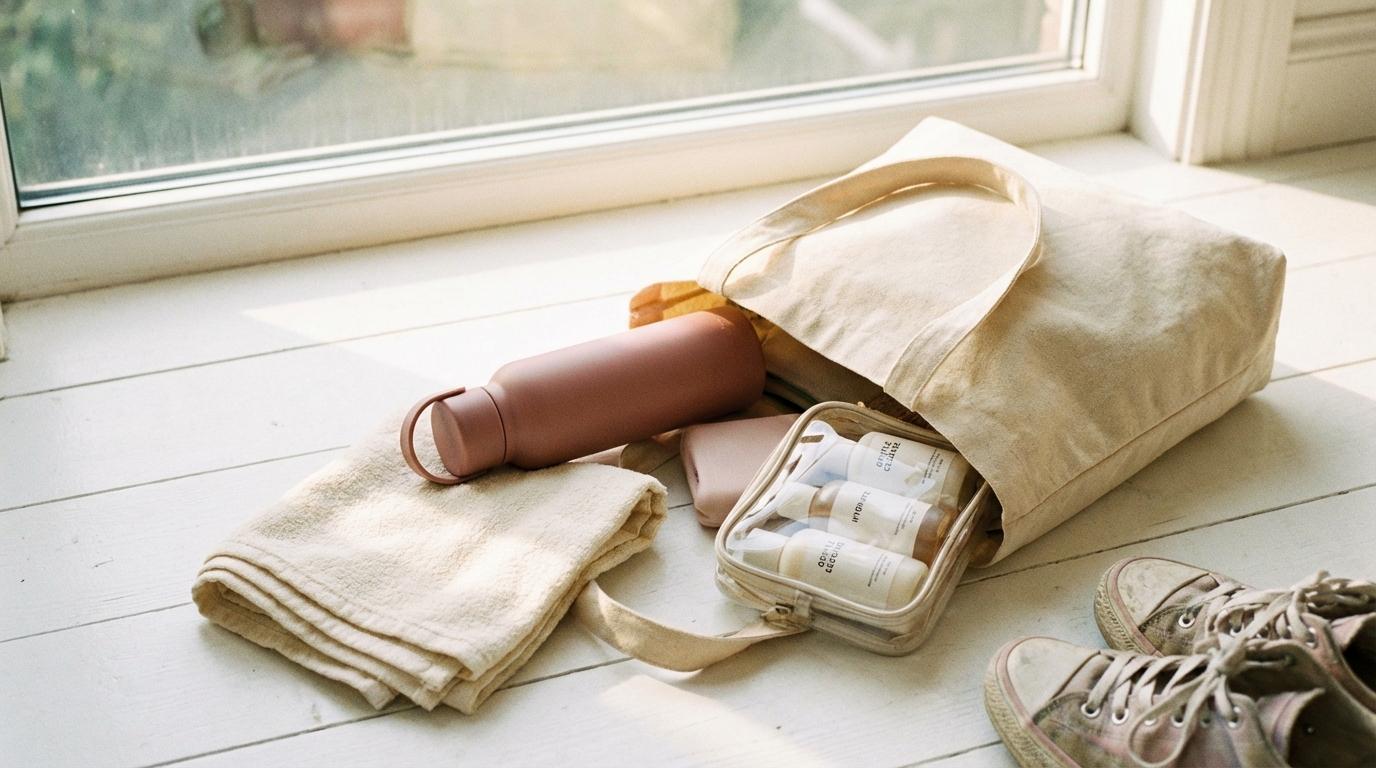
Packing the right products can make post-workout cleansing actually happen, rather than becoming another thing you skip. The key is keeping it minimal and portable. You don’t need your entire bathroom cabinet.
- Micellar water and cotton pads: For days when a full face wash isn’t possible, micellar water removes sweat, oil, and light makeup without requiring a sink. It’s not as thorough as washing, but it’s infinitely better than nothing.
- A gentle gel cleanser: Look for something without sulfates if your skin leans sensitive. Travel-size bottles work perfectly and won’t take up much space.
- Oil-free moisturizer: Your skin needs hydration after cleansing, but heavy creams can cause problems if you’re still slightly sweaty. A lightweight gel moisturizer absorbs quickly.
- A clean microfiber towel: Gym towels are notorious for harboring bacteria. Bringing your own small face towel that gets washed after every use prevents recontamination.
- A headband or hair clips: Getting hair off your face before and during workouts prevents product transfer from hair to skin.
Some people swear by facial cleansing wipes, but honestly, they’re a mixed bag. Many contain alcohol or fragrances that can irritate already-flushed skin. They also don’t rinse off, meaning whatever surfactants lift the dirt stay on your face. If you do use them, follow up with actual cleansing when you get home. The active lifestyle skincare approach covers more about balancing fitness with skin health.
The Minimal Cleansing Technique
You don’t need a ten-step routine in the locker room. In fact, doing too much to freshly exercised skin can cause more problems. Your face is already warm and your pores are more open than usual, which means products absorb differently and potential irritants have easier access.
The most effective approach is surprisingly simple. First, splash your face with lukewarm water to remove surface sweat. Then apply a small amount of gentle cleanser, working it across your face with your fingertips for about 20-30 seconds. Focus on areas that get the most congested: your forehead, nose, and chin. Rinse thoroughly with cool water to help close pores and reduce redness. Pat dry with your clean towel rather than rubbing.
That’s it. Save the actives, the serums, the exfoliants for your actual morning or evening routine at home. Post-workout is about removing what shouldn’t be there, not adding anything new. Your skin is in a slightly vulnerable state after exercise, with increased blood flow and a temporarily compromised barrier. Gentle is the operative word.
If you worked out wearing sunscreen (as you should for outdoor exercise), you might need to cleanse twice to fully remove it. A light oil-based cleanser or micellar water first, followed by your regular cleanser, ensures nothing gets left behind. This double cleanse method is particularly important if you used a mineral sunscreen, which tends to be more stubborn than chemical formulations.
What About Body Skin?
The same principles apply below the neck, though body skin is generally more resilient than facial skin. Showering within an hour of your workout helps prevent body acne, especially on the chest, back, and shoulders where sebaceous glands are most active. Use a body wash containing salicylic acid or benzoyl peroxide if you’re prone to body breakouts, but be aware that benzoyl peroxide will bleach colored towels and workout clothes.
Change out of sweaty clothes as soon as possible. The fabric holds moisture against your skin, extending that bacterial party you want to shut down. If you can’t shower immediately, at minimum change into dry clothes and use a body wipe on acne-prone areas. Anyone dealing with persistent chest or back breakouts might find the approach in back acne treatment helpful.
One detail that often gets overlooked is sports bra hygiene. These garments sit against skin that sweats heavily, and the elastic bands create friction zones. Washing your sports bras after every single wear isn’t being precious about laundry. It’s preventing bacterial and fungal buildup that can cause folliculitis and acne.
The Pre-Workout Factor
What you put on your face before exercising matters almost as much as what you do afterward. Heavy makeup, occlusive moisturizers, and thick sunscreens can trap sweat underneath them, essentially creating a greenhouse effect on your face. This doesn’t mean you should skip sun protection for outdoor workouts. It means choosing your products wisely.
For morning workouts, consider applying minimal products beforehand: just sunscreen if you’re going outside, or nothing but moisturizer if you’re staying indoors. Your full skincare routine can wait until after you’ve cleaned up. For evening gym sessions, removing makeup before you work out prevents it from mixing with sweat and sliding into your pores. Yes, this means doing a mini cleanse before and after, but it’s worth it if you’re dealing with persistent breakouts.
Hair products are another sneaky culprit. Styling products containing silicones and oils transfer to your face during exercise, especially if you touch your hair or it falls across your forehead. Pulling hair back securely and using a headband to catch drips from your hairline can prevent this transfer.
When Cleansing Becomes Over-Cleansing
There’s a temptation, especially when dealing with gym-related breakouts, to cleanse more aggressively or more often. This backfires spectacularly. Your skin barrier is not designed to be stripped multiple times daily. Over-cleansing removes the natural lipids that keep your skin healthy, leading to increased oil production as your skin tries to compensate, more sensitivity to bacteria and irritants, and paradoxically, more breakouts.
Twice daily cleansing is still the maximum for most people, workout or no workout. If you exercise in the morning, that cleanse can be your morning cleanse. If you work out in the evening, that cleanse is your evening cleanse. The only exception might be someone who exercises twice daily, and even then, milder cleansing methods for one of those sessions would be wise.
Listen to your skin. If it feels tight, looks red, or seems more reactive after introducing a new post-workout routine, you’re probably doing too much. Scale back and simplify. The goal is removing sweat and excess oil, not sterilizing your face.
Building the Habit
Knowing what to do and actually doing it consistently are different challenges. The post-workout window closes whether you’re ready or not. Making skincare after exercise non-negotiable requires a bit of planning.
Keep your gym bag stocked and ready so there’s no excuse about forgetting products. Store a backup kit in your car or at work if you exercise in different locations. Set a mental rule that your workout isn’t done until your face is clean. It takes maybe two minutes and pays dividends in clearer skin.
The science is clear: what happens to your skin immediately after exercise influences whether you break out. You can’t control your genetics or hormone levels, but you can control this window. Use it.