
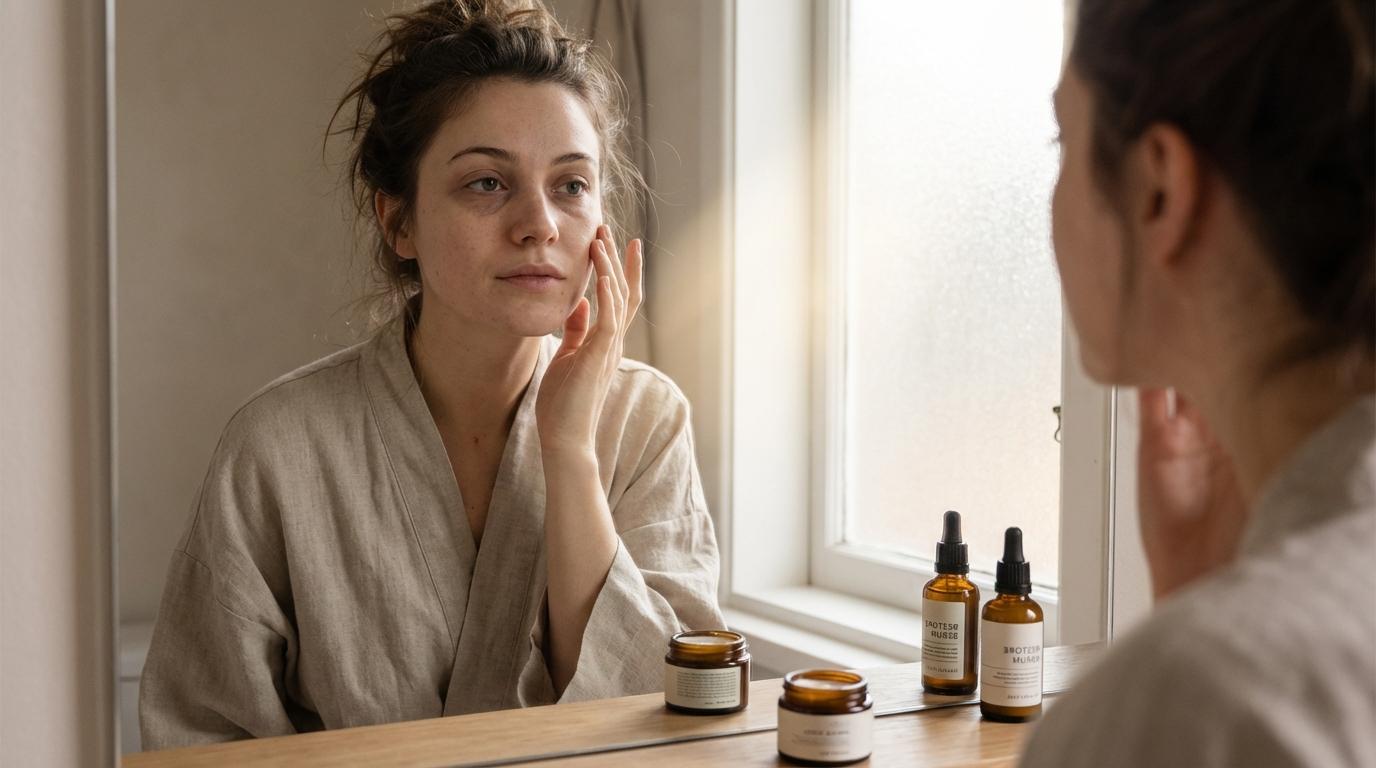
You stayed up late doom-scrolling again. Or maybe you had an early flight. Or your brain just refused to shut off until 2am. Whatever the reason, you only got five hours of sleep, and honestly, your skin noticed before you did. That reflection staring back at you in the morning mirror? It’s not lying. Sleep deprivation does real, measurable things to your skin, and I’m here to break down exactly what’s happening beneath the surface when you short yourself on rest.
Your Cortisol Goes Into Overdrive
Let’s start with the stress hormone that basically runs the show when you’re sleep-deprived: cortisol. When you don’t get enough sleep, your body interprets that as a stressor. In response, it activates something called the hypothalamic-pituitary-adrenal axis (fancy name, I know), which triggers a surge in cortisol production.
Here’s where things get rough for your skin. Elevated cortisol does a few not-so-great things. First, it increases inflammation throughout your body, including your skin. If you’ve ever noticed that your acne flares up after a string of bad sleep nights, this is exactly why. That cortisol spike is literally creating an inflammatory environment where breakouts thrive.
But wait, there’s more. According to dermatologist Dr. Anita Sturnham, increased cortisol secretion degrades collagen and affects skin elasticity. So every night you’re only getting five hours, you’re essentially accelerating the aging process. Not to scare you, but yeah, it’s that serious.
Collagen Production Takes a Hit
Speaking of collagen, let’s talk about what actually happens to it when you skimp on sleep. Your body does most of its repair work while you’re in deep sleep stages. During these phases, growth hormone gets released, which is crucial for cellular repair and, you guessed it, collagen production.
When you only sleep five hours, you’re cutting those deep sleep cycles short. Less deep sleep means less growth hormone secretion, which means less collagen synthesis. Research has shown that people who sleep only five hours a night can develop twice as many fine lines compared to those who get seven hours. That’s not a typo. Double the fine lines.
And here’s the thing that really gets me as someone who loves understanding the science: collagen production already decreases as we age. So when you’re sleep-deprived, you’re essentially doubling down on collagen loss. Your skin is fighting a battle on two fronts, and it’s losing on both.
Why You Wake Up Looking Like a Puffy Raccoon
Okay, let’s address the most obvious visual sign of poor sleep: those dark circles and puffy under-eyes staring back at you. There’s actual science behind why this happens, and it’s not just because you look tired.
When cortisol levels spike from sleep deprivation, your body becomes more prone to fluid retention. That excess fluid tends to pool in the delicate tissue around your eyes, causing puffiness. The skin under your eyes is already super thin (we’re talking about some of the thinnest skin on your entire body), so any fluid accumulation shows up immediately.
As for those dark circles, elevated cortisol makes the blood vessels around your eyes more prominent. Board-certified dermatologist Dr. Gary Jayne Rothfeld explains that chronic sleep deprivation triggers cortisol release, which causes inflammation and makes blood vessels more visible through that thin under-eye skin. The result? That bruised, shadowy look that no amount of concealer can truly hide.
Your Skin Barrier Gets Compromised
This one surprised me when I first learned about it, but it makes total sense. Even a single night of sleep deprivation can compromise your skin barrier stability. Your skin barrier is basically your body’s first line of defense against environmental stressors, pollution, bacteria, and moisture loss.
During proper sleep, your skin goes through repair processes that strengthen this barrier. Keratinocytes (the cells that make up most of your epidermis) proliferate during sleep. Skin permeability normalizes. Wound healing accelerates. When you cut your sleep short, all of these processes get interrupted.
The practical result? Your skin becomes more reactive. Products that normally work fine might suddenly sting or cause irritation. Your skin might feel drier even though you’re using the same moisturizer. You might notice more sensitivity to things that never bothered you before. That’s your compromised barrier struggling to do its job.
The Chronic Sleep Debt Problem
One rough night won’t ruin your skin forever. Your body is resilient, and catching up on sleep can help reverse acute effects. But here’s where it gets concerning: chronic sleep debt is cumulative, and its effects on your skin become increasingly difficult to reverse.
A 2025 review published in the Journal of Integrative Dermatology examined the sleep-skin axis and found that chronic sleep restriction creates a persistent inflammatory state in the body. This ongoing inflammation doesn’t just cause acne flares. It accelerates the breakdown of collagen and elastin, contributes to hyperpigmentation issues, and can even worsen existing inflammatory skin conditions like eczema and psoriasis.
What’s particularly frustrating is that sleep debt doesn’t work like a bank account where you can just deposit extra hours on the weekend and call it even. Your skin has already been exposed to elevated cortisol, reduced growth hormone, and impaired repair processes. While recovery is possible, the damage from chronic deprivation compounds over time.
Your Complexion Loses Its Vitality
Beyond the measurable biological effects, there’s something more subjective but equally real: sleep-deprived skin just looks dull. There’s a reason people talk about beauty sleep. When you’re well-rested, blood flow to your skin improves, delivering oxygen and nutrients that give your complexion that healthy appearance.
When you’re running on five hours, that circulation decreases. Your skin doesn’t get the same nutrient delivery. Dead skin cells don’t shed as efficiently because cell turnover is impaired. The result is that washed-out, flat look that makes you appear exhausted even if you’ve had three coffees and feel mentally alert.
Interestingly, research on sleep quality and skin color has shown that sleep deprivation can actually affect skin pigmentation through multiple pathways, including hormonal balance and melanocyte biology. So it’s not just your imagination telling you that you look different after poor sleep. The actual color and tone of your skin can shift.
What About Your Nighttime Skincare Routine?
Here’s something worth considering. All those expensive serums and treatments you’re applying at night? They work best when your skin is in repair mode, which happens during quality sleep. Active ingredients like retinoids and peptides are designed to support your skin’s natural nighttime processes.
When you only sleep five hours, you’re not giving those products enough time to work with your skin’s repair cycle. It’s like paying for a full hour of personal training and leaving after 30 minutes. You’re still getting some benefit, but you’re not maximizing what you paid for.
This doesn’t mean your nighttime routine is worthless if you have a bad night. But if chronic short sleep is your norm, you might want to reconsider how much you’re investing in products versus how much you’re investing in actual sleep.
The Real Talk Section
I’m not here to lecture you about perfect sleep hygiene or pretend that getting eight hours every night is realistic for everyone. Life happens. Work deadlines exist. Babies don’t read sleep training books. Anxiety doesn’t check your calendar before keeping you awake.
But I do think it’s worth understanding what’s actually happening to your skin when sleep consistently takes a backseat. Not so you can feel guilty about it, but so you can make informed decisions. Maybe knowing that cortisol spikes degrade collagen motivates you to prioritize sleep during particularly stressful periods. Maybe understanding the dark circle mechanism helps you stop buying expensive eye creams when what you really need is more rest.
Your skin is remarkably communicative if you pay attention. Those dark circles, that dullness, those unexpected breakouts? They’re feedback. Your skin is telling you something about your overall health, and sleep is often the missing piece that no product can replace.
Small Steps That Actually Help
If you can’t magically add more hours to your night, focus on sleep quality over quantity when possible. Going to bed and waking up at consistent times helps regulate your cortisol rhythm even if total hours aren’t perfect. Keeping your room cool supports the deeper sleep stages where most skin repair happens.
On mornings after rough nights, prioritize hydration (both drinking water and applying a good moisturizer). Be gentle with your skin, as that compromised barrier doesn’t need harsh actives making things worse. And honestly? Sometimes accepting that you’ll look tired because you are tired is healthier than trying to fake it with products that won’t address the root cause.
Your skin will recover from occasional bad nights. But if five-hour sleeps are becoming your standard operating procedure, your skin is probably trying to tell you that something needs to change. And unlike that serum that promised to transform your complexion, addressing your sleep might actually deliver results you can see.