
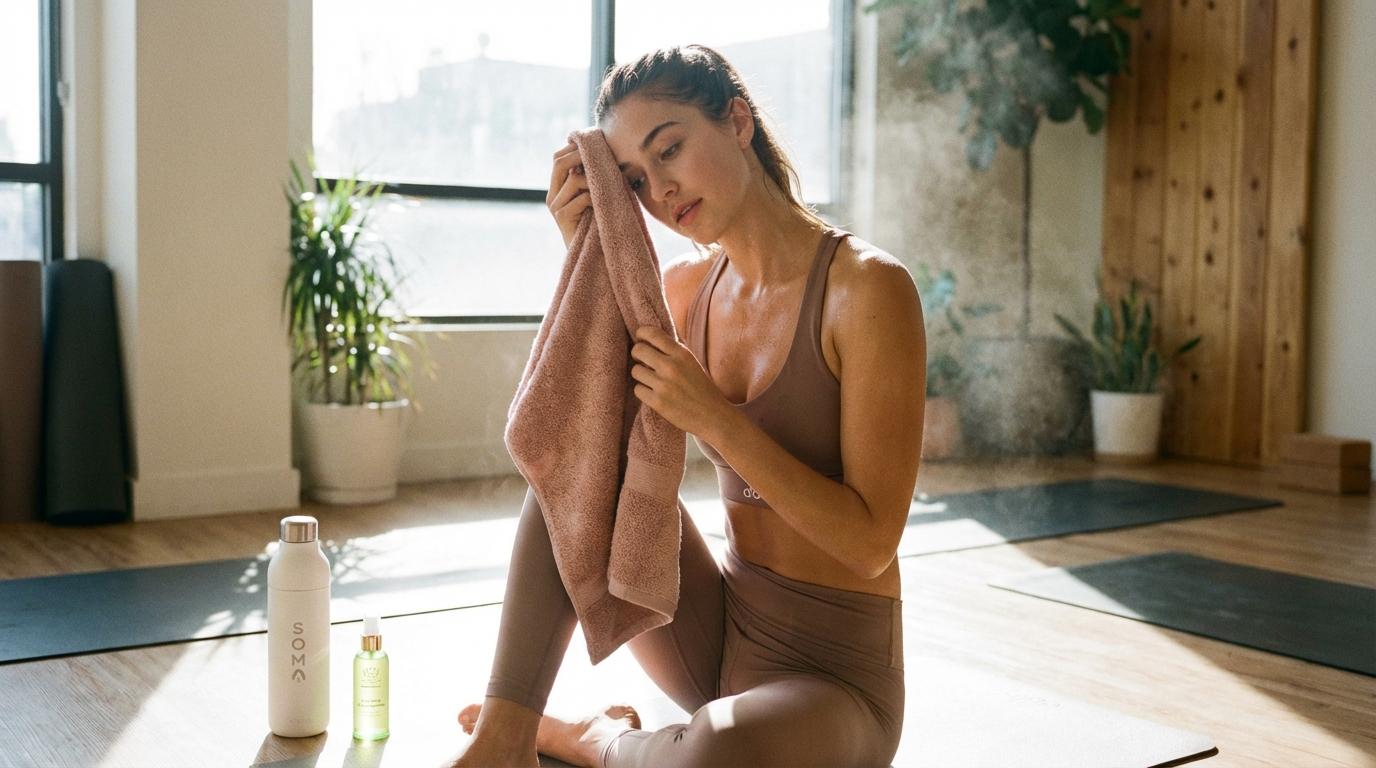
Hot yoga wrecks your face. There, I said it.
You leave class feeling spiritually cleansed and physically wrung out. But then you catch your reflection. Your face looks like you stuck it in an oven. And that redness? It’s still there three hours later.
This isn’t just “you’re hot from exercise” redness. This is something else. Let’s talk about what’s actually happening to your skin in that 105-degree room.
What Heat Does to Your Blood Vessels
When your body temperature rises, your blood vessels dilate. This is called vasodilation. It’s your body’s cooling system kicking in, pushing blood closer to your skin’s surface so heat can escape.
Normal exercise causes this. Hot yoga takes it to another level.
You’re not just working out. You’re working out in an artificially heated environment, sometimes up to 105 degrees Fahrenheit with humidity cranked to 40%. Your blood vessels are under constant pressure to expand. They’re working overtime.
For most people, this vasodilation reverses within 30-60 minutes of cooling down. Your blood vessels constrict back to normal. Redness fades.
But if your face is still tomato-red hours later? Your blood vessels might be having trouble returning to baseline. And that’s a problem worth paying attention to.
The Rosacea Connection
Here’s something the hot yoga studio won’t tell you: heat is one of the most common rosacea triggers.
If you have rosacea (and many people don’t know they do), hot environments can trigger flushing episodes. These aren’t just temporary blushes. They’re inflammatory responses that can damage your blood vessels over time.
Signs your lingering redness might be rosacea-related:
- Redness concentrates on your cheeks, nose, and forehead
- You notice tiny visible blood vessels (spider veins)
- Your skin feels warm or burning, not just flushed
- The redness lasts well beyond your cool-down period
- You get this reaction consistently, not just occasionally
According to the National Rosacea Society, 75% of rosacea sufferers identify heat as a trigger. Hot yoga is basically a concentrated dose of that trigger.
Not everyone with post-yoga redness has rosacea. But if this is a pattern for you, it’s worth getting checked out by a dermatologist.
Why Your Cool-Down Matters More Than You Think
Most people finish class, towel off, and head straight to their car. Bad move.
Your body needs time to regulate temperature gradually. Jumping from a heated studio into air conditioning shocks your system. Your blood vessels, already stressed, don’t know what to do. They might stay dilated longer as a result.
Here’s how to cool down properly:
Take at least 10-15 minutes in a cooler (not cold) environment. Sit in the lobby. Don’t blast yourself with AC immediately.
Use cool (not cold) water on your wrists and neck. These are pulse points where blood vessels are close to the surface. Gentle cooling here helps lower your core temperature faster.
Don’t splash ice water on your face. I know it feels good. But the temperature shock can cause rebound flushing. Your blood vessels constrict rapidly, then dilate again in response. You end up redder than before.
Mist your face with a thermal water spray. Avene, La Roche-Posay, and Evian all make these. The gentle mist cools without shocking. If you deal with persistent redness, you might find our guide on calming redness useful.
Hydrate before you leave. Dehydration makes flushing worse. Drink water during your cool-down, not just during class.
Skincare Adjustments for Hot Yoga Days
What you put on your skin before and after class matters.
Before class: Skip all actives. No vitamin C, no retinol, no AHAs or BHAs. These ingredients can make your skin more reactive to heat. Wash your face with a gentle cleanser and apply a light, fragrance-free moisturizer. That’s it.
After class: Don’t rush into your full routine. Your skin is sensitized. Wait until redness has subsided before applying anything beyond a basic moisturizer.
Ingredients that help calm post-workout redness:
- Niacinamide: Strengthens the skin barrier and reduces redness
- Centella asiatica (cica): Anti-inflammatory and soothing
- Aloe vera: Cooling and hydrating
- Chamomile: Natural anti-inflammatory
Avoid anything with fragrance, alcohol, or essential oils after hot yoga. Your skin doesn’t need additional irritation.
When You Should Skip Hot Environments Entirely
I’m not here to tell you to quit hot yoga. But some situations call for a break.
If you have diagnosed rosacea, talk to your dermatologist before continuing hot yoga. Some people with rosacea can tolerate it with modifications. Others really shouldn’t be in that environment at all.
If your redness takes more than 3-4 hours to fade, your skin is telling you something. Persistent vasodilation can lead to permanent visible blood vessels over time. This isn’t scaremongering. It’s what happens when blood vessels are repeatedly stretched beyond their capacity.
If you’re on certain medications, particularly blood thinners or blood pressure medications, check with your doctor. These can affect how your blood vessels respond to heat.
During heat waves or when you’re already dealing with skin sensitivity, consider switching to a regular-temperature yoga class. Our piece on skincare during extreme heat covers how heat exposure compounds on itself.
If you’re experiencing any burning, stinging, or pain along with the redness, stop immediately. This goes beyond normal flushing into potential heat injury territory.
Alternatives Worth Considering
Love the yoga but can’t tolerate the heat? Options exist.
Warm yoga (usually around 80-90 degrees) gives you some of the benefits of a heated practice without the extreme temperature. Your skin might handle this much better.
Regular vinyasa or power yoga still makes you sweat. You’re generating your own body heat through movement. Your blood vessels respond to your internal temperature, which they’re designed to handle, rather than external environmental heat.
Infrared hot yoga uses a different type of heat that some people find less triggering. The heat penetrates more evenly and doesn’t create the same humidity. Worth trying if you’re committed to hot practice but struggling with the skin effects.
Reading Your Own Patterns
Here’s the thing. Everyone’s vascular system responds differently. Some people can do hot yoga five times a week and walk out with barely a flush. Others turn red during the opening meditation and stay that way until bedtime.
Pay attention to your own patterns.
How long does your redness typically last? Does it get worse over time, or has it stayed consistent? Does it happen every session or only sometimes?
Track it for a few weeks. Note the class temperature, the humidity level if your studio shares it, how hydrated you were going in, what you ate beforehand, and how long it took for redness to fade.
You’ll start to see patterns. Maybe you’re fine at 100 degrees but not 105. Maybe you’re fine when you’re well-hydrated but not when you skipped water that morning. Maybe evening classes are better for you than morning ones.
This information is useful, especially if you end up talking to a dermatologist about it.
The Bottom Line
Post-hot-yoga redness that fades within an hour is normal. Your blood vessels are doing their job.
Redness that sticks around for hours, happens consistently, or comes with other symptoms deserves attention. Your skin might be telling you that this particular activity isn’t compatible with your particular physiology.
There’s no shame in switching to a different type of practice. And there’s definitely value in protecting your skin from repeated vascular stress.
Hot yoga isn’t going anywhere. But your long-term skin health matters more than any single workout trend. Make the choice that makes sense for your face.