
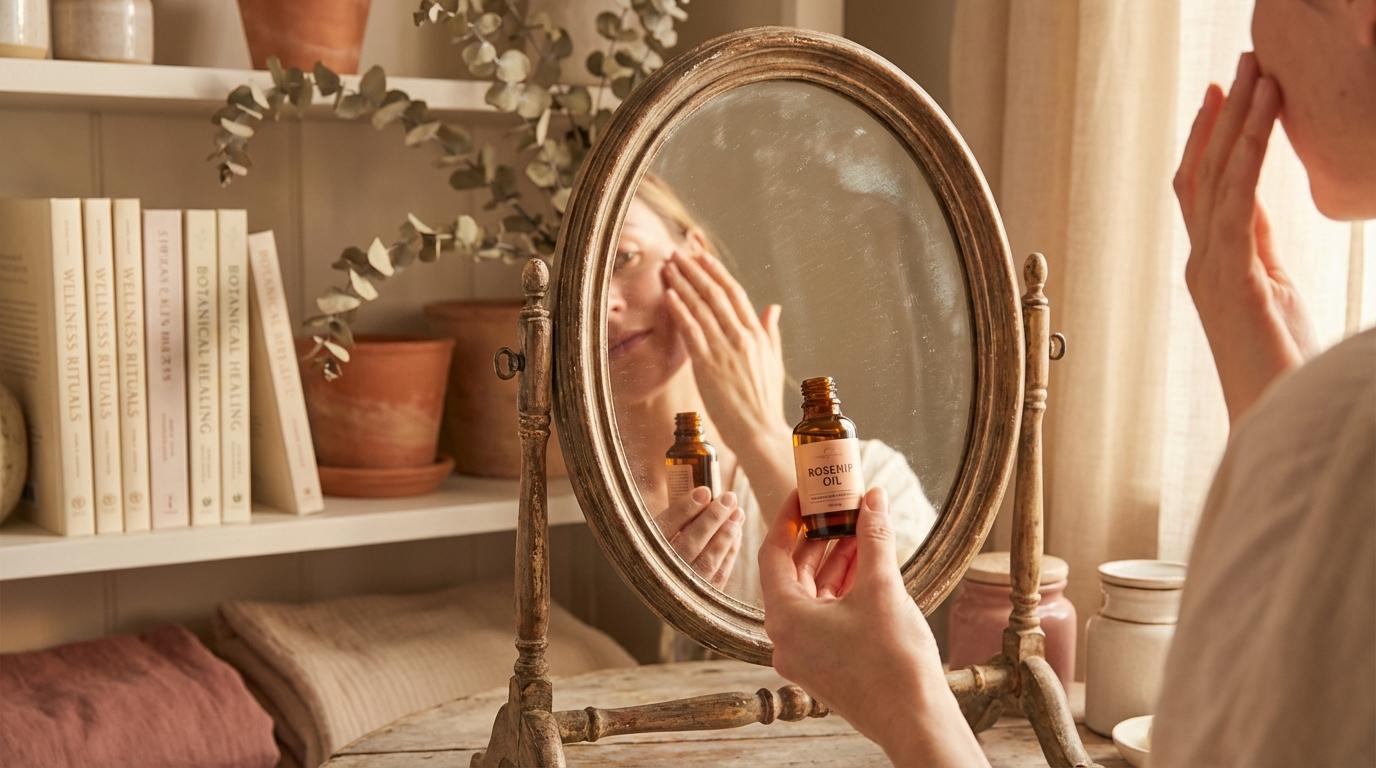
Rosehip oil is the internet’s favorite “scar eraser.” Except it’s really not that simple, and anyone who tells you otherwise is probably trying to sell you something.
I’ve been using rosehip oil on and off for like three years now, and I have Opinions. Capital O. Because this ingredient has some genuinely cool benefits, but the hype machine has gone way overboard with what it can actually do for your face. Let’s talk about what’s real and what’s wishful thinking.
What Rosehip Oil Actually Is (and Why People Love It)
Rosehip oil comes from the seeds of rose bushes, specifically Rosa canina or Rosa rubiginosa. It’s pressed from the little fruit that forms after the flower drops its petals (the “hip” part, which honestly sounds vaguely inappropriate but here we are).
The reason skincare people get excited about it: this oil is legitimately packed with good stuff. We’re talking vitamin A (in the form of tretinoin and beta-carotene), vitamin C, vitamin E, and essential fatty acids like linoleic acid and alpha-linolenic acid. That’s a pretty impressive lineup for something that grows on bushes.
The fatty acid profile is particularly interesting. Rosehip oil is high in linoleic acid, which makes it theoretically better suited for oily and acne-prone skin than oils high in oleic acid. I say “theoretically” because your skin is going to have its own opinions about this (more on that later).
The Scar Situation: What Rosehip Oil Can and Cannot Do
This is where I need to be super real with you, because the claims around rosehip oil and scarring are… ambitious.
What it might actually help with:
- Post-inflammatory hyperpigmentation (PIH), those dark marks left after a pimple heals. The vitamin A and C content can support cell turnover and potentially fade these marks faster.
- Keeping healing skin moisturized, which creates better conditions for the skin to repair itself.
- General skin texture improvement over time with consistent use.
What it probably won’t fix:
- Actual indented acne scars (ice pick scars, boxcar scars, rolling scars). These are structural damage to your skin, and no topical oil is rebuilding collagen at the dermis level. If you have real acne scars versus just dark marks, you need to know the difference because the treatments are completely different.
- Old scars that have been there for years. Sorry, but once scar tissue has fully formed and matured, you’re looking at professional treatments if you want significant improvement.
- Fresh wounds. Please don’t put oil on open skin. Just don’t.
A 2015 study did show that rosehip oil improved the appearance of post-surgical scars when used during the healing process. But here’s the thing: those subjects were using it on fresh, healing incisions under professional guidance, not on years-old acne scars. Context matters.
The Comedogenic Question (Yes, It Can Break You Out)
I see a lot of “rosehip oil is non-comedogenic!” claims floating around, and I need to pump the brakes on that.
Rosehip oil has a comedogenic rating of about 1-2 on the 0-5 scale, which means it’s LOW risk but not NO risk. And here’s the frustrating reality: comedogenic ratings are based on rabbit ear tests from the 1970s, and your face is not a rabbit ear. (Thank goodness, honestly.)
Some people slather rosehip oil on their face with zero problems. Other people get clogged pores within a week. If you’re someone whose skin seems to freak out at everything, rosehip oil might be on your no-fly list regardless of what the comedogenic charts say.
Signs rosehip oil might not be your friend:
- Small, flesh-colored bumps appearing after a few weeks of use (closed comedones)
- Increased blackheads, especially around your nose and chin
- Your skin feels congested or “textured” in a bad way
- New breakouts in areas you don’t usually break out
If you notice any of this, it’s not purging (oils don’t cause purging because they don’t increase cell turnover like retinoids do). It’s just your skin saying “nope.”
How to Actually Use Rosehip Oil Without Messing Up Your Skin
Assuming your skin tolerates oils (big if for some of us), here’s how to incorporate rosehip oil properly.
Start small. Like, really small. Two to three drops max. You can always add more, but you can’t un-grease your face once it’s greasy.
Apply it at the right time. Face oils go at the end of your routine, after your water-based products but before any heavier occlusives. The typical order: cleanser, toner (if you use one), water-based serum, rosehip oil, moisturizer if needed.
Some people use rosehip oil as their moisturizer replacement, which can work if your skin is on the drier side. But if you have oily skin, you might actually do better using it under a lightweight moisturizer rather than instead of one. Weird, I know, but sometimes skin needs the water component from a moisturizer separately from the oil component.
Nighttime is probably better. Rosehip oil can be photosensitizing because of the vitamin A content, though the evidence on this is kind of mixed. Playing it safe, use it at night. Plus, your skin does most of its repair work while you sleep anyway, so that’s when the vitamins can actually get to work.
Patch test first. I know, I know, everyone says this and nobody does it. But seriously: inside of your wrist or behind your ear, wait 24 hours, see if anything weird happens. Future you will appreciate this if rosehip oil turns out to be a problem.
How to Pick a Good Rosehip Oil
Not all rosehip oils are created equal, and the quality differences actually matter here.
Look for cold-pressed. Heat extraction damages those lovely vitamins and fatty acids we’re here for. Cold-pressed means the oil was extracted without heat, preserving more of the good stuff.
Color matters. Good rosehip oil should be a golden to reddish-orange color. If it’s super pale or basically clear, it’s probably been refined to the point of losing the beneficial compounds. If it’s brown or smells weird, it’s oxidized and you should throw it out.
Check the bottle. Dark glass bottles protect the oil from light degradation. Clear bottles = your oil is going to go bad faster. Also look for an expiration date and actually pay attention to it. This oil goes rancid, and rancid oil is not doing your skin any favors.
Pure vs. blended. Some brands sell rosehip oil mixed with other oils or add vitamin E (which acts as a preservative). Neither of these is necessarily bad, just know what you’re getting. If you want to know how rosehip compares to other options, check out how different face oils work for different skin types.
Realistic Timeline for Results
If you’re using rosehip oil hoping to see changes, here’s what you’re looking at time-wise:
- Hydration and texture improvement: 1-2 weeks
- Fading of fresh PIH marks: 4-8 weeks of consistent use (and it’s supporting the process, not replacing actual brightening treatments)
- General skin tone evening: 6-12 weeks
- Older hyperpigmentation: 3-6 months, maybe longer, and you might not see dramatic results
If someone tells you their scars disappeared in two weeks from rosehip oil alone, they’re either lying, misremembering, or their “scars” were actually just PIH that was going to fade anyway.
When to Skip Rosehip Oil Entirely
Real talk: rosehip oil isn’t for everyone, and that’s fine. Skip it if:
- You have fungal acne (malassezia folliculitis). This oil can feed the yeast. Not what we want.
- You’re allergic to roses. I feel like this should be obvious but just in case.
- Your skin is currently irritated, compromised, or you’re dealing with active breakouts. Adding oil to an already upset situation usually makes things worse.
- You’ve tried other face oils and they consistently break you out. The pattern is telling you something.
If you have super dry skin and oils haven’t been your thing, you might do better with something like squalane oil, which has a completely different structure and absorbs differently.
Mixing Rosehip Oil With Other Actives
Quick compatibility guide because I see people messing this up:
Generally fine to mix/layer with:
- Hyaluronic acid (apply the HA first, then oil)
- Niacinamide
- Ceramides
- Most moisturizers
Be careful mixing with:
- Retinol/retinoids: Both have vitamin A, so you might be overdoing it. If you use retinol, maybe skip the rosehip on those nights or apply the oil first as a buffer.
- Vitamin C serums: Technically fine, but vitamin C is usually best applied to bare skin in the morning, and rosehip is better at night. Just use them at different times.
- AHAs/BHAs: The acids do their thing, wait 20-30 minutes, then apply the oil. Don’t mix them directly.
The Actual Bottom Line on Rosehip Oil
Rosehip oil is a solid skincare ingredient with legitimate benefits. It’s vitamin-rich, has a favorable fatty acid profile for many skin types, and can support your skin’s overall health and appearance. What it is NOT is a miracle product that erases scars, reverses sun damage, or replaces actual medical treatments.
If you go in with realistic expectations (hydration boost, some support for fading dark marks, general skin nourishment), you’ll probably be happy with it. If you’re expecting it to fix years of acne scarring, you’re setting yourself up for disappointment.
And if it breaks you out? That’s okay. There are like a hundred other face oils out there, or you can skip the oil step entirely. Your skin, your rules. No single ingredient is mandatory, no matter how many influencers are posting about it.