
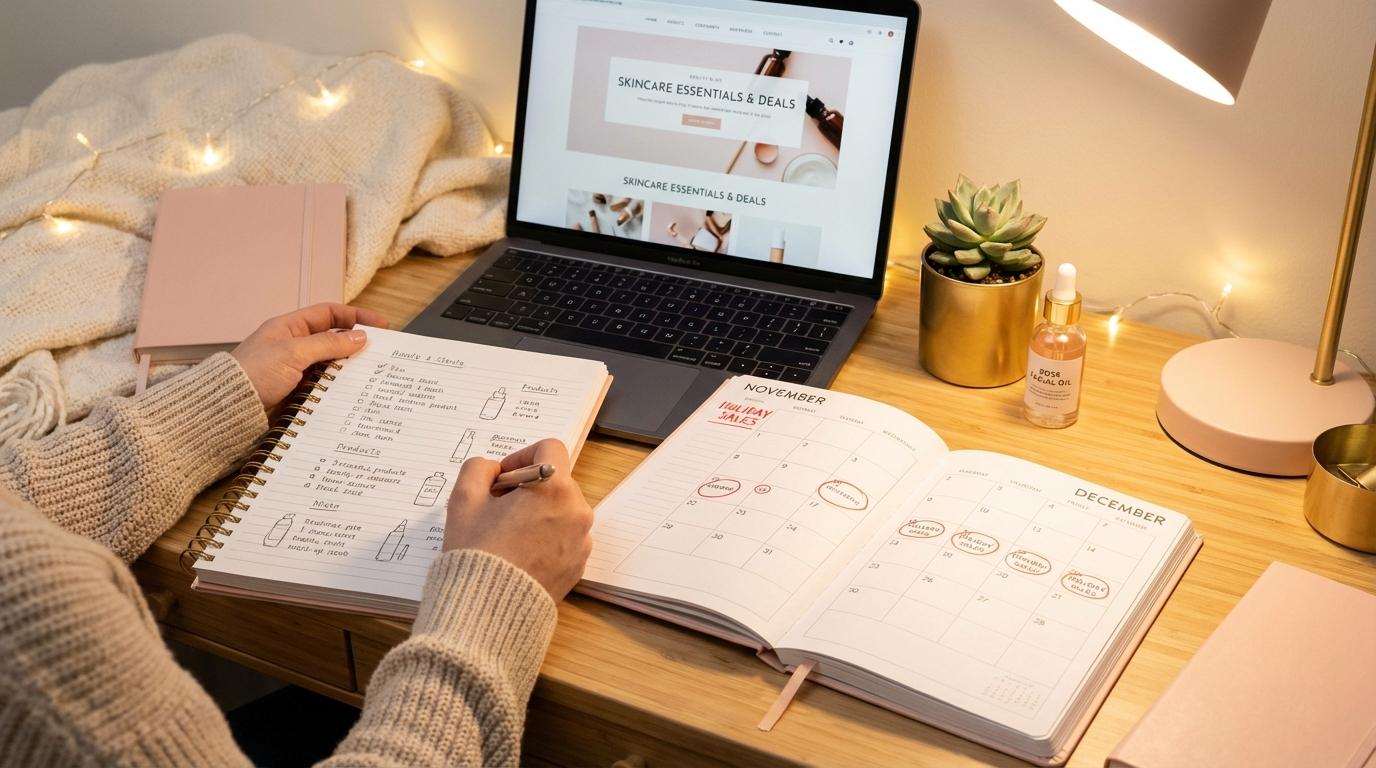
About 70% of skincare products purchased in the US happen during promotional periods, and if you’re not timing your purchases strategically, you’re probably spending more than you need to. The skincare industry runs on predictable sale cycles, and once you understand these patterns, you can stock up on your favorites without the guilt of paying full price. Let me walk you through exactly when those discounts drop, because shopping smarter means more money for the products that actually work.
Understanding the Holiday Sale Calendar
The retail industry operates on a calendar that repeats itself year after year, and skincare brands are no exception. Black Friday and Cyber Monday remain the biggest sales events, with discounts often ranging from 20% to 50% off. But here’s what many people miss: the sales actually start earlier than you think. Many brands launch their Black Friday promotions the week before Thanksgiving, giving you a head start before the rush.
Memorial Day and Labor Day weekends have quietly become significant skincare shopping windows. Retailers use these long weekends to clear inventory, and you’ll often find 25-30% off sitewide deals. These are particularly good times to stock up on SPF products, since Memorial Day kicks off summer and Labor Day marks the season’s end.
The December holiday period brings a second wave of major discounts. Boxing Day sales (December 26th) and the week between Christmas and New Year’s often feature clearance pricing that rivals Black Friday. Brands are pushing to hit year-end revenue targets, which works in your favor. January also brings post-holiday clearance events where holiday sets and limited editions get marked down significantly.
Valentine’s Day and Mother’s Day sales tend to focus on gift sets and skincare bundles. While the discounts might be smaller (typically 15-20% off), these bundles often represent good value if you’re looking to try multiple products from a brand. For a deeper look at building an effective routine on a budget, check out our guide on products worth your money.
Brand Anniversary Sales: Hidden Discount Windows
Every skincare brand has a birthday, and most celebrate with substantial discounts. These anniversary sales are often the best time to buy from specific brands because the discounts can be more generous than typical seasonal sales. According to retail shopping guides, anniversary sales typically offer 20-30% off with occasional doorbusters at deeper discounts.
Sephora’s annual sale events run twice yearly: the Spring Savings Event (usually April) and the Holiday Savings Event (November). These are tiered by membership level, with Rouge members getting the earliest access and deepest discounts. If you’re a regular Sephora shopper, planning your purchases around these events can save you hundreds annually.
Ulta’s 21 Days of Beauty sale happens twice a year, typically in March and September. During these events, specific products rotate daily at 50% off. The catch is you need to pay attention to which products are featured on which day. Following Ulta’s social media or signing up for their emails will keep you informed about the daily steals.
Smaller indie brands often celebrate their founding anniversaries with flash sales or limited edition releases. These can be harder to track, but following your favorite brands on Instagram or subscribing to their newsletters will alert you to these opportunities. Paula’s Choice, for example, runs anniversary promotions that often include their best percentage discounts of the year.
End of Season Clearance: The Strategic Approach
Seasonal transitions create natural clearance opportunities. The skincare industry adjusts its marketing focus throughout the year: heavy moisturizers in winter, lightweight formulas and SPF in summer. When seasons change, retailers need shelf space for new arrivals. This is when you find the best clearance deals.
Late February and early March mark the end of winter product cycles. Rich creams and heavy occlusives often go on clearance as retailers make room for spring products. If you have dry skin that needs intensive moisture year-round, this is prime shopping time. According to consumer research, clearance pricing can drop products to 40-60% below original retail.
August and September bring summer clearance. SPF products, lightweight lotions, and after-sun care get marked down as retailers prepare for fall launches. Stock up on sunscreen during this window because SPF has a shelf life of about three years unopened, and you’ll need it again come spring.
The formula for successful clearance shopping is simple: buy products you already know work for your skin. Clearance is not the time to experiment with new ingredients unless you’re comfortable potentially wasting money. If you’re building a brightening routine, for instance, wait for clearance on products you’ve already patch tested.
Strategic Timing for Specific Product Categories
Different product categories have their own ideal buying windows. Retinol products, which are typically recommended for fall and winter use, often see their best prices in late summer. Brands know that autumn is when many people start their retinol routines, so late August sales help drive purchases before the peak season. This timing aligns well with understanding how retinol works and starting at the right time.
Vitamin C serums often go on sale during January sales events. The antioxidant focus of many brands’ marketing picks up in spring (for protection against increased sun exposure), so winter clearance hits vitamin C products that haven’t sold through. Just check expiration dates, as vitamin C can degrade over time.
Sheet masks and treatment masks see significant discounts during mid-year events like Amazon Prime Day (typically July) and after holiday seasons when gift sets get broken up. Individual masks from broken sets often hit clearance at steep discounts.
High-end tools and devices, such as LED masks or microcurrent devices, follow a slightly different pattern. The best discounts typically come during Black Friday, Cyber Monday, and Prime Day. These big-ticket items rarely go on sale otherwise, so timing your purchase around these events can save you $100 or more.
Building Your Shopping Calendar
The most effective approach to budget skincare shopping involves planning ahead. About six weeks before you expect to run out of a product, add it to a shopping list and start monitoring prices. Price tracking tools like CamelCamelCamel for Amazon products or Honey browser extension can help you identify when prices drop.
Create a simple annual calendar with key sale dates marked:
- January: Post-holiday clearance, vitamin C deals
- March: Ulta 21 Days of Beauty, end of winter clearance
- April: Sephora Spring Savings, brand anniversary sales
- May: Memorial Day weekend sales
- July: Prime Day, mid-year clearance
- September: Labor Day sales, Ulta 21 Days of Beauty, summer SPF clearance
- November: Black Friday, Cyber Monday, Sephora Holiday Savings
- December: Holiday sets, Boxing Day, year-end clearance
Sign up for email newsletters from your most-used brands and retailers. Yes, your inbox will fill up, but you can create a filter to sort these into a shopping folder. When you’re ready to buy, check that folder first. Many brands offer exclusive email subscriber discounts that don’t get advertised elsewhere.
What Not to Buy on Sale
Not everything is worth buying at a discount. Products close to expiration, even at deep discounts, often aren’t worth it. Active ingredients like retinoids, vitamin C, and AHAs degrade over time, and a product at 50% off isn’t a deal if it’s only effective for another three months.
Be cautious with product reformulations. Sometimes clearance prices indicate that a brand is discontinuing or reformulating a product. While this can be good news if you want to stock up on a formula you love, it’s worth checking if the product has been replaced with something new.
Avoid impulse buying just because something is on sale. A product you don’t need at 30% off still costs more than not buying it at all. The psychological pull of a good deal is real, but stick to your actual routine needs. If your current moisturizer is working and you have a backup, you don’t need a third one regardless of the discount.
Counterfeit products also increase during major sale events, particularly on marketplace sites. Stick to authorized retailers and be suspicious of prices that seem too good to be true. If a luxury serum is 70% off on an unknown site, it’s likely not the real product.
Getting the Most From Loyalty Programs
Retailer loyalty programs amplify your savings when combined with sale events. Sephora’s Beauty Insider program, Ulta’s Ultamate Rewards, and brand-specific programs often offer point multipliers during sales. A 20% off sale combined with double points essentially increases your effective discount.
Many programs also offer birthday gifts and rewards. Plan your point redemptions strategically, redeeming them during sales events for maximum value. Some programs, like Ulta’s, also send surprise coupons to members that can sometimes stack with sale prices.
Credit card cashback offers add another layer of savings. Cards like Chase or Amex occasionally offer increased cashback at specific retailers. Combine a 20% sale, double loyalty points, and 5% cashback, and you’re approaching 30% total savings on your purchase.
The science of smart skincare shopping ultimately comes down to patience and planning. Your skin doesn’t know whether you paid full price or waited for a sale, so let your wallet benefit from a little strategic timing. Track your products, mark your calendar, and watch your skincare budget stretch further than you thought possible.