
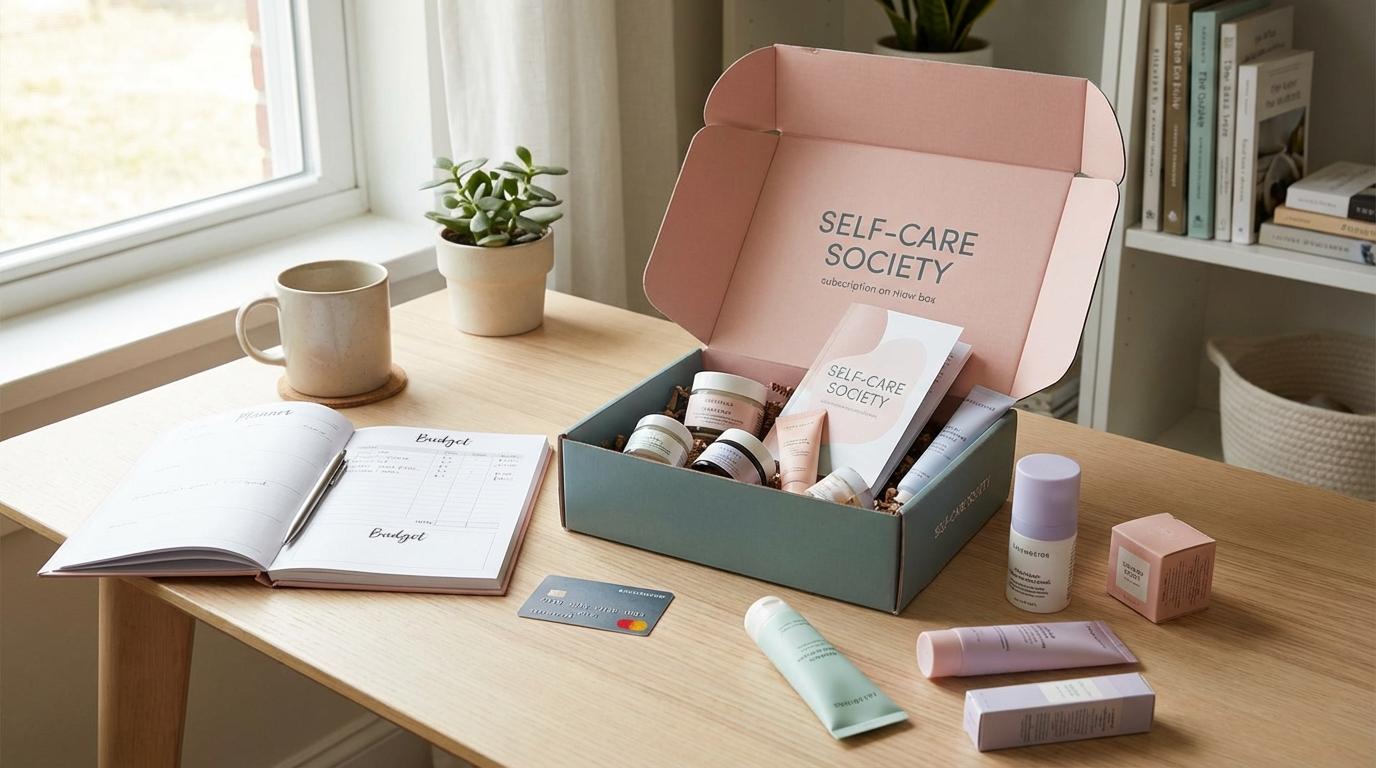
I cannot believe I spent nearly $400 on skincare subscription boxes last year before I actually sat down and did the math! Seriously, I found the receipts (because apparently I save those now like some kind of adult) and almost choked on my iced coffee. Four hundred dollars. On tiny products I never asked for, in shades that don’t match my skin, with ingredients I’m probably allergic to. Cool, cool, cool.
If you’re reading this wondering whether that FabFitFun or Ipsy or Birchbox subscription is worth it, I’m about to save you some money and a whole lot of bathroom cabinet clutter. Because the truth about skincare subscription boxes is… complicated. And mostly not in your favor.
The Math They Don’t Want You to Do
Subscription boxes love to advertise their “value.” You’ve seen it: “This box contains $150 worth of products for only $25!” And technically, that’s not a lie. But here’s what they’re not telling you.
That $150 value is calculated using full retail prices of products you probably wouldn’t have bought anyway. It’s like saying you got a great deal on a purple velvet couch just because it was on sale. Great, but did you need a purple velvet couch? Were you even looking for one? No, you were looking for a beige sectional, and now you have a purple velvet couch taking up space.
Let me break down some real numbers from my own subscription box experience:
- Box cost per month: $25
- Products received: Usually 5-6 items
- Products I actually used: 1-2 items (being generous)
- Real cost per usable product: $12.50-$25 each
Suddenly that “deal” doesn’t look so hot, does it? When you’re paying $25 for one or two products you’ll actually use, you could have just… bought those products. With the exact formulation you wanted. In your shade. For your skin type.
The Sample Size Scam
A lot of these boxes send sample sizes, which they count toward the total “value.” But let’s be real about sample sizes for a second.
A sample size moisturizer (usually around 0.5 oz) might last you a week if you’re being conservative. That’s not enough time to actually see if a product works for you. Skincare needs at least 4-6 weeks to show results (sometimes longer for things like retinol which takes weeks to see results). So you use your tiny sample, maybe like it, then have to buy the full size anyway. The box didn’t save you money; it was basically just a commercial you paid for.
And those sample sizes they’re valuing at $20 because “it’s a proportional value of the $80 full-size product”? According to FDA cosmetic labeling regulations, companies can calculate value however they want. There’s no standard. That 0.5 oz sample might have cost them pennies to produce.
The Products You’ll Never Use (A Horror Story)
I need to tell you about my bathroom drawer of shame. It’s where subscription box products go to die, and honestly, opening it feels like an archaeological dig of bad decisions.
Here’s a sampling of what’s living in there:
- A bright coral lipstick (I’m a neutral girlie, always have been)
- Three different self-tanners (I don’t self-tan, my pale corpse aesthetic is intentional)
- A “universal” bronzer that was universal for approximately no one with my skin tone
- Eye cream with fragrance (my under-eyes said no thank you immediately)
- Multiple hair oils (I have fine hair that gets greasy if I even think about oil)
- A “brightening” serum that turned out to contain citrus oils and broke me out
- Perfume samples that smell like my aunt’s bathroom in 2003
Every single one of these products represents money I spent on things I never wanted. And I can’t even give most of them away because opened skincare products aren’t really giftable (hygiene, people).
The Personalization Lie
Most subscription boxes claim to personalize your products based on a quiz you take when signing up. You know the one: “What’s your skin type? What are your concerns? What’s your preferred aesthetic?”
I filled out every quiz honestly. Oily skin. Acne-prone. Sensitive to fragrance. Prefers minimal packaging. Neutral makeup tones.
And yet I still received:
- Heavy, occlusive creams meant for dry skin
- Fragranced everything
- Bold, colorful makeup I specifically said I don’t wear
- Products in elaborate, wasteful packaging
The “personalization” is mostly theater. These companies have contracts with brands who need to move inventory. Your quiz results matter a lot less than what products need to be distributed that month. I’m not being cynical; this is literally how the business model works. They buy surplus inventory cheap and send it to subscribers under the guise of curation.
When Subscription Boxes MIGHT Make Sense
I’m not going to sit here and say subscription boxes are universally terrible (even though I kind of want to). There are a few specific situations where they might work:
1. You genuinely love trying new things and don’t care about waste. If you view it as entertainment rather than practical skincare shopping, and you’re okay with throwing money at an experience, go for it. Just don’t pretend it’s financially smart.
2. You’re brand new to skincare and have no idea what you like. A few months of a subscription box can expose you to different textures, ingredients, and brands. Think of it as a paid education. But set a limit, maybe three months max, then cancel and build a proper routine with products you actually chose.
3. You found a very niche box that matches your exact needs. There are some subscription boxes specifically for sensitive skin, or clean beauty only, or K-beauty specifically. These targeted boxes have a better chance of sending you usable products. But even then, do the math first.
The Environmental Guilt Trip
Can we talk about the waste for a second? Because I feel like nobody talks about this.
Every month, millions of subscription boxes ship products in elaborate packaging. We’re talking tissue paper, boxes within boxes, plastic wrap, foam inserts, promotional cards, and more. Even if the products themselves come in recyclable containers (and many don’t), the shipping waste is significant.
Then there’s the product waste. According to EPA data on plastic waste, cosmetic containers are a significant contributor to plastic pollution. When you’re getting five products a month and only using two, those other three are eventually hitting the landfill.
I’m not saying we all need to be perfect environmental angels, but if sustainability matters to you at all, subscription boxes are working against those values.
The Sunk Cost Fallacy Trap
One thing subscription boxes do brilliantly is make you feel like you’re getting a deal, which makes canceling feel like losing something. This is the sunk cost fallacy in action.
“But I already paid for the year upfront!” (That money is gone either way.) “But next month’s box looks good!” (Based on what, their marketing?) “But I’ve been subscribed for so long!” (That’s actually an argument FOR canceling, not against it.)
The longer you stay subscribed, the more money you spend on products you don’t need. Every month you stay is another $25-50 that could go toward products you actually want. Products that match your skin type. Products you researched. Products in shades that work for you.
What to Do Instead
If you’re spending $25-50 a month on subscription boxes, here’s what you could do with that money instead:
Option 1: Build a targeted routine. Take that $50/month and spend it on one or two quality products you’ve researched and chosen specifically for your skin concerns. In three months, you’ll have a complete, effective routine instead of a drawer full of random samples. Check out where to actually splurge vs save in skincare if you need guidance.
Option 2: Sample strategically. Want to try new products without committing? Most Sephora and Ulta locations will give you samples if you ask. Sephora’s sample policy lets you get free samples of products you’re actually interested in. Plus, many brands offer sample sizes for purchase on their websites, so you can trial exactly what you want.
Option 3: Wait for sales. Instead of paying $50/month for random products, save that money and shop the Ulta 21 Days of Beauty sale or Sephora’s annual sales. You’ll get the products you actually want at a discount, instead of discounts on things you never wanted.
Option 4: Invest in staples. Put your subscription money toward proven, affordable staples. The Ordinary has products worth your money that cost less than a single month of most subscription boxes.
How to Cancel Without FOMO
If you’re currently subscribed and feeling that pull to stay “just one more month,” here’s how to rip off the band-aid:
1. Do an inventory. Go through your bathroom and count how many subscription box products you’ve actually finished versus how many are languishing unused. Be honest. This reality check is painful but necessary.
2. Calculate your true cost per use. Take what you’ve spent on subscriptions over the past year and divide it by the number of products you actually finished. I guarantee that number will be higher than you expected.
3. Make a list of what you actually need. Write down your current skincare and makeup needs. A cleanser, a moisturizer, sunscreen, whatever. Then ask yourself: would a subscription box address these specific needs? Or would it send you five things that have nothing to do with your list?
4. Unsubscribe and unfollow. Cancel your subscription AND unfollow their social media. The marketing is designed to create FOMO. Remove yourself from the manipulation.
5. Redirect the money. Set up an automatic transfer of your subscription cost to a savings account. Use it for targeted skincare purchases when you actually need them.
The Real Truth
Subscription boxes are a business model built on making you feel like you’re getting a deal while actually spending more than you would if you just bought what you needed. They benefit from the excitement of receiving packages, the gamification of “what will I get this month,” and our collective tendency to overvalue surprise.
The skincare industry knows this. They know that a box of five random products feels like more value than one carefully chosen serum, even when the serum costs less and does more for your skin. They’re banking on your excitement outweighing your logic.
I’m not saying never treat yourself. I’m not saying subscription boxes are evil. I’m saying: do the math. Actually calculate what you’re spending versus what you’re using. Look at that drawer of unused products and ask yourself if this system is serving you, or if you’re just making some company’s surplus inventory problem disappear.
Because here’s the thing about skincare: it works best when it’s intentional. When you know your skin, know what it needs, and choose products specifically to address those needs. Random mystery products showing up every month isn’t skincare; it’s shopping with extra steps and worse results.
Save your money. Buy what you need. Skip the subscription. Your wallet (and your bathroom cabinet) will be so much happier.